
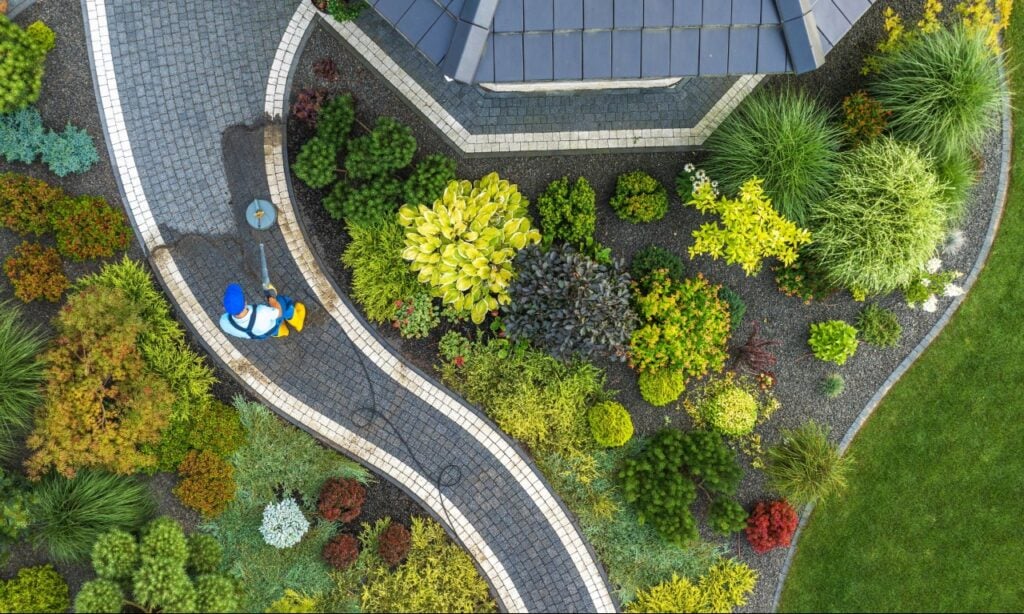
This Florida landscape supply guide helps homeowners choose the right materials for better lawn performance, planting beds, drainage, outdoor appearance, and long-term property care.
Landscape supply materials play a major role in how a property looks, performs, and holds up over time. Homeowners often focus on mowing, trimming, and maintenance, but the materials beneath and around the landscape are just as important.
The right mulch improves moisture retention and bed appearance. The right topsoil supports healthier planting and turf establishment. Fill sand helps with grading and base preparation.
Rock and gravel improve drainage and define spaces. Sod creates a faster, cleaner lawn upgrade. Bulk delivery makes larger projects more practical and efficient.
For Florida properties, choosing the right landscape supply materials is especially important because the environment is demanding. Sandy soil, heavy rain, high heat, and long growing seasons create constant pressure on both lawn and planting areas.
A landscape may fail not because of poor maintenance alone, but because the materials used underneath it were not the right fit for the property.
Why Landscape Supply Matters More Than Most Homeowners Realize
Landscape supply is not just about ordering materials for appearance. It is about supporting the whole property.
A lawn needs the right base and soil conditions. Planting beds need mulch and bed structure. Drainage zones may require gravel or grading material.
Outdoor improvements often depend on having consistent, properly delivered materials in the right quantity.
When supply materials are chosen correctly, they improve both performance and presentation. When the wrong material is used, the result can be poor drainage, weak plant growth, unstable turf, or a landscape that requires repeated correction.
- Proper materials help lawns establish more evenly
- Soil-related products improve planting success
- Mulch supports moisture retention and weed control
- Rock and gravel help with structure and drainage
- Bulk delivery improves efficiency for larger projects
A practical Florida landscape supply guide should help homeowners match each material to the job instead of choosing based only on appearance.
Homeowners can also review the University of Florida Florida-Friendly Landscaping Program, which provides science-based principles and resources for sustainable Florida landscapes. The program includes principles such as water efficiency, mulching, reducing stormwater runoff, and responsible yard care.
Mulch: The Protective Surface Layer
Mulch is one of the most visible and functional materials used in landscape beds. It improves the look of the property almost immediately, but it also serves important performance functions.
Mulch helps hold moisture in the root zone, suppress weed growth, reduce temperature stress around plants, and create a cleaner finished appearance around shrubs and ornamental beds.
In Florida, mulch is especially useful because exposed bed soil dries out quickly and planting beds can lose visual definition fast under heavy rain and long growing seasons.
A fresh mulch layer helps stabilize the bed while giving the landscape a cleaner, more maintained look.
Mulch is commonly used for:
- Planting bed definition
- Weed suppression
- Root zone moisture retention
- Visual cleanup in front-yard and foundation beds
- General property refreshes
The University of Florida Florida-Friendly Landscaping Program lists mulch as one of its nine core principles and provides guidance on recommended mulch materials, including pine bark, pine straw, fallen leaves, melaleuca mulch, mixed hardwood mulch, eucalyptus mulch, and utility mulch. Florida-Friendly Landscaping mulch guidance can help homeowners understand mulch choices for Florida landscapes.
Topsoil: Supporting Growth from Below
Topsoil is one of the most important materials for improving planting conditions and preparing for lawn work.
In many Florida properties, the native soil is sandy and drains quickly. This can make it harder for grass and ornamental plantings to establish strong root systems.
Topsoil helps create a more supportive growing layer where roots can perform more consistently.
Topsoil is commonly used for lawn preparation, bed development, low-area improvement, and soil enhancement where the existing surface is too poor to support healthy growth on its own.
This Florida landscape supply guide recommends considering topsoil when lawn or planting areas need better root-zone support before new plants, sod, or bed improvements are installed.
Fill Sand: Grading and Base Preparation
Fill sand is usually not the most visible landscape material, but it plays an essential role in preparing surfaces.
It is often used for leveling, grading, and creating a base layer before other materials are installed. That may include correcting uneven sections of a yard, preparing a surface before sod, or supporting other landscape improvements that need a stronger foundation.
Florida properties frequently deal with uneven drainage and soft or inconsistent surfaces. Fill sand helps create better grade control and more predictable surface preparation when used correctly.
Rock and Gravel: Structure, Drainage, and Visual Definition
Rock and gravel materials are used for more than decorative effect. They can support drainage improvement, help stabilize certain areas of the yard, create transitions between spaces, and reduce maintenance in zones where turf or exposed soil are not ideal.
Rock and gravel can also give the landscape a more intentional look, especially in side-yard utility spaces, low-maintenance beds, drainage corridors, and design borders.
For homeowners who want durability and cleaner space definition, rock and gravel can be a strong part of a Florida landscape supply guide and material plan.
Sod: Faster Lawn Results
Sod is one of the most effective supply materials for homeowners who want a cleaner lawn result without waiting through slower repair cycles.
Instead of hoping thin turf fills in over time, sod creates an immediate lawn surface with more uniform visual impact.
Sod is especially useful when:
- The existing lawn is too damaged for small repairs
- A property needs stronger curb appeal quickly
- New construction requires finished turf
- Large dead or uneven sections make the yard look incomplete
Before installing sod, homeowners should also consider irrigation, soil condition, grading, and preparation. Sod performs better when the base underneath it is properly planned.
Bulk Delivery: Efficiency for Larger Projects
Bulk delivery is one of the smartest ways to handle larger landscape material needs.
Instead of relying on small bagged quantities or repeated pickup trips, homeowners and contractors can get the material they need delivered in a more efficient and consistent way.
Bulk delivery is especially practical for:
- Large mulch refreshes
- Topsoil and fill projects
- Rock and gravel installation
- Sod preparation support materials
- Whole-property improvement work
For larger outdoor projects, this Florida landscape supply guide recommends bulk delivery because it improves project flow and reduces material inconsistency.
How to Choose the Right Material for the Job
One of the most common mistakes homeowners make is choosing supply materials based only on what seems familiar.
In reality, each material has a specific purpose. Using the wrong one can lead to disappointing results.
For example, topsoil cannot replace fill sand, and gravel serves a purpose beyond decoration. Mulch supports bed performance differently than rock. Sod depends on what is underneath it.
Bulk delivery is often the right move when the material volume is large enough to make bagged products inefficient.
The EPA WaterSense program notes that residential outdoor water use across the United States accounts for nearly 8 billion gallons of water each day, mainly for landscape irrigation. Homeowners planning lawn or planting improvements can review EPA WaterSense outdoor water guidance to better understand outdoor water use and irrigation efficiency.
Think About the Whole Property, Not Just One Area
Landscape supply decisions work best when viewed as part of a larger property plan.
A homeowner may need mulch in the front beds, topsoil in a planting zone, sod in a failed turf area, and gravel in a drainage-sensitive side yard.
Looking at the whole property at once helps make better decisions and often reduces repeated rework later.
A comprehensive guide to landscape supplies in Florida should always connect material choices to the larger outdoor goal, not just the immediate area that you are improving.
Common Landscape Supply Mistakes
- Using the wrong material for the job
- Ordering too little and having mismatched batches later
- Ignoring drainage when choosing base materials
- Relying only on bagged materials for larger jobs
- Choosing for appearance alone instead of performance
These mistakes can lead to wasted time, uneven results, poor drainage, or repeated corrections.
The better approach is to choose materials based on the way the property actually needs to function.
Why Delivery and Material Quality Matter
Landscape supply is not only about what you order. It is also about how it arrives and how consistent it is.
Material quality affects installation results. Delivery timing affects project flow. For larger projects, poor coordination creates delays and inconsistent appearance.
Reliable supply and delivery help the whole job come together more smoothly.
Professional Landscape Supply Services in Florida
Fine Design Outdoor Solutions can help homeowners choose and deliver the right landscape materials for outdoor projects, including landscape supply materials, mulch delivery, topsoil delivery, fill sand delivery, gravel delivery, and sod installation services.
You can also request a landscape supply quote if you need help choosing mulch, topsoil, fill sand, rock, gravel, sod, or bulk delivery for your property.
Final Thoughts on This Florida Landscape Supply Guide
A stronger landscape starts with stronger material choices. Mulch protects beds. Topsoil supports growth. Filling with sand prepares the grade. Rock and gravel help with drainage and structure.
Sod creates faster lawn improvement. Bulk delivery makes larger projects practical and more efficient.
When homeowners make landscape supply decisions with purpose instead of guesswork, they get better results, a better appearance, and fewer avoidable problems later.
Frequently Asked Questions
What should a Florida landscape supply guide include?
A Florida landscape supply guide should include mulch, topsoil, fill sand, rock, gravel, sod, bulk delivery, material selection, drainage considerations, lawn preparation, and common supply mistakes to avoid.
Why is mulch important for Florida landscapes?
Mulch is important for Florida landscapes because it helps retain moisture, suppress weeds, protect root zones, reduce temperature stress around plants, and create a cleaner finished appearance in planting beds.
When should homeowners use topsoil?
Homeowners should use topsoil when planting areas, lawn preparation zones, low sections, or weak soil areas need better root-zone support before installing plants, sod, or other landscape improvements.
What is fill sand used for in landscaping?
Fill sand is used for grading, leveling, base preparation, and correcting uneven or low areas before other landscape materials are installed.
Are rock and gravel only decorative?
No. Rock and gravel can be decorative, but they can also support drainage, stabilize certain areas, define outdoor spaces, and reduce maintenance in areas where turf or exposed soil are not ideal.
Why is bulk delivery useful for landscape supply projects?
Bulk delivery is useful because it saves time, improves consistency, supports larger projects, and reduces the need for repeated trips or mismatched bagged materials.