
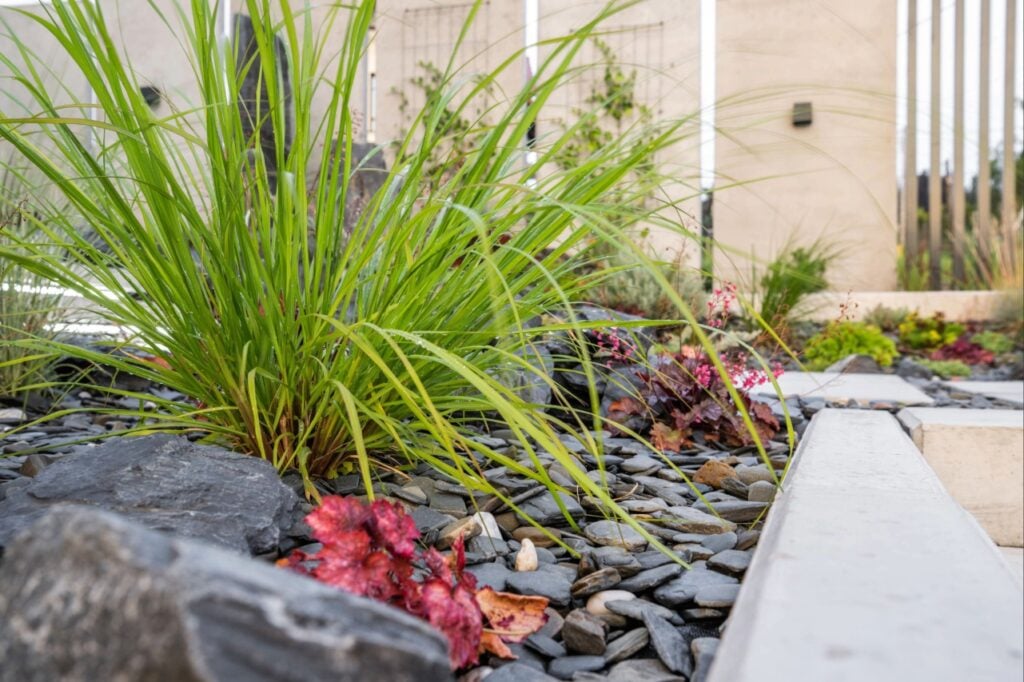
Choosing the right landscape stone for Florida properties requires more than picking a color you like. Florida’s heat, intense sun, heavy rainfall, sandy soils, and drainage challenges can all affect how landscape materials perform.
Landscape stone for Florida properties should be selected according to the property’s climate, drainage, intended use, and overall landscape design.
Landscape stone can serve several purposes around a property. Fine Design Outdoor Solutions lists landscape stone for decorative beds, drainage solutions, walkways, and outdoor living spaces, making it a versatile material for both functional and aesthetic projects in Southwest Florida.
However, not every type of stone is appropriate for every application. Before ordering material, consider the size, shape, color, location, drainage requirements, and surrounding plants.
For homeowners in Port Charlotte, Punta Gorda, North Port, and surrounding Southwest Florida communities, choosing the right material from the beginning can help create a landscape that looks attractive while performing well under local conditions.
Why Landscape Stone Is Popular in Florida
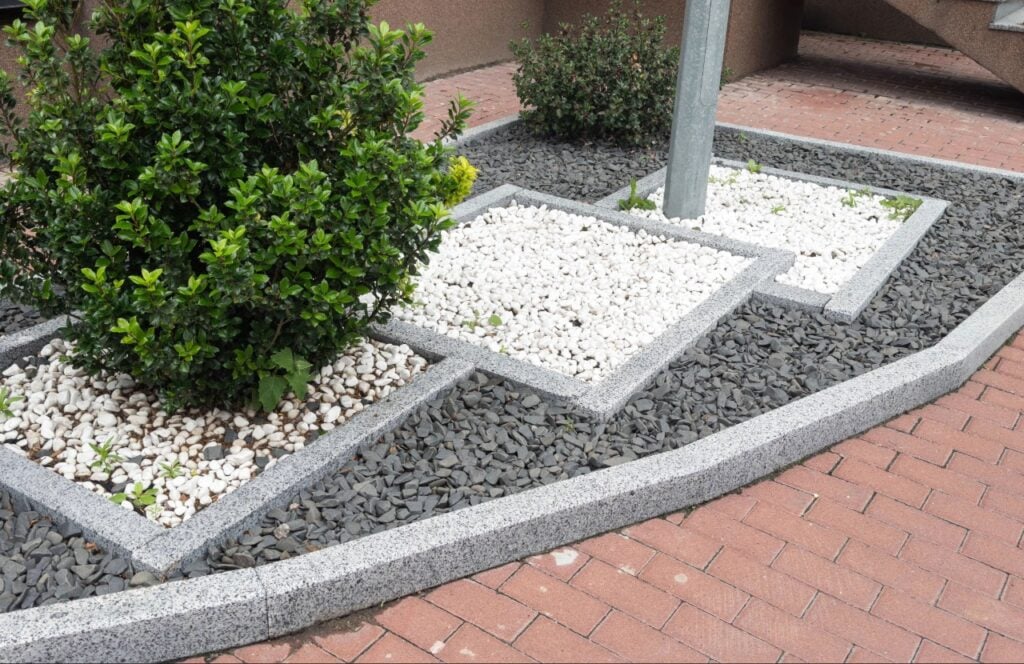
One reason homeowners consider landscape stone for Florida properties is its durability.
Unlike organic materials that gradually break down, stone can remain in place for years with relatively little material replacement. It can also create defined areas around a property, provide a finished appearance, and serve functional purposes in certain landscape applications.
UF/IFAS notes that rocks and stones can be appropriate in Florida landscapes when used reasonably, including as accents, pathways, and in areas where they can help manage rainfall or erosion.
That distinction is important.
Using stone throughout an entire yard isn’t necessarily the best approach for a Florida property. The Florida-Friendly Landscaping program does not promote landscapes consisting entirely of rock because extensive rock surfaces can increase heat and provide limited habitat benefits.
Instead, consider where stone can effectively solve a problem or enhance the design.
Landscape stone can be useful for:
- Decorative landscape beds
- Walkways
- Drainage areas
- Dry creek beds
- Rain gardens
- Areas around downspouts
- Erosion-prone locations
- Outdoor living spaces
- Landscape accents
- Defined borders and transitions
When selected appropriately, landscape stone for Florida homes can provide both practical and decorative benefits.
The key is matching the material to the job.
1. Start With the Purpose of the Landscape Stone
Before choosing a particular stone, determine why you need it.
This is the first and most important consideration when selecting landscape stone for Florida properties.
A stone intended for a walkway may need different characteristics than a stone used as a decorative accent. Similarly, material placed around a downspout may have a different purpose than material installed in a front-yard planting bed.
Ask yourself:
Is the stone decorative?
Decorative landscape stone for Florida homes should complement the architecture and surrounding plants rather than simply filling an empty space.
If the primary goal is appearance, color, texture, and size may be your biggest considerations.
Is the stone intended for drainage?
For drainage applications, landscape stone for Florida properties needs to be evaluated according to how water moves through the site.
You’ll need to consider how water moves through the area and whether the selected material is appropriate for that application.
Will people walk on it?
A pathway requires material that provides a reasonably stable walking surface and works with the overall design.
Will it surround plants?
You need to consider heat, moisture, soil conditions, and the needs of the plants growing nearby.
Will it help control erosion?
The material needs to work with the site’s water flow rather than simply being placed over an area where water is already causing problems.
Starting with the purpose prevents a common mistake: selecting stone based solely on appearance and trying to make it work for an application it wasn’t intended to serve.
2. Consider Florida’s Heat and sun exposure.
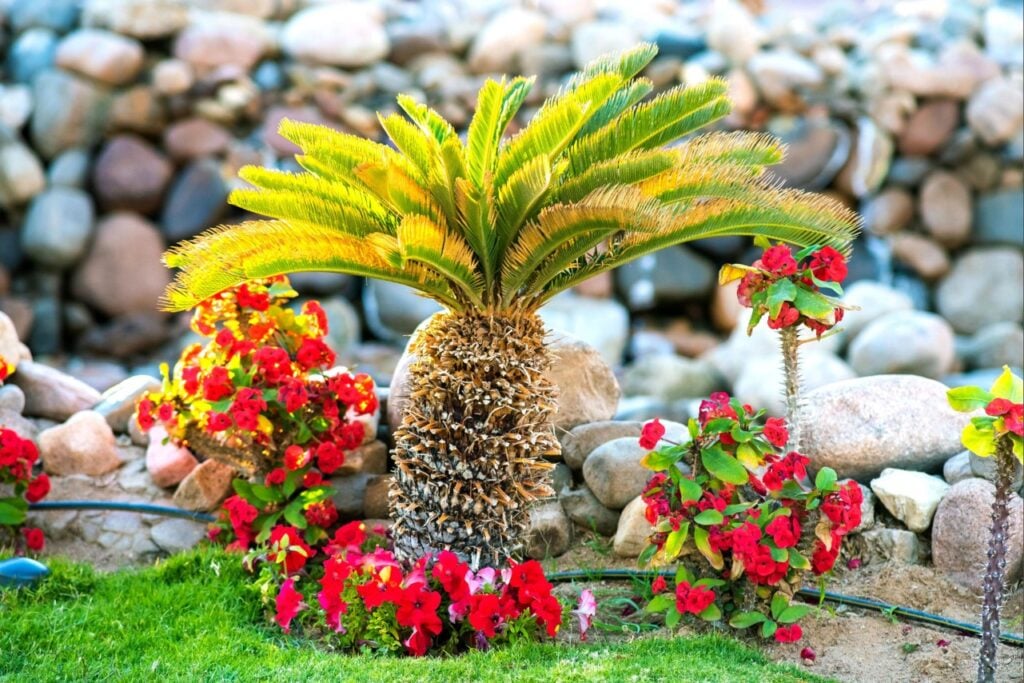
Florida’s sunshine is an important consideration when choosing landscape materials.
Choosing landscape stone for Florida properties also means considering how much direct sunlight the material will receive throughout the day.
Stone can absorb and radiate heat, particularly when large areas are covered with exposed rock. UF/IFAS specifically warns that extensive rock landscapes can increase heat and potentially stress plants. This is an important consideration when planning landscape stone for Florida because extensive exposed rock can change the conditions around nearby plants.
That doesn’t mean stone should be avoided.
It means where you place it is important.
For example, a small decorative stone area around heat-tolerant plants may work well, while covering a large portion of a yard with rock can create a much hotter environment.
Think about:
- How much direct sunlight the area receives
- Whether nearby plants tolerate heat
- Whether the stone is near windows or living areas
- Whether the area needs to remain comfortable for people
- How much of the property will be covered
Using stone strategically can provide the benefits of a durable landscape material without unnecessarily increasing exposed hardscape across the property.
Stone Near Plants
Be particularly thoughtful when placing landscape stone for Florida properties around trees, shrubs, and other landscape plants.
UF/IFAS recommends using rock reasonably and incorporating it with living plants rather than creating an entirely rock-based landscape.
If a planting area contains plants that prefer cooler, organic-rich soil conditions, stone may not be the best choice for covering the entire bed.
The right approach depends on the specific plant, site conditions, and purpose of the landscape area.
3. Match Stone Size to the Application
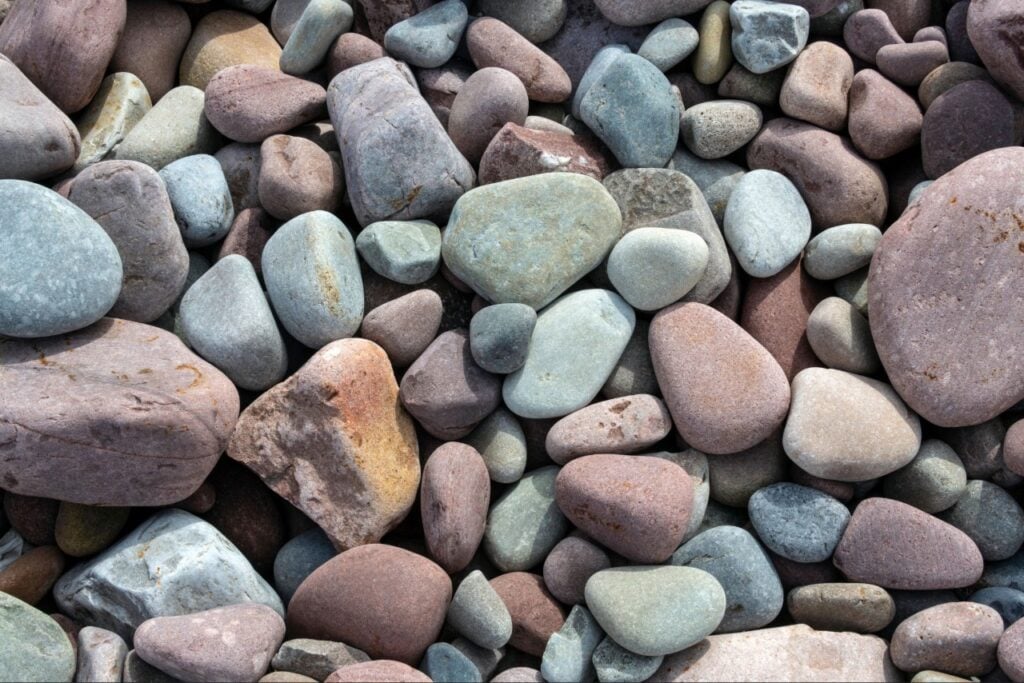
Stone comes in many different sizes, and size affects both appearance and performance.
The appropriate size of landscape stone for Florida projects depends heavily on how and where the material will be used.
Small gravel may work well for certain pathways or contained areas. Larger river rock can create a different visual effect in decorative beds, while larger stones and boulders can become focal points.
UF/IFAS Gardening Solutions notes that gravel, stepping stones, cut stone, and other materials can be used for pathways depending on the desired landscape style and function.
When evaluating landscape stone for Florida, consider the scale of the material compared with the surrounding property.
A tiny stone may visually disappear in a large landscape bed.
Conversely, oversized stones can overwhelm a small residential space.
Smaller Stone
When selecting landscape stone for Florida walkways and smaller landscape areas, consider both appearance and how the material will behave under foot traffic.
Smaller materials may be appropriate for:
- Certain walkways
- Narrow landscape areas
- Decorative accents
- Small drainage applications
- Areas requiring a more refined appearance
Medium Stone
Medium-sized rocks can work well for
- Landscape beds
- Borders
- Decorative areas
- Drainage features
- Natural-looking landscape designs
Larger Stone
Larger rocks and boulders can serve as:
- Focal points
- Landscape accents
- Edging elements
- Features in larger properties
- Components of naturalistic designs
The important point is to consider scale before ordering bulk material.
A material that looks excellent in a sample or photograph may look completely unique when spread across an entire landscape.
4. Think About Drainage Before Buying Stone
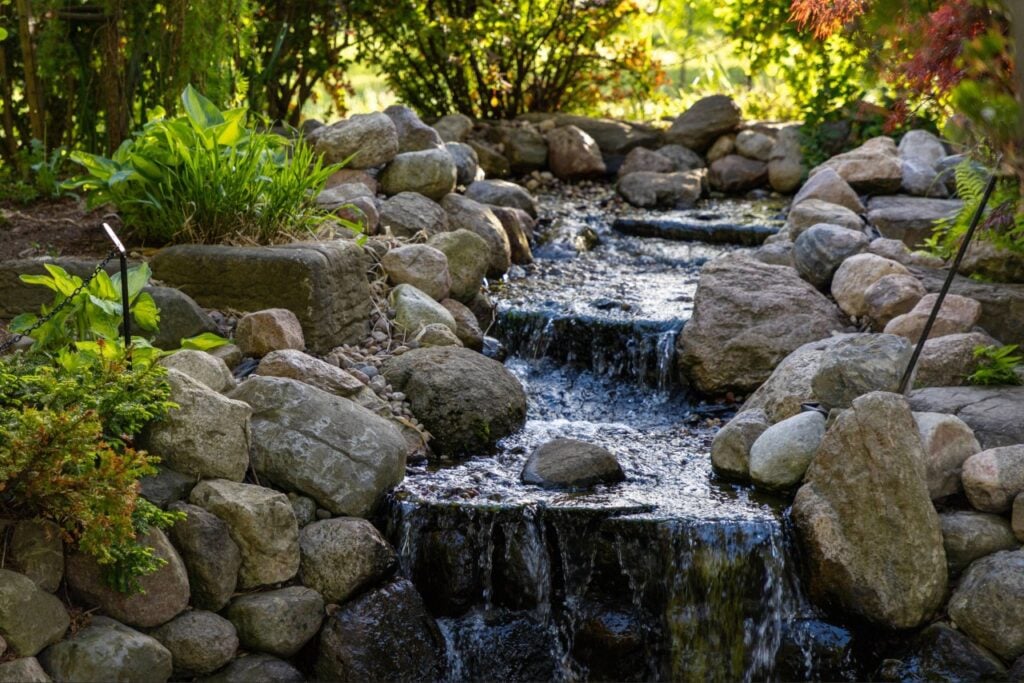
This makes drainage an important consideration when choosing landscape stone for Florida properties.
Drainage is especially important in Southwest Florida.
Heavy rainfall can put significant amounts of water onto residential properties, and the way that water moves across the landscape can affect plants, soil, walkways, foundations, and other outdoor features.
Landscape stone can be useful in certain drainage applications, but homeowners shouldn’t assume that simply putting gravel into a wet area will automatically solve a drainage problem.
UF/IFAS specifically explains that placing gravel by itself at the bottom of a planting area does not improve drainage in wet soil. Effective drainage may require an outlet, piping, grading, or another appropriate solution.
That’s an important distinction.
If you are experiencing recurring standing water, please determine the cause of the accumulation before ordering a truckload of stone.
Possible causes can include:
- Poor grading
- Compacted soil
- Improper downspout discharge
- Low areas in the landscape
- Blocked drainage paths
- Excess irrigation
- Runoff from surrounding areas
Before purchasing landscape stone for Florida drainage projects, identify the source of the water and determine where it needs to go.
In some applications, stone can help stabilize areas receiving concentrated runoff. The Florida-Friendly Landscaping handbook notes that rock or stone can be used around downspout outlets to help dissipate concentrated water flow and limit erosion.
That makes stone a potentially useful part of a drainage solution—but the material needs to be selected and installed according to how water actually moves through the property.
5. Consider Color and How It Works With Your Home
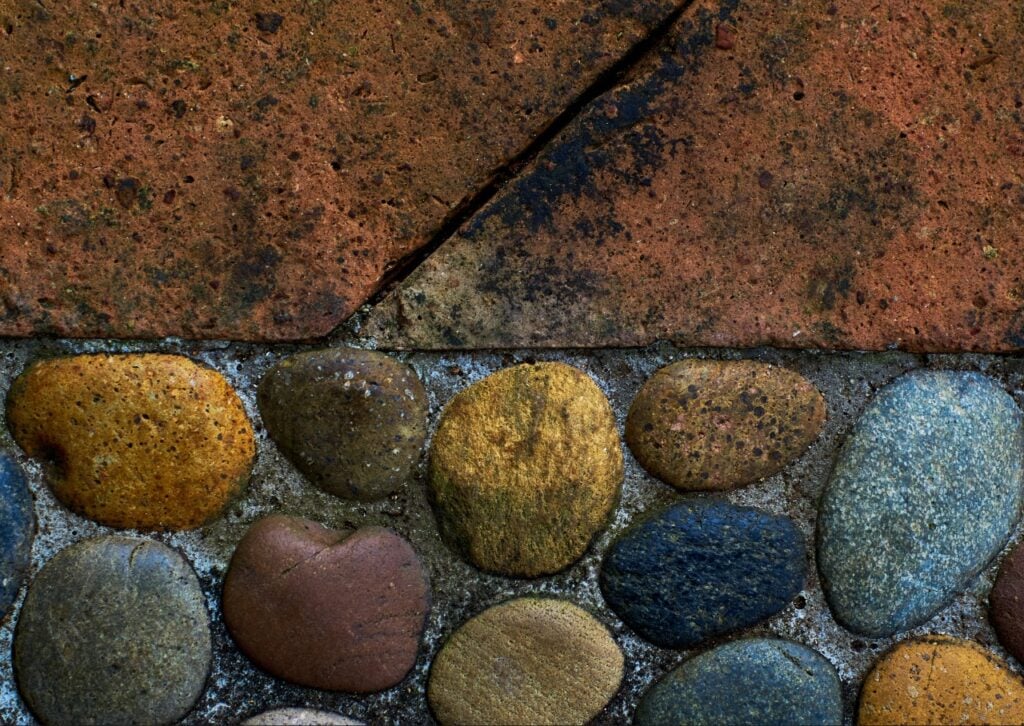
The color of landscape stone for Florida homes should work with the property’s exterior finishes and surrounding vegetation.
Once you’ve determined the purpose and size of the material, color becomes an important consideration.
The right landscape stone for Florida should complement the home’s exterior rather than compete with it.
Look at the colors already present on the property, including:
- Roof shingles
- Exterior walls
- Driveway
- Pavers
- Walkways
- Fencing
- Outdoor furniture
- Existing landscape materials
For example, a home with warm beige or tan exterior finishes may work well with earth-toned stone. A property with a modern white or gray exterior may benefit from a cooler gray or charcoal material.
This doesn’t mean everything needs to match perfectly.
In fact, using slightly contrasting colors can create more visual interest. The goal is to create a landscape where the stone feels like part of the overall design.
Consider the Surrounding Plants
Stone color can also affect how plants appear.
Dark stone may make green foliage stand out, while lighter stone can create a brighter appearance around colorful flowers and shrubs.
Consider the mature appearance of the landscape rather than judging the stone only against bare soil.
Plants will change the overall color balance once they grow.
This is especially useful when choosing landscape stone for Florida planting beds where the stone will remain visible between plants.
Be Careful With Very Dark Materials
Dark stone can absorb more solar energy and become noticeably hot in the direct Florida sun.
If the material is installed near areas where people walk barefoot, sit, or spend significant time outdoors, consider how much direct sunlight the location receives.
This is particularly relevant in the following areas:
- Pool areas
- Patios
- Outdoor seating
- Walkways
- Children’s play areas
A material that looks attractive in a photograph may not necessarily be the most comfortable choice for every location.
6. Think About Maintenance Before Choosing Stone
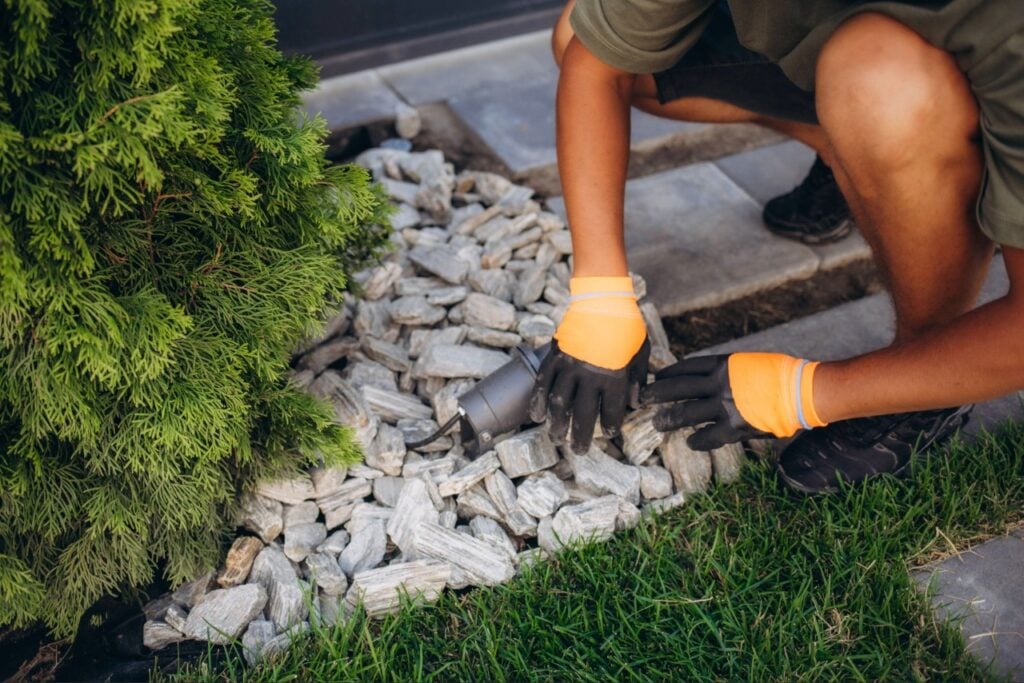
Although landscape stone for Florida properties can be durable, homeowners should still plan for routine maintenance.
One advantage of stone is that it generally lasts longer than materials that decompose.
However, landscape stone for Florida is not completely maintenance-free.
Leaves, grass clippings, soil, weeds, and other organic debris can accumulate between stones.
Florida’s combination of warmth and moisture can make vegetation particularly persistent.
Over time, a stone bed can become less defined if it isn’t maintained.
Common Maintenance Tasks
Depending on the application, maintenance may include the following:
- Removing leaves and debris
- Pulling weeds
- Raking displaced material
- Adding stone to areas where it has migrated
- Cleaning areas affected by soil runoff
- Maintaining landscape-bed borders
- Clearing drainage channels
Stone can also move when exposed to concentrated water flow.
For example, heavy rainfall flowing through a sloped landscape may displace smaller rocks and gravel.
If you notice stone repeatedly washing away, don’t just keep adding more material. Investigate where the water is coming from and whether the area needs a better drainage or erosion-control solution.
Stone and Weed Growth
Stone doesn’t necessarily eliminate weeds.
Wind-blown seeds, organic debris, and soil can accumulate between stones and provide enough material for weeds to establish.
Proper site preparation and regular maintenance can help.
However, homeowners should be cautious about relying on chemical weed-control products without understanding how they should be used around plants, pets, and other areas of the property.
The EPA recommends using nonchemical prevention and control methods where practical as part of integrated pest management. (epa.gov)
Proper preparation and maintenance can help keep landscape stone for Florida landscape beds looking cleaner over time.
7. Calculate How Much Stone Your Project Needs
One of the most important steps when purchasing landscape stone for Florida projects is determining the amount of material you’ll actually need.
Accurate measurements are particularly important when ordering landscape stone for Florida projects in bulk.
Buying too little can leave an unfinished section of the landscape.
Buying too much can leave you with excess material, additional handling, and unnecessary expense.
Before ordering, measure the area as accurately as possible.
For a simple rectangular area, multiply:
Length × Width = Square Footage
You then need to determine the desired depth of the stone.
For irregularly shaped areas, divide the space into smaller sections and calculate the depth for each section separately.
Consider the Application
The appropriate depth can vary depending on the material and its intended use.
A decorative landscape bed may require a different installation depth than a walkway or drainage application.
This is another reason not to estimate quantities based only on the square footage of the area.
If you’re ordering bulk material, ask the landscape-supply provider about the recommended quantity for your specific application.
Fine Design Outdoor Solutions provides bulk landscape materials and delivery for projects throughout Southwest Florida, making it possible to source larger quantities without relying entirely on small retail bags. (finedesignfl.com)
Bulk Landscape Stone vs. Bagged Material
For small projects, purchasing several bags of decorative stone may be convenient.
The best purchasing method for landscape stone for Florida projects depends largely on the size and scope of the installation.
But larger projects can require a substantial amount of material.
If you’re covering a large landscape bed, creating a drainage feature, building a pathway, or completing multiple areas at once, bulk material may be worth considering.
Bagged Stone
Bagged products can make sense when:
- The project is small
- You need a limited amount
- You want to transport material yourself
- Storage space is limited
- You’re making a small repair
Bulk Stone
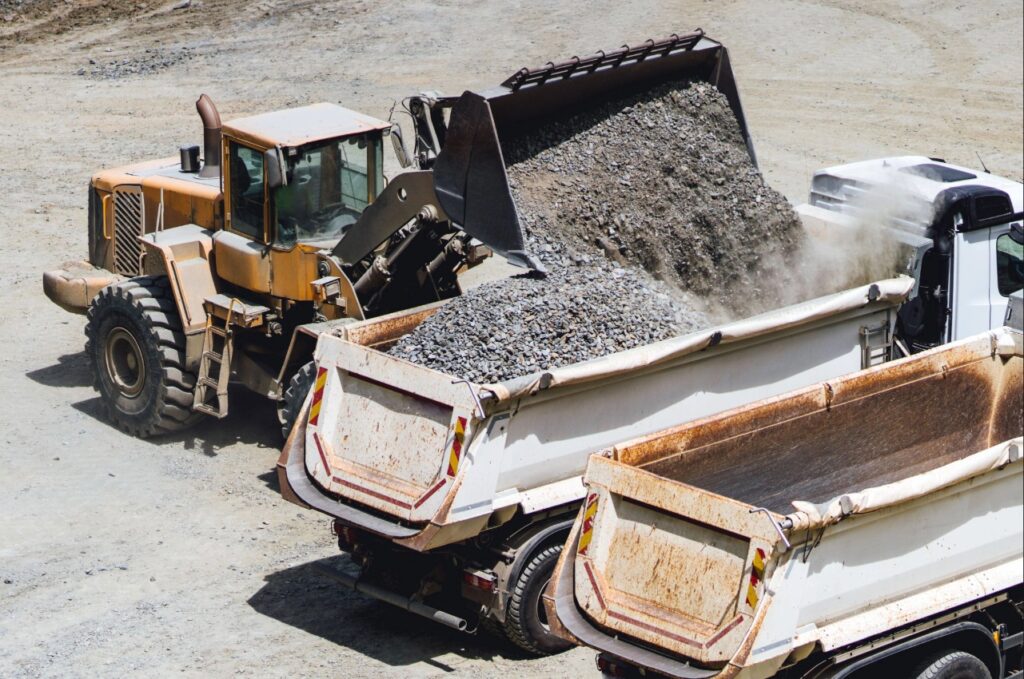
Bulk landscape stone can make more sense when
- You’re covering a large area
- Multiple landscape beds need material
- You’re constructing a walkway
- You’re working on a drainage project
- You’re completing a larger landscape installation
- You need a significant quantity of consistent material
Bulk purchasing can also simplify a larger project because the material arrives in a quantity suited to the job rather than requiring repeated trips to purchase individual bags.
How Delivery Can Affect Your Landscape Stone Project
Delivery should be considered before ordering bulk material.
A large load of stone requires a suitable place for unloading.
Before scheduling delivery, determine:
- Where the truck can safely access the property
- Where the material can be unloaded
- Whether the driveway can accommodate the delivery vehicle
- Whether overhead branches or utility lines could create access problems
- How far the material needs to be moved after delivery
Ideally, the delivery location should minimize the amount of manual handling required.
If stone is dumped too far from the work area, moving several tons of material can significantly increase the labor involved in the project.
For homeowners working with a landscape contractor, coordinate the delivery location with the contractor before placing the order.
Landscape Stone for Different Areas of the Property
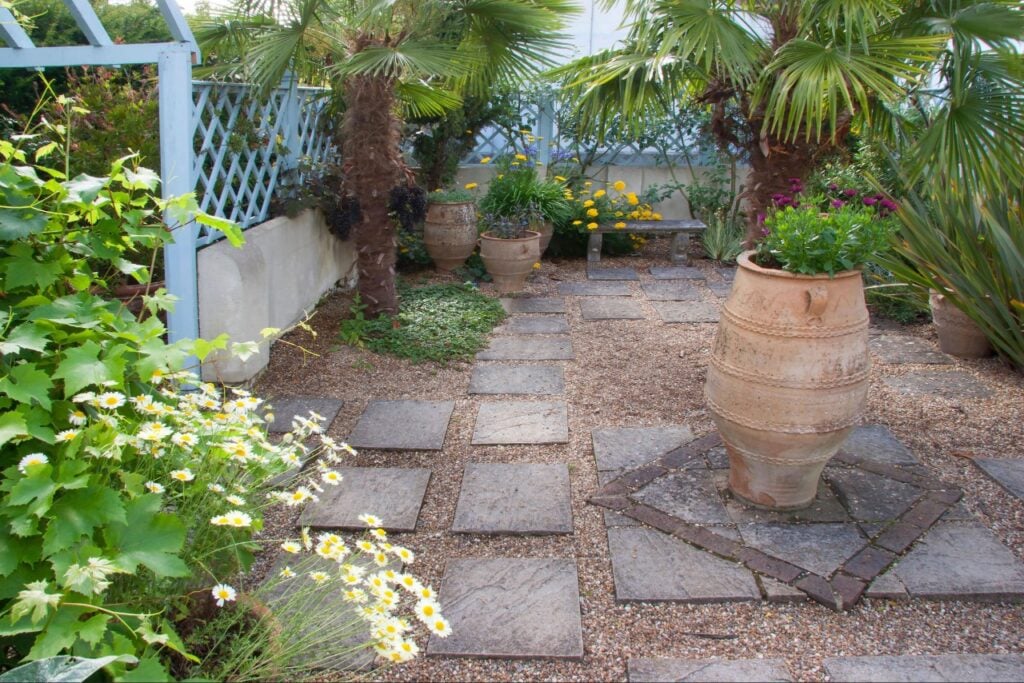
The best landscape stone for Florida can vary considerably depending on where you intend to use it.
Front Yard
In front yards, appearance is usually an important consideration.
Choose a stone that complements the architecture, existing plants, driveway, and other visible features.
Side Yard
Side yards can have different requirements.
Narrow spaces may benefit from stone pathways or materials that help create a cleaner transition between structures and landscape areas.
Backyard
Backyards often provide more flexibility.
Stone can be used around patios, planting beds, walkways, outdoor living areas, or specific drainage features.
Drainage Areas
Functional performance becomes more important in drainage applications.
Instead of choosing material simply because it looks attractive, determine how water enters, moves through, and exits the area.
Around Downspouts
Stone can sometimes help stabilize the area where water exits a downspout and reduce erosion caused by concentrated runoff.
However, the design should ensure that water is directed appropriately rather than simply accumulating beside the house.
Common Mistakes When Buying Landscape Stone
Even durable materials can cause problems if you select or install them incorrectly.
Choosing Only Based on Appearance
A beautiful stone isn’t always the right stone for your project.
Start with function, then consider appearance.
Using Too Much Stone
Covering large portions of a property with rock may create additional heat and reduce the amount of living vegetation.
A balanced landscape can use stone strategically rather than everywhere.
Ignoring Drainage
If water is already accumulating in an area, adding stone without understanding the drainage problem may not solve it.
Determine the cause first.
Buying the Wrong Size
Small decorative gravel may not be appropriate for every pathway, while large rocks may be impractical in a narrow planting bed.
Underestimating the Quantity
Running out of material halfway through a project can create an inconsistent appearance if the same product is no longer available.
Measure carefully before ordering.
Forgetting About Maintenance
Stone still requires occasional maintenance.
Plan for weeds, debris, erosion, and displaced material before deciding whether it is the right ground-cover option.
How to Make the Most of Your Landscape Stone Investment
Choosing landscape stone for Florida properties is only the first step. How you plan, deliver, install, and maintain the material can have just as much impact on the finished result.
A little planning before ordering can help prevent common problems such as inconsistent coverage, material shortages, poor drainage, or stone that doesn’t complement the rest of the landscape.
For larger projects, it can also be useful to discuss the application with a landscape professional or landscape-supply provider before purchasing material.
Plan the Stone Around Existing Landscape Features
Landscape stone should work with the features already present on your property.
These considerations are particularly important when incorporating landscape stone for Florida properties into an established landscape.
Before ordering, look at the entire area rather than focusing only on the space where the stone will be placed.
Consider nearby:
- Trees
- Shrubs
- Flower beds
- Walkways
- Patios
- Driveways
- Fences
- Outdoor structures
- Drainage features
- Irrigation systems
For example, installing stone around an existing tree requires consideration of the tree’s root zone and long-term growth.
Likewise, placing stone near irrigation equipment may require adjustments so that the system can continue to function properly.
A landscape material should complement the existing design rather than creating problems for features that are already working well.
Don’t Ignore Soil and Site Conditions
Florida properties can have completely unique soil and drainage conditions.
Some areas may drain relatively quickly, while others can experience water accumulation because of grading, compaction, runoff, or other site-specific conditions.
This matters when choosing landscape stone for Florida because the same material may perform differently depending on where it is installed.
Before beginning a project, consider:
Soil:
What type of soil is present?
Slope:
Does the area slope toward or away from the home?
Water:
Where does rainfall and irrigation water go?
Sun:
Does the area receive full sun, partial shade, or mostly shade?
Existing vegetation:
Are plants already established in the area?
Traffic:
Will people regularly walk over the material?
These conditions should guide your choice of landscape stone for Florida rather than relying solely on appearance.
Understanding these conditions helps you choose a material based on the actual site rather than simply choosing the most attractive option.
Use Stone Strategically in Florida-Friendly Landscapes
Florida-Friendly Landscaping emphasizes selecting and placing plants appropriately, conserving water, protecting soil and water resources, and reducing unnecessary environmental impacts.
The goal is to use landscape stone for Florida properties where it provides a clear design or functional benefit.
Stone can be part of that approach when you use it strategically.
For example, stone can complement planted areas, define pathways, stabilize certain drainage locations, or create decorative focal points.
However, using stone to replace nearly all vegetation isn’t necessarily a Florida-friendly strategy.
UF/IFAS explains that large areas of rock can increase heat and may negatively affect plants and wildlife. (ask.ifas.ufl.edu)
A better approach for many residential properties is to combine hardscape and living landscape elements.
That could mean:
- Stone pathways surrounded by plants
- Decorative rock beds with appropriate Florida plants
- Stone borders around planting areas
- Rock features near outdoor living spaces
- Stone used to address specific drainage or erosion concerns
- Small decorative areas rather than an entirely rock-covered yard
This creates a more balanced landscape while still providing the durability and visual definition that stone can offer.
Think About the Long-Term Appearance
A landscape rarely looks exactly the same five years after installation.
Planning ahead can help ensure that landscape stone for Florida continues to complement the property as the surrounding landscape matures.
Plants grow.
Trees mature.
Mulch breaks down.
Soil moves.
Stone can become partially covered by vegetation or displaced by water and foot traffic.
When choosing landscape stone for Florida, think about how the material will look as the surrounding landscape develops.
Ask:
- Will nearby plants eventually cover the stone?
- Will tree roots affect the area?
- Could rain move the material?
- Will leaves accumulate?
- Will the color still complement the home?
- Will the stone remain accessible for maintenance?
Planning for the mature landscape can help prevent a design that looks appealing immediately but becomes difficult to maintain later.
Consider Combining Stone With Other Landscape Materials
You don’t have to use landscape stone by itself.
Combining materials can create more visual interest and define different areas of the property.
For example, stone can be paired with the following:
- Mulch
- Pavers
- Concrete
- Natural plants
- Stepping stones
- Timber edging
- Landscape borders
The key is to establish a clear transition between materials.
A poorly defined transition can make the landscape look unfinished.
A well-planned transition can make separate areas feel intentional and connected.
This is especially useful for larger properties, where different outdoor spaces serve different purposes.
When to Consider Bulk Landscape Stone
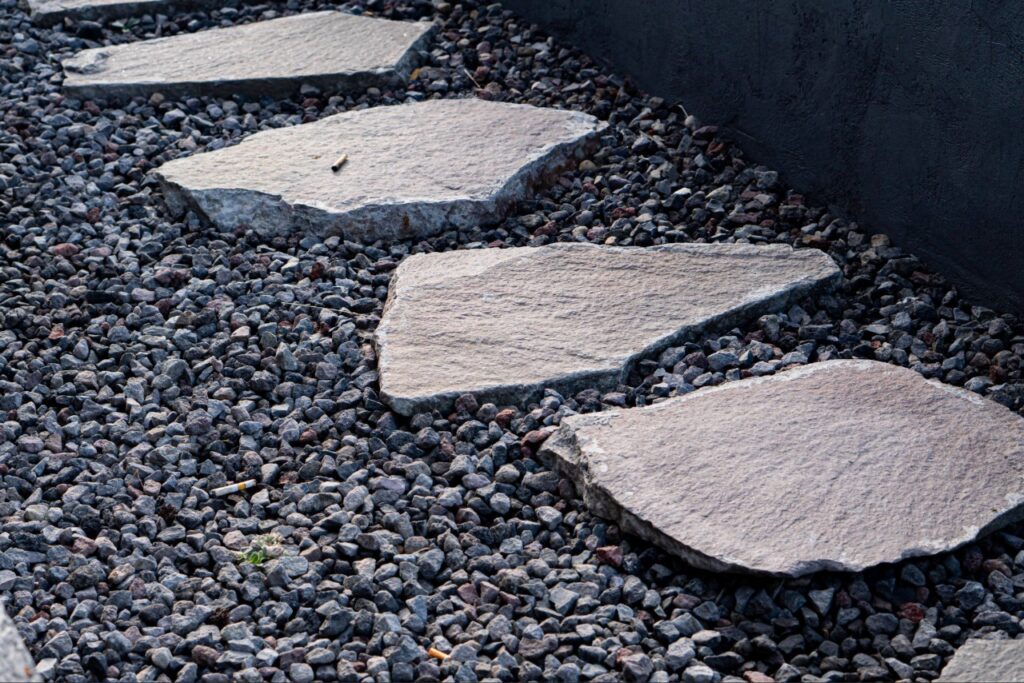
Bulk material can be particularly useful for larger landscaping projects.
If you need only a small amount of decorative stone, bagged material may be convenient.
But larger projects can quickly require hundreds or thousands of pounds of material.
Bulk landscape stone may be worth considering when you’re
- Installing a large planting bed
- Building a long walkway
- Creating a drainage feature
- Stabilizing an erosion-prone area
- Renovating multiple landscape beds
- Completing a new landscape installation
- Working on a larger outdoor living project
Fine Design Outdoor Solutions offers landscape supply materials and bulk delivery for Southwest Florida projects, including landscape stone. (finedesignfl.com)
Before ordering, confirm the material type, estimated quantity, delivery location, and intended application.
Questions to Ask Before Ordering Landscape Stone
If you’re uncertain about which material to purchase, prepare a few questions before contacting a landscape-supply provider.
-
What type of stone is appropriate for my project?
Explain whether you’re building a walkway, improving a landscape bed, addressing erosion, creating a decorative feature, or working on another application.
-
How much material will I need?
Provide the length, width, and intended depth of the area whenever possible.
For irregular spaces, measurements or a simple site drawing can help. -
Is the material available in bulk?
Larger projects may benefit from bulk ordering rather than purchasing numerous bags.
-
Can the material be delivered?
If you’re ordering a significant quantity, ask about delivery options and determine where the material can safely be unloaded.
-
What preparation is required?
Some applications may require grading, excavation, edging, base preparation, drainage improvements, or other work before the stone is installed.
-
Will this material work around my existing plants?
If the stone will be installed in an established landscape, make sure the material and installation approach are compatible with the plants already growing there.
A Practical Checklist Before Buying
Before ordering landscape stone for Florida, run through this checklist:
Identify the purpose
Know exactly what the stone will accomplish.
Measure the area
Determine the length, width, and required depth.
Evaluate drainage
Understand where water currently goes.
Consider sun exposure
Consider how much heat the material and surrounding plants will receive.
Select the appropriate size
Choose a material that matches the application and scale.
Compare colors
Consider the home’s exterior and surrounding landscape.
Plan maintenance
Think about weeds, leaves, erosion, and material movement.
Determine quantity
Avoid ordering significantly more or less material than necessary.
☐ Plan delivery
Make sure there is an appropriate location for bulk material.
Consider professional help
For complicated drainage, grading, or large landscape projects, professional planning can help avoid costly mistakes.
Final Thoughts
The best landscape stone for Florida isn’t necessarily the most expensive material or the one that looks best in a photograph.
It’s the material that fits the project’s purpose, the property’s conditions, the surrounding landscape, and the homeowner’s maintenance expectations.
Florida’s heat, intense sunlight, rainfall, and varied site conditions make planning particularly important. Stone can be an excellent addition to a residential landscape when it is used strategically for decorative beds, pathways, drainage applications, erosion control, and outdoor living areas.
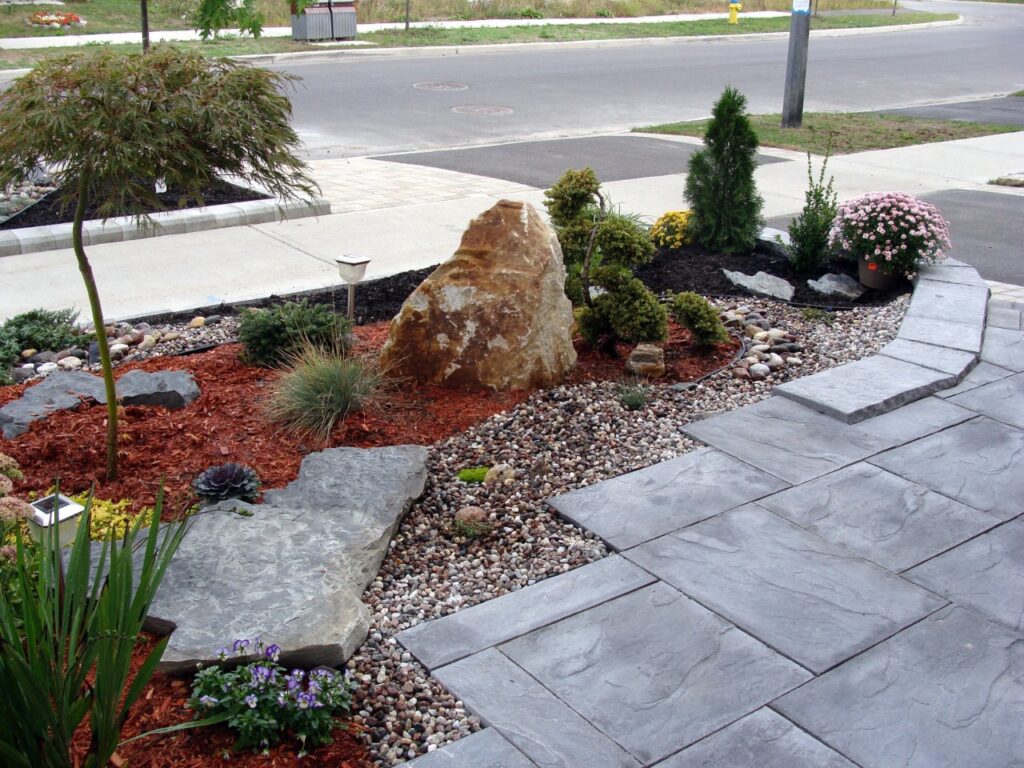
Before ordering, determine what you need the material to accomplish, evaluate the site, calculate the required quantity, and consider how the finished landscape will look and function several years from now.
For homeowners and contractors working on larger projects in Southwest Florida, Fine Design Outdoor Solutions can provide landscape supply materials and bulk delivery, making sourcing materials more convenient.
The right material, combined with thoughtful planning and proper installation, can help create an outdoor space that looks attractive and performs well for years to come.
Frequently Asked Questions
-
What is the best landscape stone for Florida?
There isn’t one landscape stone that is best for every Florida property. The right choice depends on whether the material is being used for a decorative bed, pathway, drainage application, erosion control, or another purpose. Size, color, site conditions, drainage, and surrounding plants should all be considered.
-
Is landscape stone beneficial for Florida landscaping?
Yes. Landscape stone is useful in Florida landscapes when you use it appropriately. It can provide decorative interest, define planting areas, create pathways, and support certain drainage or erosion-control applications. UF/IFAS recommends using rock strategically rather than covering an entire landscape with it.
-
Does landscape stone get hot in Florida?
Stone exposed to direct sunlight can become hot, particularly darker materials and large areas of exposed rock. This is one reason homeowners should consider sun exposure and plant selection before installing extensive stone areas.
-
How much landscape stone do I need?
The amount depends on the size of the area, the material, and the desired installation depth. Measure the length and width of the area and determine the required depth before calculating the quantity. For larger projects, a landscape-supply provider can also help with material estimates.
-
Can landscape stone help with drainage?
Landscape stone can be useful in certain drainage and erosion-control applications, but simply adding gravel to a wet area does not automatically fix a drainage problem. The underlying cause of the water accumulation should be identified first. Proper drainage may require grading, drainage piping, an outlet, or another engineered solution.
-
Is bulk landscape stone better than bagged stone?
It depends on the project size. Bagged stone can be convenient for small projects, while bulk material may be more practical for large landscape beds, pathways, drainage projects, and other applications requiring substantial quantities.