
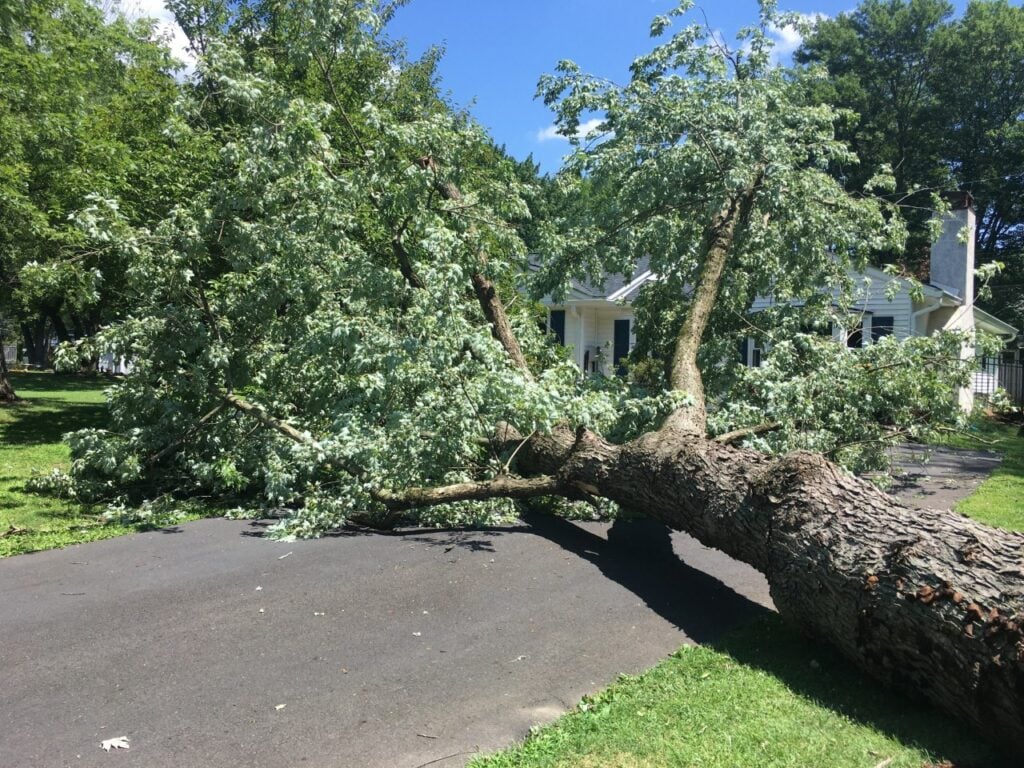
A tree trimming assessment after a storm in Port Charlotte can help homeowners understand whether damaged branches need professional attention or whether the tree requires a more specialized evaluation. However, before scheduling routine trimming, the first priority is identifying any conditions that make the surrounding area unsafe.
High winds and heavy rainfall can leave broken branches hanging in the canopy, damage major limb connections, or affect a tree’s trunk and root system. Some damage may be addressed through appropriate pruning, while other conditions require evaluation beyond routine tree trimming.
For Port Charlotte homeowners, the safest starting point is to observe the tree from a distance, keep people and pets away from suspected hazards, and document visible changes without approaching damaged limbs.
Fine Design Outdoor Solutions offers tree trimming and pruning as part of its landscaping services. The appropriate scope depends on the damage, the condition of the remaining tree, and whether additional professional assessment is necessary.
This guide explains five warning signs that deserve attention, when routine trimming may not be enough, and what information to prepare before requesting an assessment.
First, separate urgent hazards from a trimming request
Do not walk beneath a damaged tree to get a closer look. If you cannot inspect it without entering the area beneath damaged branches, leave that inspection to an appropriate professional.
Keep clear and seek the appropriate urgent help when you notice:
- A tree or branch touching, pulling on or lying near a power line.
- A fallen wire anywhere near the tree or surrounding ground.
- A tree or large branch resting on a building or vehicle.
- A newly leaning tree with visible soil lifting or roots pulling out of the ground.
- A split trunk or large broken limb suspended over an occupied area.
Trees and branches near damaged electrical lines can create serious hazards. Follow your utility provider’s emergency guidance, keep people away from the affected area, and never attempt to move wires or branches touching them. Ready.gov’s power outage guidance provides additional information about electrical hazards during and after severe weather.
For utility-line involvement, contact the utility and stay away from the tree, wires, and anything they touch. If someone is injured or immediate danger exists, contact emergency services. Do not attempt to free branches from lines or move a fallen wire.
A routine trimming request should not substitute for an urgent hazard response. Do not assume a landscaping appointment includes emergency work, tree removal, or a formal tree-risk evaluation; ask what the provider can assess and handle.
When should you request a trimming assessment?
Request an assessment when visible storm damage leaves you unsure which branches need attention or whether the remaining canopy can be pruned appropriately. You do not need to decide which cuts to make before asking for help.
Broken branches remain attached
A branch may snap without falling completely. Hanging or partially attached limbs are a reason to restrict access and describe the situation when contacting a professional. Do not pull on them; shake the tree or stand beneath them to take photographs.
Be specific about what is below the damage: a walkway, driveway, patio, fence, or planting bed. That helps explain the access concerns without requiring you to judge the branch’s stability.
Branches are cracked, torn or newly displaced
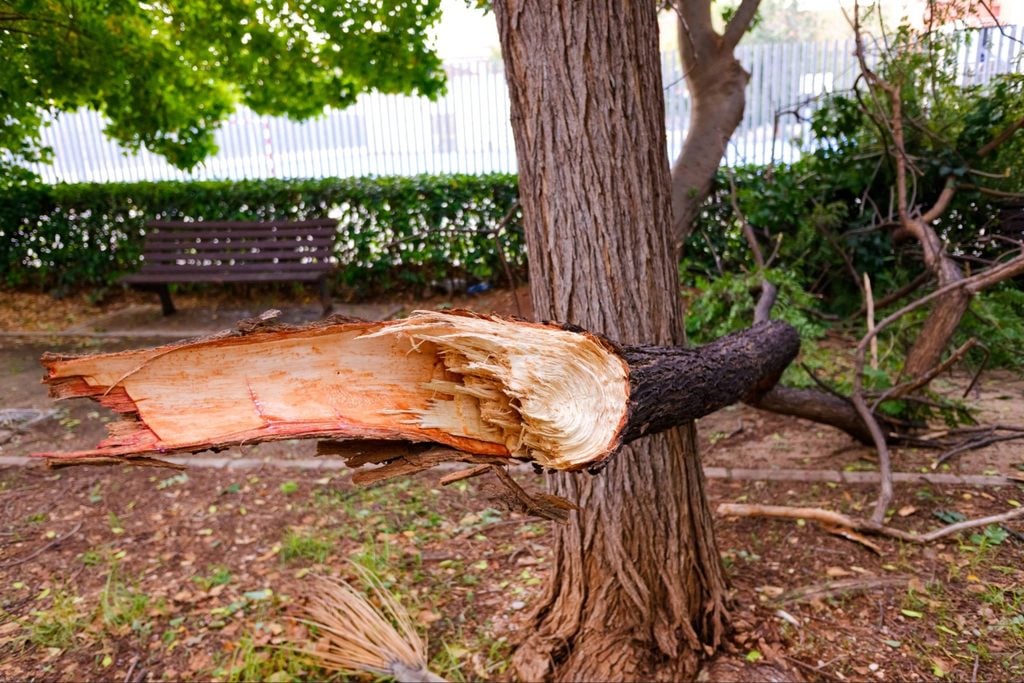
Not all storm damage appears as a limb on the ground. From a safe viewpoint, you may notice a branch hanging lower than before, torn bark at a break, or a visible crack where a limb joins the trunk.
These observations warrant assessment rather than an attempt to make the tree look even. Tell the provider where the damage appears and whether the affected branch extends over an area people use.
The canopy has lost substantial branches
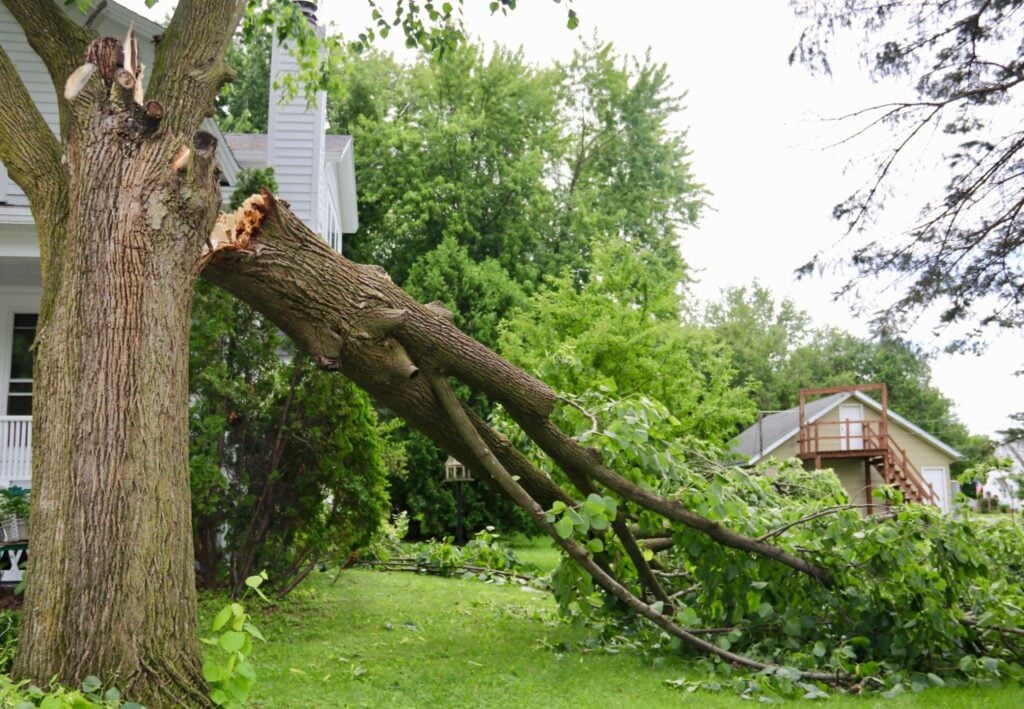
If a tree has lost a large portion of its canopy or several major limbs, ask whether routine trimming is an appropriate next step. Avoid requesting that the opposite side simply be cut back to match.
The aim should be to evaluate the remaining tree and establish suitable work—not to restore visual symmetry at any cost. A qualified tree-care professional may need to evaluate damage that involves major branch attachments or the trunk.
Branches now interfere with everyday access
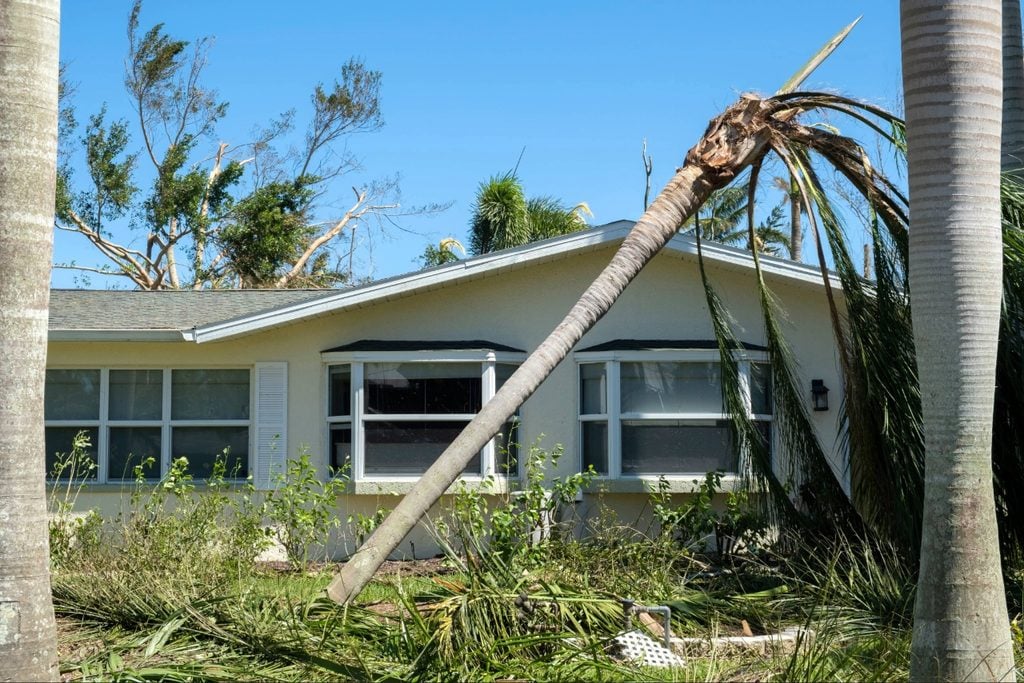
A displaced branch may obstruct a path, driveway, or outdoor seating area even when the trunk looks unchanged. Request an assessment before trying to push, tie, or cut the branch out of the way.
Until the situation is evaluated, use another route where possible. Keep children, pets, and visitors out of the affected area.
5 Warning Signs That Storm-Damaged Trees Need Professional Attention
A storm can leave damage that is easy to see, along with changes that are difficult to evaluate from the ground.
For homeowners considering a tree trimming assessment after a storm in Port Charlotte, the following five warning signs are useful details to report. They do not establish that pruning is safe or sufficient.
1. Broken Branches Are Still Hanging in the Tree
A branch that has snapped but remains suspended can be hazardous even when it appears motionless.
Do not stand beneath the branch, pull on it, or attempt to dislodge it.
Keep people and pets away from the area and contact an appropriate professional. If the branch involves electrical lines or presents immediate danger, use the relevant urgent-response service.
2. Major Branch Connections Show Visible Damage
From a safe distance, you may notice torn bark, a split branch attachment, or a limb that hangs differently after the storm.
These changes can indicate damage that needs closer professional evaluation.
Describe where the damage appears and whether the affected branch extends over a driveway, walkway, patio, or building.
3. The Tree Has Lost Several Large Branches
Extensive canopy damage deserves more consideration than simply trimming the remaining branches to restore a balanced appearance.
The amount and location of damage can affect what work is appropriate.
Ask whether routine pruning is sufficient or whether the remaining tree requires a broader structural assessment.
4. The Tree Has Developed a New Lean or Root Disturbance
A newly leaning tree, lifted soil, or exposed roots can indicate a concern involving the tree’s support system.
Do not approach the base to test the ground or determine whether the tree is stable.
These conditions should be reported promptly to an appropriate professional because branch trimming alone may not address the underlying problem.
5. Damaged Branches Affect Buildings or Frequently Used Areas
Storm-damaged branches may extend over roofs, vehicles, fences, walkways, or outdoor seating areas.
Even when the tree remains standing, the location of the damage can affect how urgently the situation needs attention.
Keep the area clear and describe the affected structures or access routes when requesting help.
Routine Trimming Inquiry or More Urgent Evaluation?
| Visible condition | Why it matters | Appropriate next step |
|---|---|---|
| Small broken branches already on the ground | May involve cleanup rather than remaining canopy damage | Ask about cleanup scope if the area is otherwise safe. |
| Hanging or partially detached branch | May fall unexpectedly | Keep clear and contact an appropriate tree-care professional. |
| Cracked major branch connection | Could involve structural damage | Request a professional evaluation before pruning. |
| Extensive canopy loss | The remaining tree condition may need assessment. | Ask whether a qualified arborist is needed. |
| New lean or disturbed roots | May indicate loss of stability | Please restrict access and arrange for a prompt professional evaluation. |
| Branch touching a power line | Potential electrical hazard | Stay away and contact the utility. |
| Large limb resting on a structure | May create additional hazards during removal | Keep clear and seek appropriate professional assistance. |
This table is intended to guide communication, not to establish whether a tree is safe or determine the appropriate pruning technique.
What Should Homeowners Do Next?
The appropriate response depends on the type of damage, its location, and whether the tree has broader structural concerns.
Some situations may be suitable for routine trimming after evaluation. Others may require specialized tree assessment, utility assistance, or emergency response.
The safest approach is to report what you can observe without entering the hazardous area or deciding which branches should be removed yourself.
When trimming alone may not answer the problem
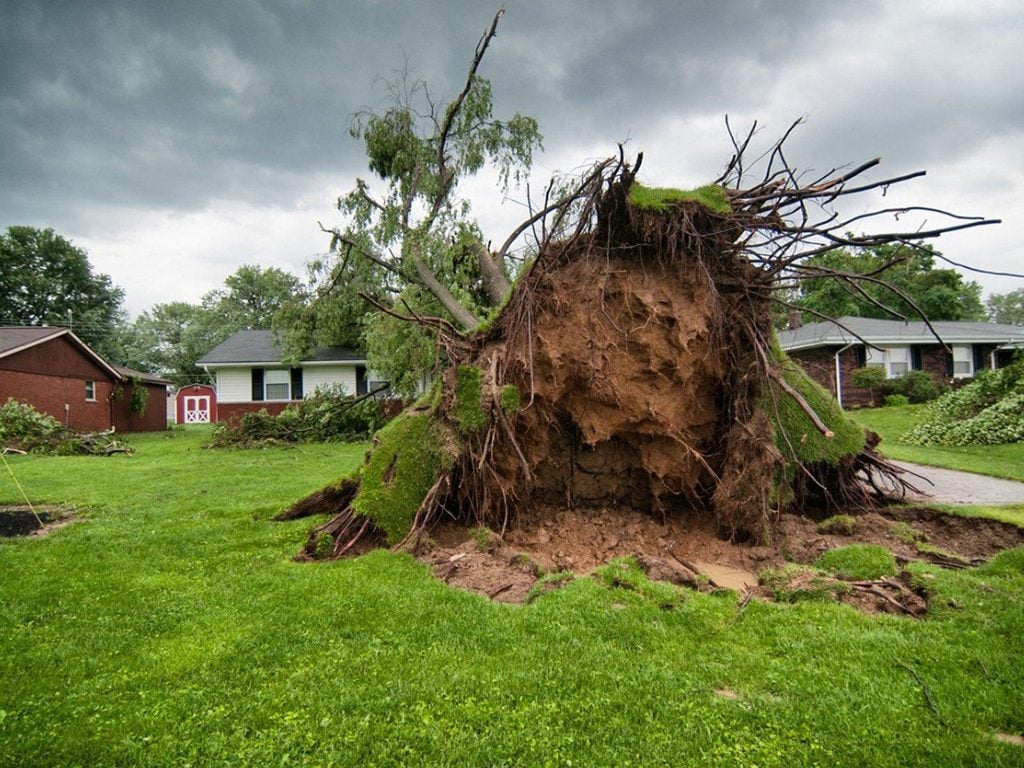
Pruning concerns branches. It should not be assumed to resolve a newly leaning trunk, disturbed roots, a major trunk split, or damage involving a structure.
Please mention these conditions during the first contact, rather than booking only a cosmetic cleanup. Ask whether the provider can evaluate the issue or whether you need a qualified arborist or another specialist.
Similarly, a tree that remains standing is not automatically safe. A ground-level photograph cannot establish its stability, and the absence of obvious damage does not guarantee that none occurred. If something has visibly changed and you cannot explain it, describe the change instead of trying to diagnose it yourself.
The UF/IFAS guide to assessing hurricane-damaged trees provides additional information about evaluating trees after severe weather. Significant trunk, root, or structural damage may require a qualified tree-care professional to determine whether pruning is appropriate or whether other action is needed.
What to prepare before contacting a provider
Useful information can make the initial conversation clearer without putting you at risk. Collect only what you can observe safely:
- Location: Front yard, side yard, backyard, or another part of the property.
- Visible changes: Hanging branch, torn limb, new lean, trunk crack, or disturbed ground.
- Nearby features: Buildings, utility lines, driveways, fences, patios, and walkways.
- Access limitations: Gates, blocked routes, or wet ground along the approach.
- Photographs: Wide views taken from a safe location, without approaching the damaged tree.
After heavy rainfall, note visibly wet or disturbed ground, but do not enter the area to test it. Let the provider determine appropriate access for an assessment and any proposed work.
Questions to ask before approving trimming
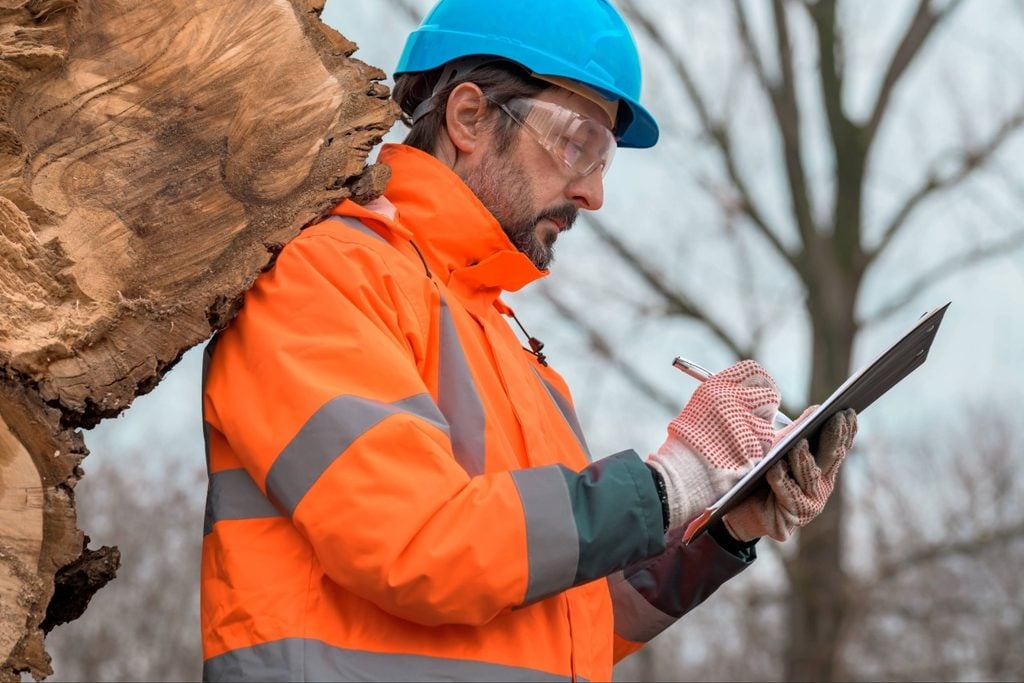
Ask what the proposed work addresses and what remains uncertain. A useful discussion should distinguish damaged-branch pruning from broader concerns about the tree.
You can ask:
- Which damaged branches are included in the proposed work?
- Is any visible damage outside the scope of routine trimming?
- Does the tree need another type of evaluation before pruning?
- How will access around nearby landscaping and outdoor features be handled?
- What debris handling is included in the quote?
Do not assume cleanup, removal, or other tasks are included unless the scope says so.
If the damage involves major structural concerns, ask whether a qualified arborist should evaluate the tree before work begins. The International Society of Arboriculture’s tree-care resources can help homeowners understand professional tree care and arborist qualifications.
Common Mistakes to Avoid When Assessing Storm-Damaged Trees
After a storm, homeowners often want to restore their property as quickly as possible. However, moving too quickly can lead to unsafe decisions or work that does not address the full extent of the damage.
Approaching a Tree to Get Better Photographs
Photos can help a professional understand what happened, but a closer image is never worth entering a hazardous area.
Take photographs only from a safe location. If you cannot document the damage safely, please describe what you can see instead.
Assuming a Standing Tree Is Safe
A tree may remain upright despite damage to its branches, trunk, or root system.
Do not rely on appearance alone to determine stability. If the tree has visibly changed after a storm, report those changes and ask what evaluation is appropriate.
Requesting Cosmetic Trimming Before Structural Concerns Are Addressed
A damaged canopy may look uneven, but making the tree symmetrical should not be the first priority.
Ask whether the remaining branches and structural connections need assessment before requesting appearance-focused pruning.
Attempting to Remove Hanging Branches
Partially detached limbs can move or fall unexpectedly.
Do not pull, shake, tie, or cut suspended branches yourself. Please keep the area clear and reach out to a qualified professional.
Assuming Every Landscaping Company Handles Emergency Tree Work
Routine trimming, emergency tree removal, and formal tree-risk evaluations may involve different equipment, qualifications, and service arrangements.
Explain the damage when making initial contact and ask whether the provider can handle the situation or recommend the appropriate specialist.
Overlooking Cleanup and Access Requirements
A trimming quote may not automatically include debris hauling, removal of larger damaged sections, or restoration of affected landscaping.
Ask what is included, how nearby features will be protected, and whether additional services are required.
A clear scope helps homeowners understand the proposed work before authorizing it.
Frequently asked questions
Should I wait for a hanging branch to fall?
No. Keep the area beneath and around it off-limits and contact an appropriate professional. If it involves utility lines or immediate danger, use the relevant urgent-response channel rather than waiting for a routine appointment.
Can I judge the damage from photos?
Photos can help explain what you see, but they do not replace an on-site assessment. Take them only from a safe position; a closer image is not worth approaching a suspected hazard.
Does every storm-damaged tree need removal?
Do not assume either removal or trimming is the answer. The appropriate response depends on the damage and the condition of the remaining tree. Ask for evaluation before deciding on the work.
Can a storm-damaged tree be saved with trimming?
Some storm-damaged trees may be suitable for pruning, depending on the location and extent of the damage and the condition of the remaining tree. However, trimming should not be assumed to resolve major trunk, root, or structural concerns. An appropriate professional assessment is needed before deciding on the work.
How soon should I request a tree assessment after a storm?
The urgency depends on the damage and the surrounding hazards. Hanging branches, new leaning, disturbed roots, and damage affecting frequently used areas warrant prompt attention and restricted access. If electrical lines or immediate danger are involved, contact the appropriate urgent-response service rather than waiting for a routine trimming appointment.
Request a Tree Trimming Assessment After a Storm in Port Charlotte
Storm damage can affect a tree in different ways, from broken branches to more serious concerns involving major limb connections, the trunk, or roots.
Before requesting routine trimming, observe the damage from a safe location and identify whether the surrounding area needs to remain off-limits.
A tree trimming assessment after a storm in Port Charlotte can help clarify whether damaged branches are suitable for pruning or whether the situation requires additional professional evaluation.
Document the visible changes, identify nearby structures and access concerns, and ask what work the proposed scope includes.
Fine Design Outdoor Solutions provides tree trimming and pruning as part of its landscaping services in Port Charlotte.
For non-emergency inquiries, Get a Free Quote to describe the storm damage and discuss whether the requested work falls within Fine Design’s available services.
If you suspect an immediate hazard, keep the area clear and contact the appropriate emergency service, utility provider, or qualified tree-care professional rather than waiting for a routine landscaping appointment.