
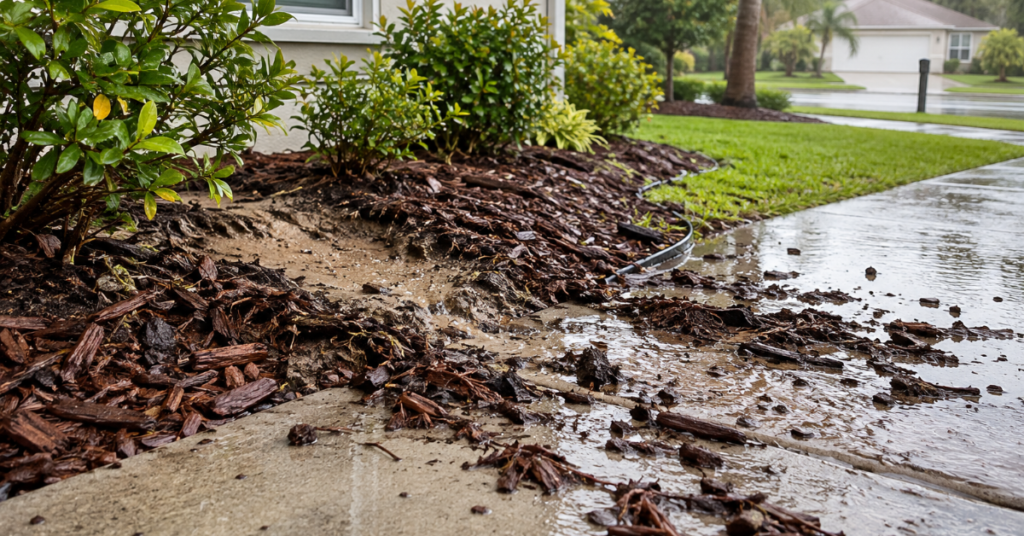
Mulch washing out after heavy rain is a common frustration when a strong downpour sends mulch across the lawn, walkway, or driveway. Before replacing it, take a closer look at where the water entered the bed, the path it followed, and where the displaced mulch ended up. Those clues can help determine whether the bed simply needs maintenance or whether its layout and water movement deserve a closer look.
For Port Charlotte homeowners, heavy rainfall is an important consideration when maintaining mulched landscape beds. Simply adding more mulch or installing a taller border may not prevent the problem from happening again if concentrated runoff, bed height, or the surrounding layout is contributing to the washout.
Start with the washout pattern
Once conditions are safe, photograph the affected bed before raking everything back into place. Include the surrounding lawn, pavement, roof edges, and downspout outlets in your photos—not just the bare patch.
Look for three points: where water appears to enter, where it travels through the bed, and where mulch collects afterward.
This is highly relevant: UF/IFAS specifically notes that Florida’s heavy rains can wash away mulch and erode soil around plant roots. Gardening Solutions
Useful clues include:
- A narrow trail through the mulch: Check for a concentrated source of water uphill or directly above that point.
- Mulch piled along the downhill edge: Look at the slope of the bed and the route water takes toward its border.
- Mulch spread across a walkway: Check whether the bed surface sits higher than the pavement and whether water crosses that edge.
- Bare soil beneath a roof edge or outlet: Note whether water appears to land repeatedly in the same place.
- Standing water behind edging: Record where it collects and whether it remains after nearby areas have drained.
These patterns are clues, not a diagnosis. A photo during light rain, taken from a safe sheltered location, may help clarify the route. Do not go outside during dangerous weather just to investigate.
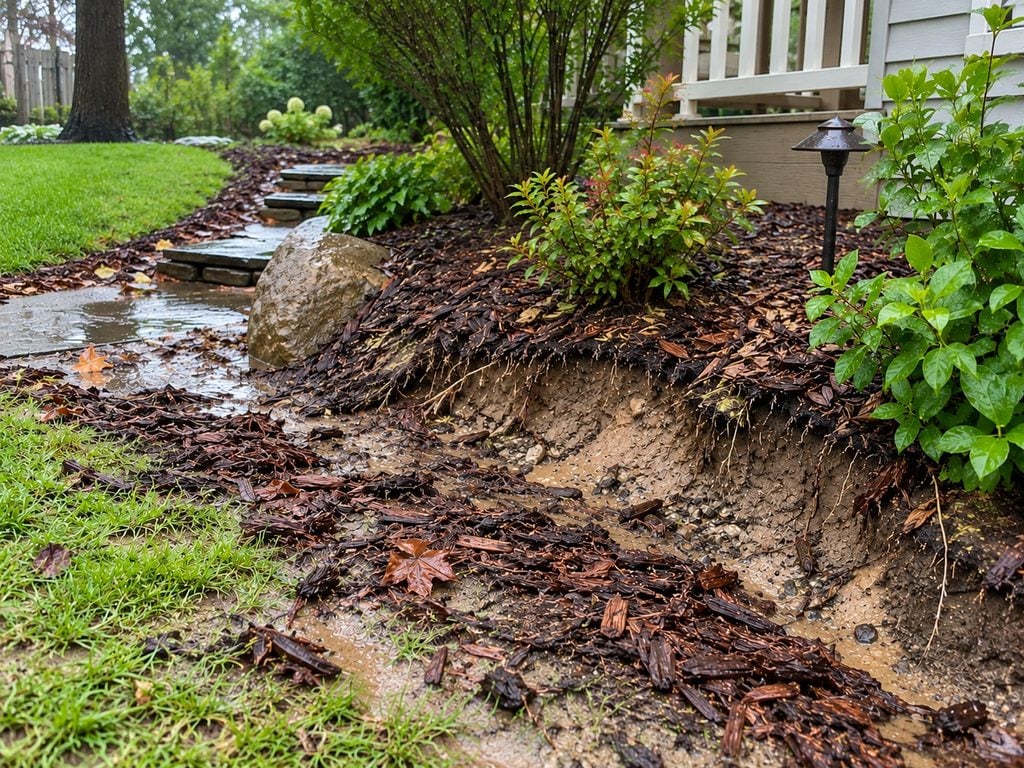
Check for concentrated water before changing the mulch
A bed receiving ordinary rainfall presents a different planning problem from one receiving runoff from a roof, driveway, or larger section of the yard.
Check whether a downspout empties into the affected area. Also look for runoff arriving from adjoining pavement or higher ground. The spot where mulch disappears may be the end of a water path that starts well outside the planting bed.
Before changing anything, ask:
- Does this bed receive water from somewhere else?
- Is the washout directly below a roof edge or outlet?
- Has a recent change to a walkway, bed, or yard altered the route?
- Where would water go if the current exit were blocked?
Avoid redirecting runoff toward the house, neighboring property, or an area that already holds water. If the issue involves roof drainage or persistent standing water, seek an appropriate evaluation rather than treating it only as a mulching problem. Do not assume routine bed maintenance includes drainage-system work.
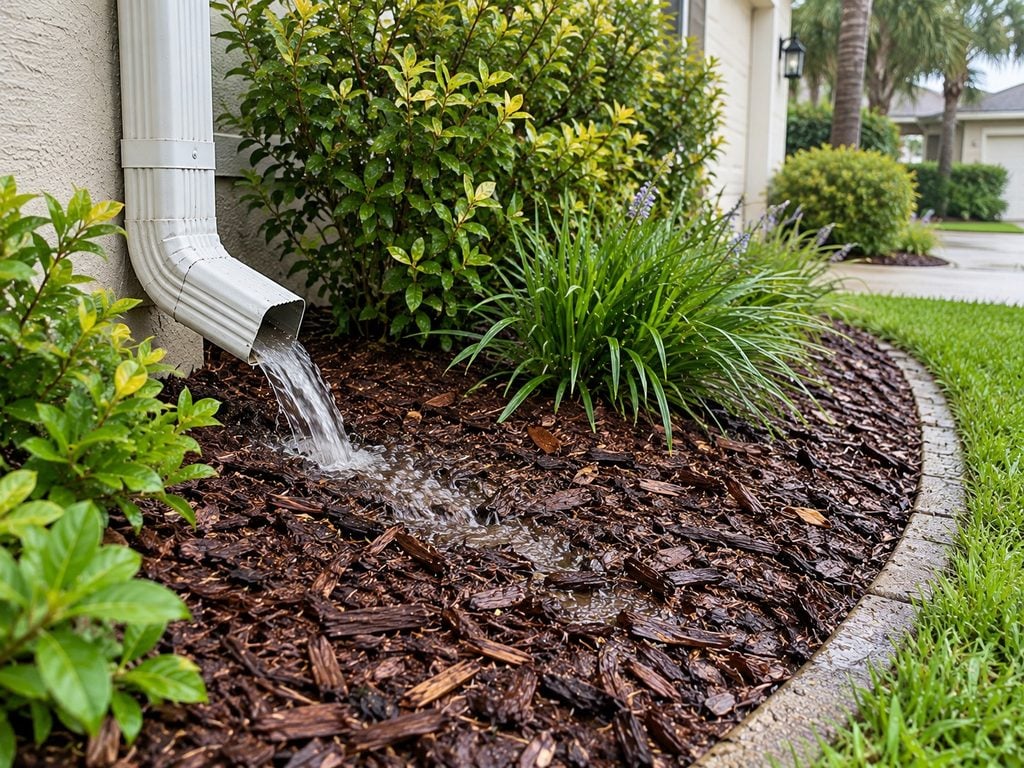
Review the bed height and mulch buildup
Compare the finished mulch surface with the surrounding lawn, edging, and pavement. Pay particular attention to places where loose mulch sits at or above the edge of a walkway.
Before approving another application, ask whether the bed needs preparation or redistribution instead. Repeatedly adding material without reviewing the existing layer can make it harder to understand the bed’s actual shape.
Check for:
- Uneven piles left from an earlier application.
- Mulch heaped along a border or around plants.
- Bare channels next to areas with accumulated material.
- Soil exposed or displaced beneath the mulch.
Do not simply fill every channel with more mulch if water repeatedly follows that route. First determine whether the issue is the surface arrangement or water moving through the bed.
For a homeowner dealing with both washed-out mulch and exposed sandy soil, photograph the soil as well. Ask whether soil movement needs attention before the bed is refreshed. A new surface layer should not conceal an unresolved problem.
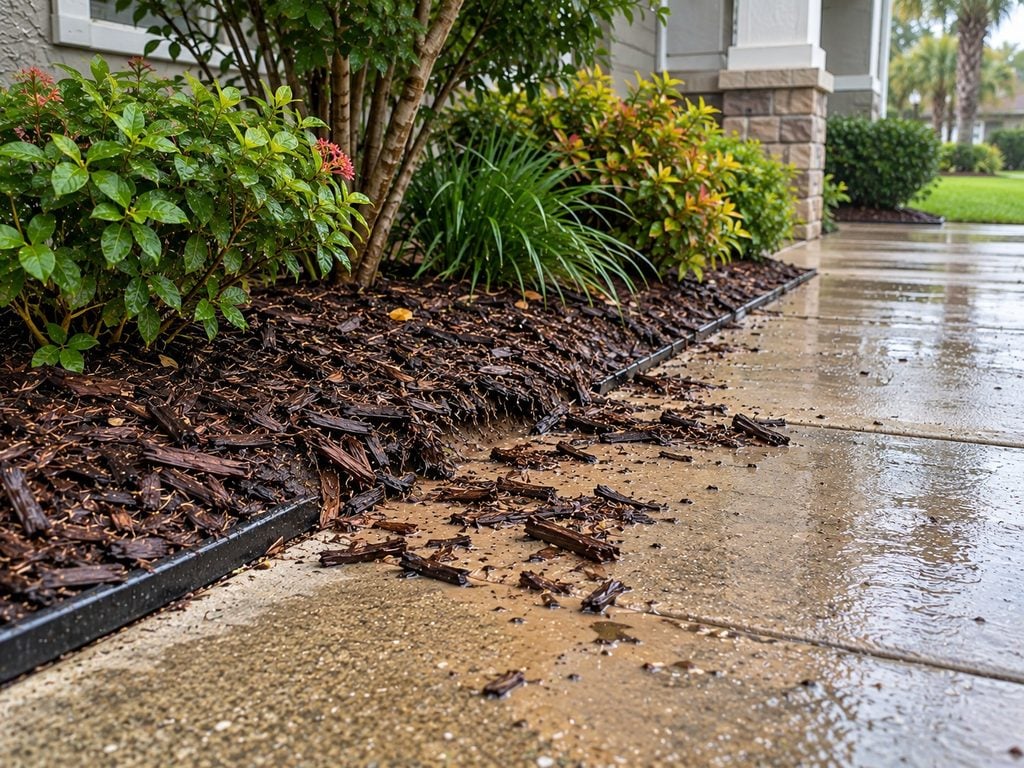
Would edging or concrete curbing help?
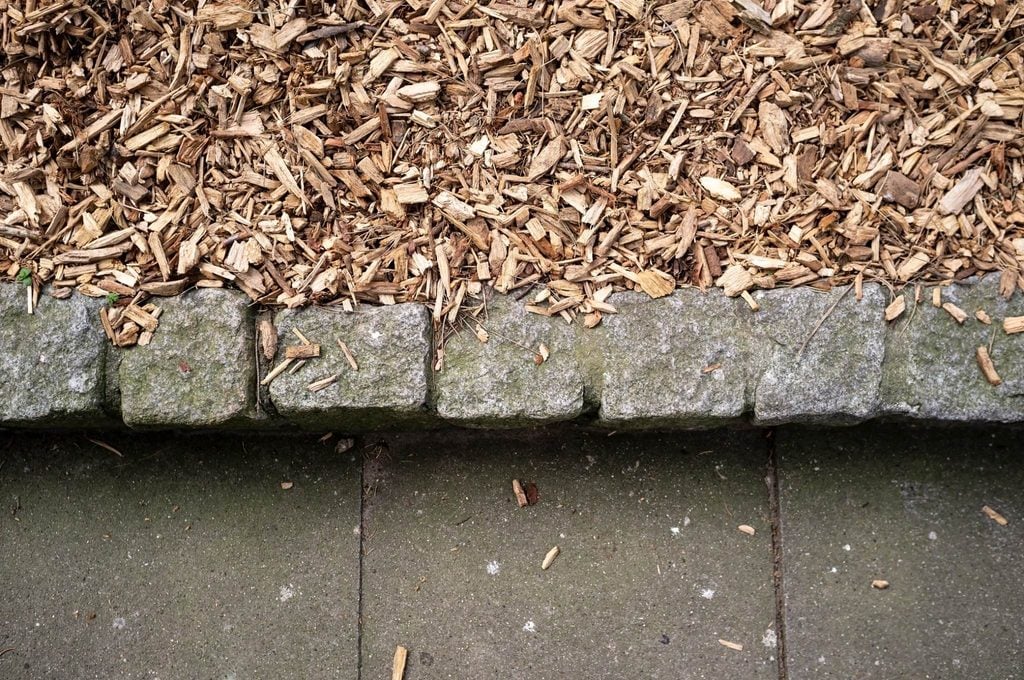
Edging deserves a close look when mulch repeatedly spills onto a lawn or walkway. But a border should be planned around how the bed handles water, not just how it looks.
Fine Design Outdoor Solutions offers concrete curbing as part of its landscaping services. If you are considering it, discuss the bed’s height, shape, maintenance access, and water path together.
Questions worth asking include:
- Where does water currently leave the bed?
- Would the proposed border interrupt that route?
- How will the mulch surface relate to the top of the border?
- Is the existing bed shape suitable, or should the layout be reconsidered?
Concrete curbing should not be treated as a substitute for resolving concentrated runoff. A taller boundary is not automatically the right answer, especially if water already collects along the edge.
Should you switch mulch materials?
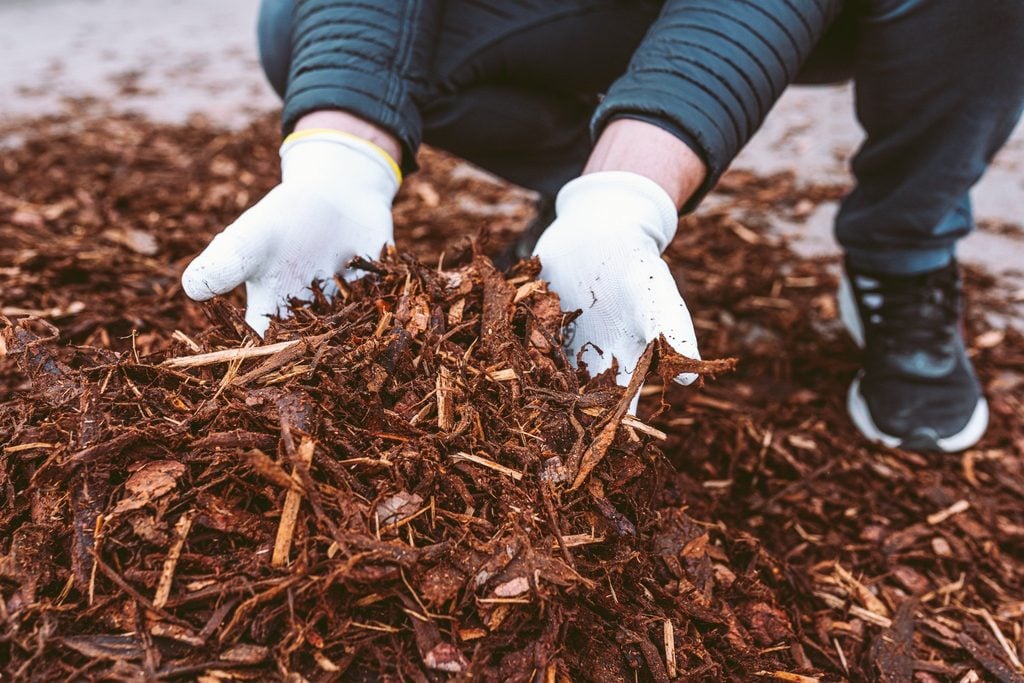
A different mulch may be worth discussing, but choosing a replacement before understanding the washout can put the decisions in the wrong order.
When reviewing options, explain where the bed sits, how much runoff appears to enter it, and what happened during the rain. Ask how the proposed material fits those conditions and what maintenance it will require.
Avoid assuming that a heavier material will solve every problem. If water has cut a route through the bed or displaced the soil underneath, address that observation as part of the plan rather than relying on a material change alone.
The useful question is not simply, “Which mulch stays put? “It is. “What combination of bed preparation, layout, edging, and mulch makes sense here? ”
Decide between maintenance and a layout review
A bed refresh may be a reasonable starting point when displacement is limited and there is no obvious recurring water channel. Repeated washouts in the same place deserve a broader look before another application.
Consider requesting a layout review when:
- The same section loses mulch after multiple rain events.
- Water crosses several beds before reaching a walkway or patio.
- Existing borders appear to trap water.
- You are already planning changes to adjacent planting beds or paved areas.
Fine Design provides mulching and bed maintenance, along with landscape design, 2D AutoCAD plans, and CAD drafting. These landscaping services give homeowners a way to discuss routine bed care and larger layout changes together. Confirm the scope of any proposed work, especially if your observations suggest a separate drainage concern.
Frequently asked questions
Should I replace washed-out mulch immediately?
Document the pattern first. Clear displaced material from walking areas when it is safe, but avoid immediately covering the evidence in the bed. Photos can make a maintenance discussion more useful.
Will adding more mulch stop another washout?
Do not assume it will. Check the existing layer, bed height, and water path before adding material. If runoff is concentrated in one spot, more mulch alone does not address its source.
Can concrete curbing prevent mulch from washing away?
It may be an option to discuss for the bed boundary, but it should not be presented as a guaranteed fix. Review how water enters and leaves the bed before deciding on the border design.
What should I have ready for a quote?
Bring photos of the washout, a wider view of the surrounding area, and notes about whether it happens repeatedly. Point out nearby downspouts, pavement, standing water, and any recent landscape changes.
If your beds need attention after heavy rain, Get a Free Quote from Fine Design Outdoor Solutions to discuss mulching, bed maintenance, or landscape planning for your Port Charlotte property.