
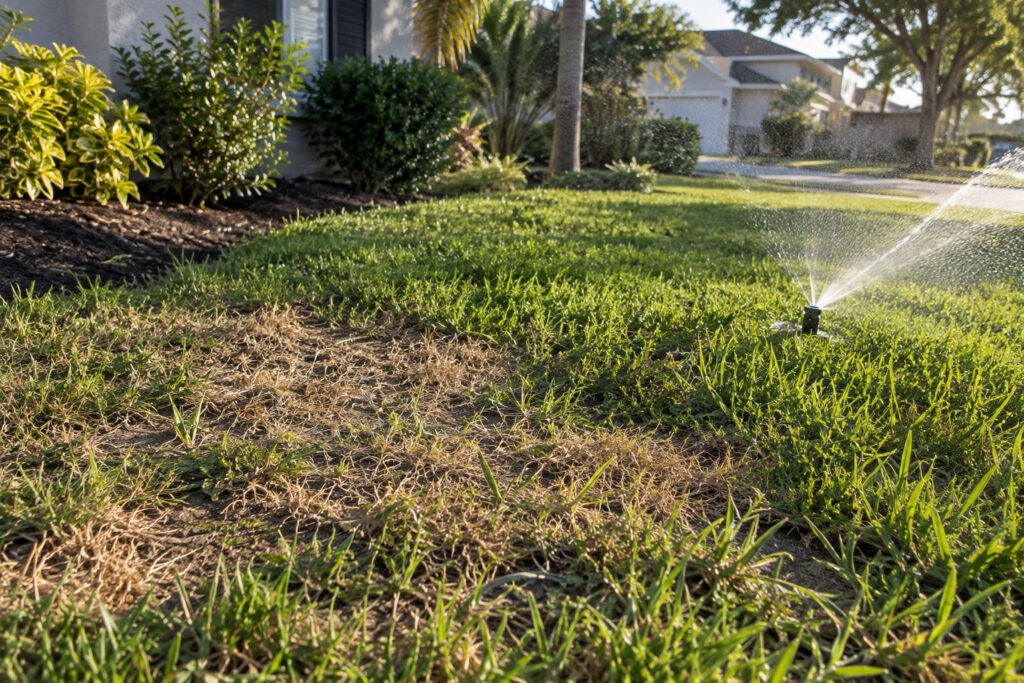
Dry patches in lawn after watering can appear even when the rest of the grass looks wet after the sprinklers run. Before increasing the watering time for the entire yard, check whether the affected patch is actually receiving the same sprinkler coverage as the healthy grass around it.
For Port Charlotte homeowners, the useful first question is not simply, “How long should I water?” It is, “What is happening in this particular spot?” Uneven sprinkler coverage, blocked spray, a zone that does not run, or a recent change to the landscape can all deserve a closer look. Brown grass alone, however, does not establish an irrigation problem.
First, check whether the patch is actually dry
Compare the affected area with a nearby healthy section after the same watering cycle. Check the soil beneath the surface rather than judging by wet grass blades alone. Use a small hand tool carefully, avoiding sprinkler heads and known buried equipment.
When investigating dry patches in lawn after watering, checking the soil beneath both healthy and stressed grass can help reveal whether they are receiving similar moisture.

Look for a difference in moisture between the two areas. Is the soil under the brown patch noticeably drier? Is it wet while the grass still looks stressed? Does water collect on the surface or run away before soaking in?
Because dry patches in lawn after watering can occur under different soil conditions, compare what you see above ground with the moisture you find below the surface.
These observations help narrow the next step:
- Dry soil beside moist soil: Start by checking sprinkler coverage and operation.
- Moist soil beneath brown grass: Do not automatically add more watering time. The grass may need an assessment beyond irrigation.
- Puddling or runoff: Record where it occurs and discuss it before changing the schedule.
In sandy soil, a damp surface is not a complete picture of moisture below it. After heavy rain, do not assume that every part of the yard absorbed an equal amount of water.
Watch each irrigation zone operate
If you are familiar with the controller, use its manual test function to observe one zone at a time. Follow the controller instructions, and avoid changing multiple settings during your first inspection.
Watching each zone from start to finish can help determine whether dry patches in lawn after watering correspond with areas receiving inconsistent sprinkler coverage.
Stay out of roadways and watch for slippery pavement. Please do not open electrical components or dig around buried lines to investigate a problem yourself.
Look for missed areas
Watch the entire affected patch through the watering cycle. Check whether spray actually reaches it, rather than stopping several feet short or passing over it without consistent coverage.
Some dry patches in lawn after watering may appear where sprinkler spray falls short, is redirected, or does not consistently reach the affected grass.
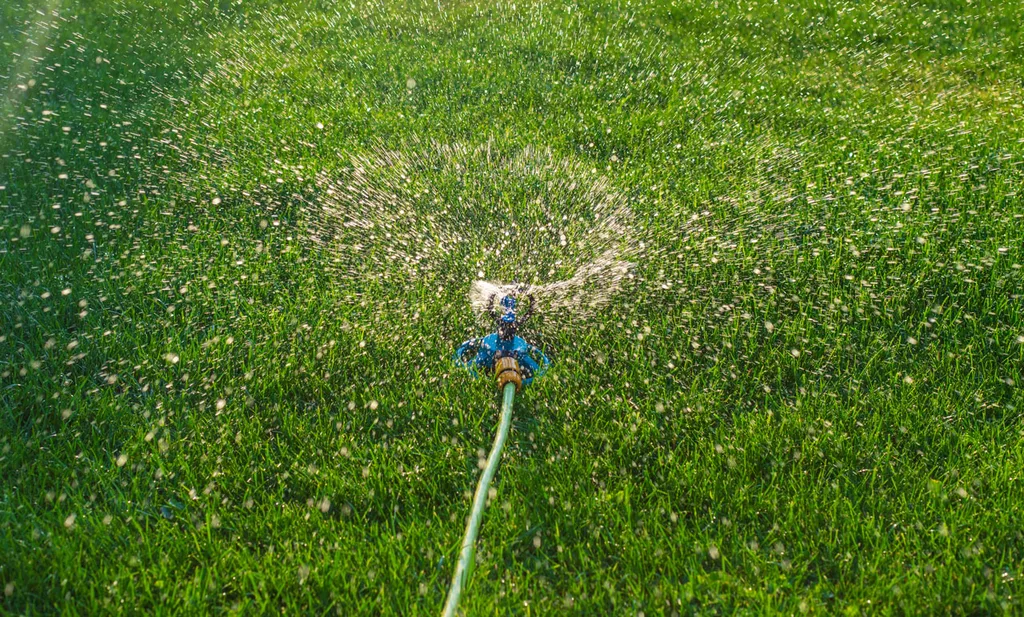
Pay attention to the edges of the lawn, narrow strips beside walkways, and areas behind planting beds. A head can appear to work normally while directing much of its water onto pavement or away from the intended grass.
Check for visible obstructions
Grass growing over a sprinkler head, an overhanging plant, or an object placed in the yard may interrupt the spray. Raised soil or mulch around a head may also affect how it operates.
When dry patches in lawn after watering appear near planting beds or overgrown lawn edges, check whether vegetation, mulch, or other objects are interfering with the spray pattern.
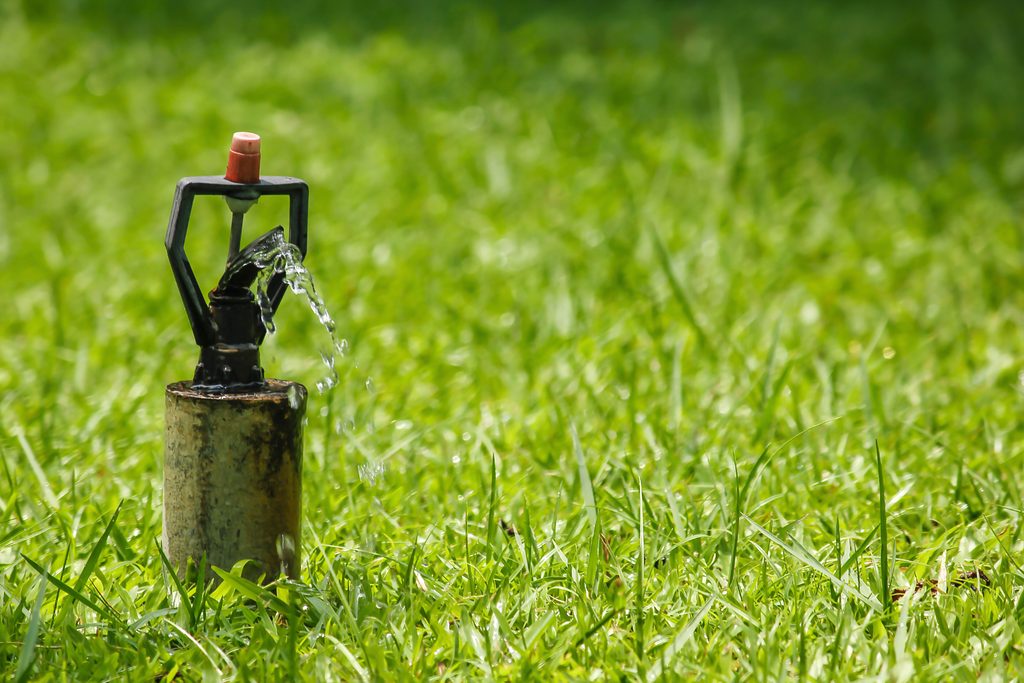
Move temporary objects where practical, but do not cut plants back aggressively or raise sprinkler heads without a plan. A changed bed layout may call for irrigation adjustment rather than repeated trimming to accommodate an old spray pattern.
Notice abnormal operation
If dry patches in lawn after watering consistently appear within one irrigation zone, observe how each sprinkler head operates compared with nearby heads.
Useful observations to record include:
- A head that does not rise or spray.
- A rotating head that remains pointed in one direction.
- Water bubbling around the base of a head.
- A spray pattern that looks broken or unusually weak.
- Several heads in the same zone are performing differently than those in neighboring zones.
These are clues to share with an irrigation service provider, not enough information to diagnose a particular broken component. Avoid forcing a head to rotate or probing a nozzle with a sharp object.
Compare water coverage instead of guessing
Identical, straight-sided containers can help you compare how much sprinkler water reaches different locations. Place them securely across the affected area and nearby healthy grass, away from foot traffic, then run the same zone for a measured period.
A simple container comparison can provide useful information when dry patches in lawn after watering appear even though the irrigation system seems to be running normally.
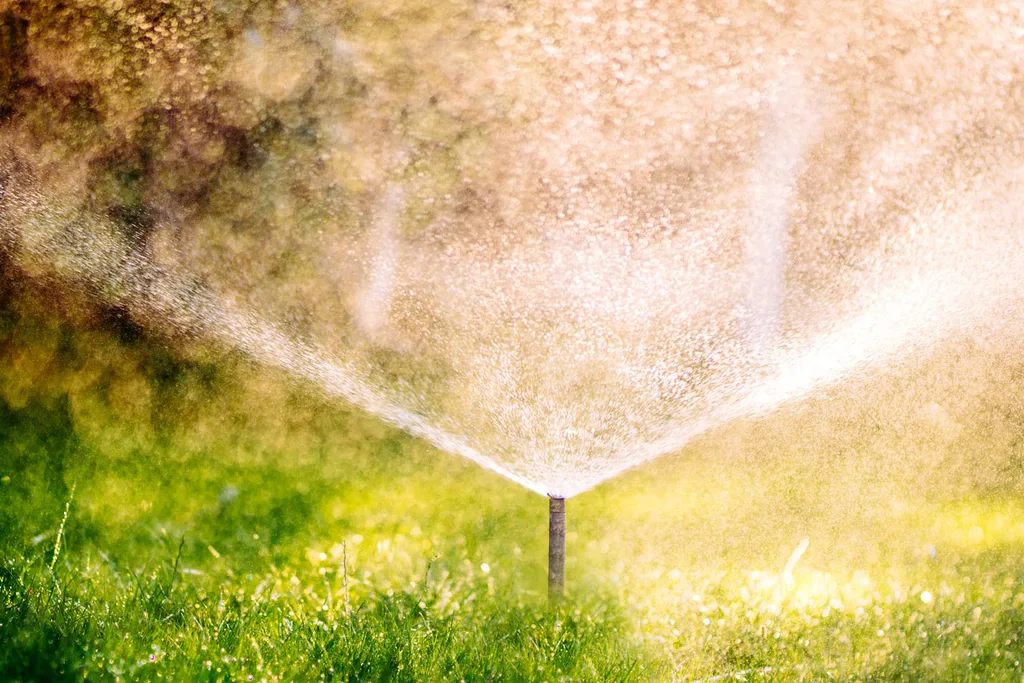
Afterward, compare the collected amounts and remove the containers. A consistent difference between locations is a useful indication that coverage deserves attention. This simple assessment does not determine the lawn’s exact watering needs or identify the cause of every brown patch.
If one location receives less water, extending the whole zone’s runtime may give already-wet areas more water without correcting the underlying distribution problem.
UF/IFAS guidance on watering Florida lawns also recommends using straight-sided containers to check whether an irrigation system is applying water uniformly across the lawn.
Review the controller without immediately adding time
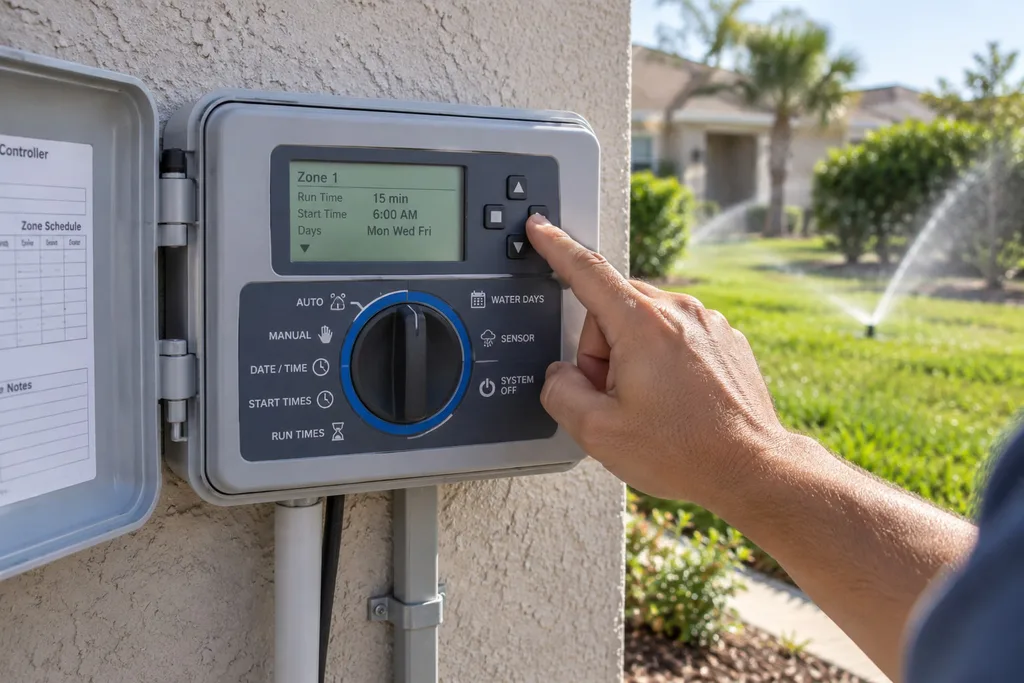
Check the current settings against what you expected the system to do. Confirm the clock, active watering days, zone runtimes, and whether an intended program is enabled. In addition, please check if multiple start times are creating unintended cycles.
When investigating dry patches in lawn after watering, reviewing the controller can also help confirm whether the affected zone is running when and for as long as expected.
Before establishing a schedule, confirm the current Charlotte County watering restrictions that apply to your property rather than relying on a neighbor’s schedule or assuming the controller’s existing settings are suitable.
Heat, rainfall, soil conditions, grass type, and irrigation coverage all matter when evaluating watering. There is no single runtime that this visual inspection can establish for every Port Charlotte lawn.
Consider what changed before the patches appeared
Recent landscape work can provide an important clue. Recent landscape work can provide an important clue. Consider whether the problem began after sod installation, a new planting bed, paver work, concrete curbing, or changes to mowing and edging.
If dry patches in lawn after watering began after landscape changes, compare the current sprinkler pattern with the new lawn edges, planting beds, pavers, or other modified areas.
A new landscape boundary may no longer match an older sprinkler layout. Newly installed sod also deserves its establishment guidance rather than an assumption that the previous lawn’s schedule will work unchanged.
If lawn replacement is being considered, review irrigation before installing new sod. Replacing damaged grass without addressing an observed coverage problem leaves the issue unresolved.
Addressing dry patches in lawn after watering may therefore require looking at both irrigation coverage and recent changes to the surrounding landscape.
Fine Design Outdoor Solutions provides irrigation system installation and repair, sod installation, and landscape design through its landscaping services. Those related services are relevant when lawn damage and a changed landscape layout need to be considered together.
What to prepare for an irrigation assessment
Bring a few clear observations rather than trying to identify the failed part yourself. Photograph the patch and note which zone serves it, when you first noticed it, whether the soil is dry or wet after watering, and any visible sprinkler problems. A short video of the zone operating may also help explain what you observed.
Documenting dry patches in lawn after watering with photographs, soil observations, and a short video of the irrigation zone can give the service provider useful information before an assessment.
For help evaluating uneven coverage or planning an irrigation repair in Port Charlotte, contact Fine Design Outdoor Solutions to Get a Free Quote.
Frequently asked questions
-
Should I water longer if only one patch is dry?
Check coverage first. If that patch is being missed, a longer cycle may add water elsewhere but will not resolve the missed area.
-
Can a sprinkler be working but still miss part of the lawn?
Yes. A visible spray does not establish complete coverage. Observe its direction, reach, movement, and any obstructions between the head and the affected grass.
-
Should I replace brown grass before repairing irrigation?
First establish whether irrigation is contributing to the damage. If a coverage problem is present, include its correction in the lawn replacement plan rather than treating new sod as the fix.
-
What if the soil is wet but the grass is brown?
Do not assume more water is the answer. Record the conditions and request a lawn assessment to help determine whether irrigation or another issue needs attention.