
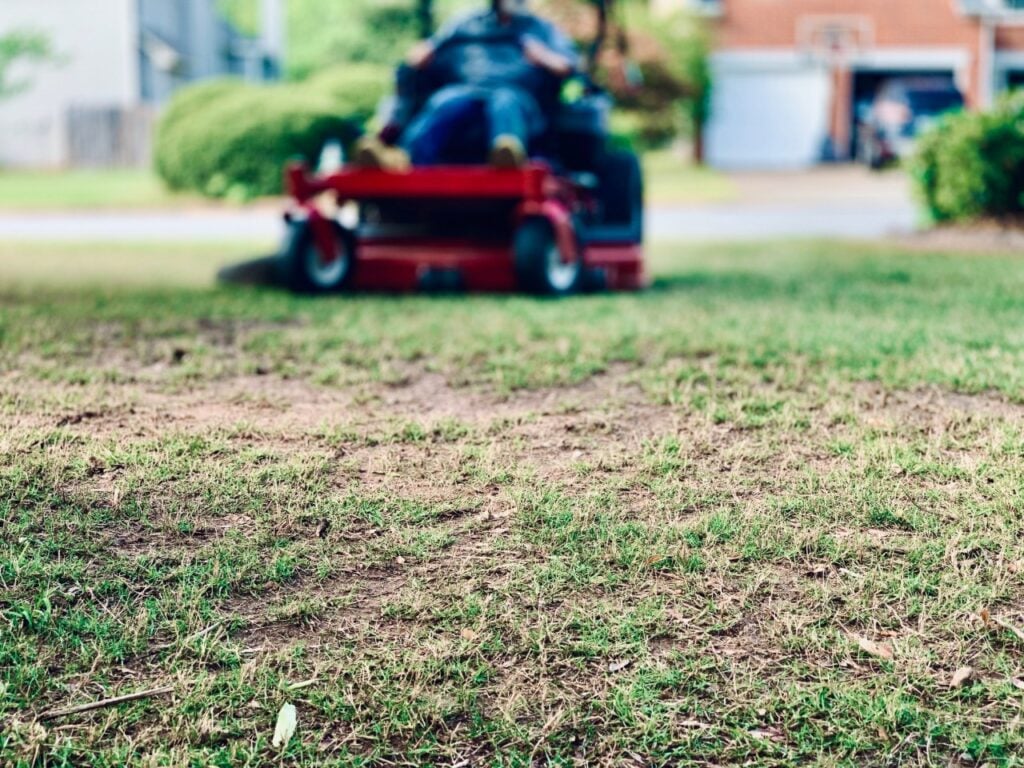
Lawn scalping is one possible reason your grass looks green before mowing but turns brown immediately afterward. It occurs when a mower removes too much leafy growth, exposing the lower, less-green portions of the grass. In more severe cases, the mower may damage the turf or scrape the soil.
For Port Charlotte homeowners, seeing brown patches immediately after a mowing visit can be frustrating, especially when the lawn appeared healthy beforehand. However, discoloration does not automatically mean the grass is dead, diseased, or suffering from inadequate irrigation.
Florida lawns experience changing growth rates, heavy seasonal rainfall, heat, and varying soil conditions. These factors can affect how often you need to mow the lawn and how much growth you can reasonably remove during each visit.
The first step is to determine when the discoloration appeared and whether its pattern corresponds with the mowing route, cutting height, or uneven ground.
Before increasing irrigation, applying fertilizer, or purchasing replacement sod, examine the remaining grass and consider whether the mowing approach needs adjustment.
This guide explains how to recognize lawn scalping, seven costly mowing and maintenance mistakes to avoid, and practical steps Port Charlotte homeowners can take to support lawn recovery and prevent recurring damage.
What Is Lawn Scalping and How Can You Recognize It?
Scalping does not always leave the entire yard looking bare. It can show up as scattered pale patches, brown strips, or a broadly discolored lawn after an unusually short cut.
Lawn scalping can occur across an entire lawn or affect only specific areas where the mower cuts closer to the ground. The severity may range from exposed brown stems and thatch to damaged turf with visible soil. The timing of the discoloration is particularly useful when distinguishing a mowing-related problem from a condition that was already affecting the grass.
Look for these clues:
- Discoloration appears immediately after mowing. Previously, green growth had been removed, revealing the lower lawn canopy.
- Brown areas follow mower passes or turns. The pattern may point to how the equipment moved across the yard.
- High spots look worse. A mower can cut closer over a raised area even when its height setting has not changed.
- The remaining grass is noticeably short. You may see more stems, thatch, or exposed soil than before.
These clues suggest scalping, but they do not prove that every brown area has the same cause. If a patch was brown before mowing, or discoloration continues spreading afterward, avoid assuming a higher mower setting alone will solve it.
One of the most useful ways to identify possible lawn scalping is to compare photographs taken before and after mowing. If the discoloration appears suddenly and follows the mower’s path, cutting height and equipment movement deserve closer attention. If the affected area continues to expand between mowing visits, you may need to investigate additional lawn conditions.
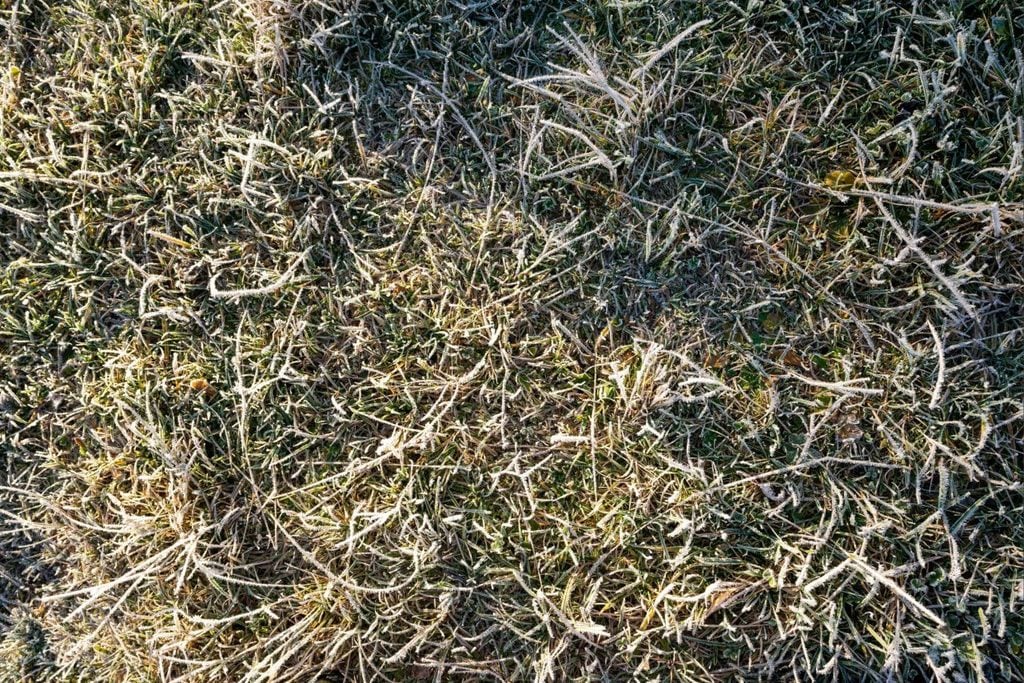
7 Costly Mowing and Maintenance Mistakes That Can Damage Your Lawn
1. Cutting the Grass Below Its Recommended Mowing Height
There is no single correct mowing height for every Florida lawn. Grass type matters, and a setting suitable for one lawn may be too short for another.
If you do not know your grass type, identify it before choosing a numerical cutting height. Asking for a very short cut simply to extend the time between visits can create an avoidable problem.
An unsuitable cutting height is a common contributor to lawn scalping. Florida turfgrasses have different growth characteristics, and some varieties maintain a healthier canopy at taller mowing heights than others. Identifying your grass type is an important step before adjusting the mower or requesting a shorter cut.
| Florida turfgrass | General mowing height |
|---|---|
| Standard St. Augustine grass cultivars | 3.5–4 inches |
| Dwarf St. Augustine grass cultivars | 2–2.5 inches |
| Bahia grass | 3–4 inches |
| Centipede grass | 1.5–2 inches |
| Zoysia grass | 1–2.5 inches, depending on cultivar |
| Bermuda grass | 0.5–1.5 inches, depending on cultivar and equipment |
The UF/IFAS mowing recommendations for Florida lawns provide guidance on appropriate mowing practices for Florida turfgrasses. Following recommendations for your specific grass type can help maintain adequate leaf growth and reduce the likelihood of lawn scalping caused by excessively short cuts.
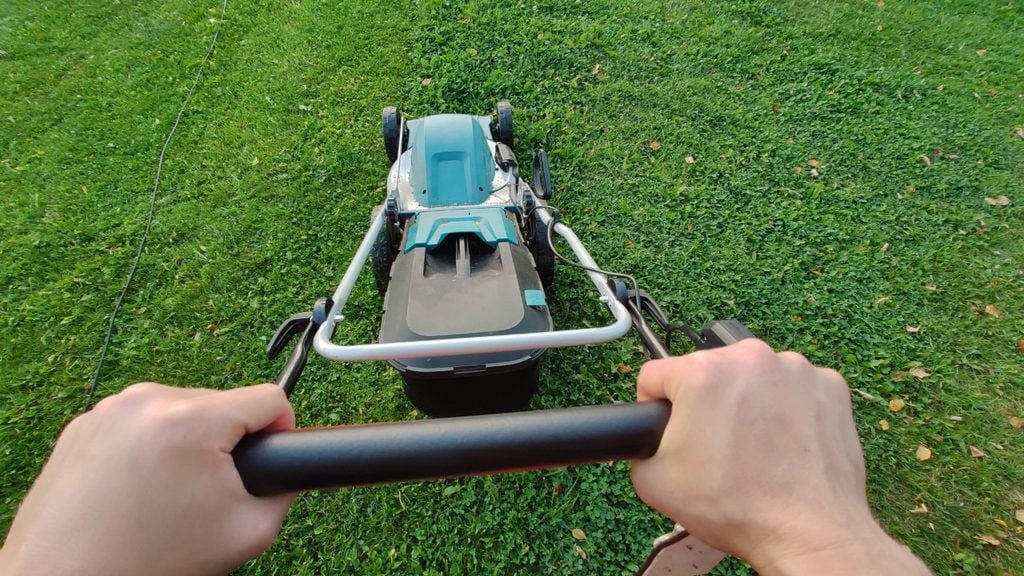
These are general reference ranges, not universal settings. Cultivar, equipment, growing conditions, and current extension recommendations should guide the final mowing height.
2. Removing Too Much Grass in a Single Mowing Visit
A lawn that has grown taller between cuts can look brown when it is brought back down in one pass. This is especially worth discussing after rain interrupts the usual mowing schedule.
Rather than forcing an overgrown lawn immediately back to its previous height, ask whether it should be brought down gradually. The goal is to maintain useful leaf growth, not to achieve the shortest possible finish.
A widely recommended mowing practice is the one-third rule, which generally advises removing no more than one-third of the grass blade’s height during a single mowing. For example, if the intended mowing height is three inches, mowing when the grass reaches approximately four and a half inches follows this guideline.
When a lawn becomes overgrown because of rainfall, scheduling interruptions, or rapid seasonal growth, gradually reducing its height may be more appropriate than immediately returning it to its usual cutting height. This approach can help reduce mowing stress and the likelihood of lawn scalping.
3. Ignoring High Spots and Uneven Lawn Surfaces
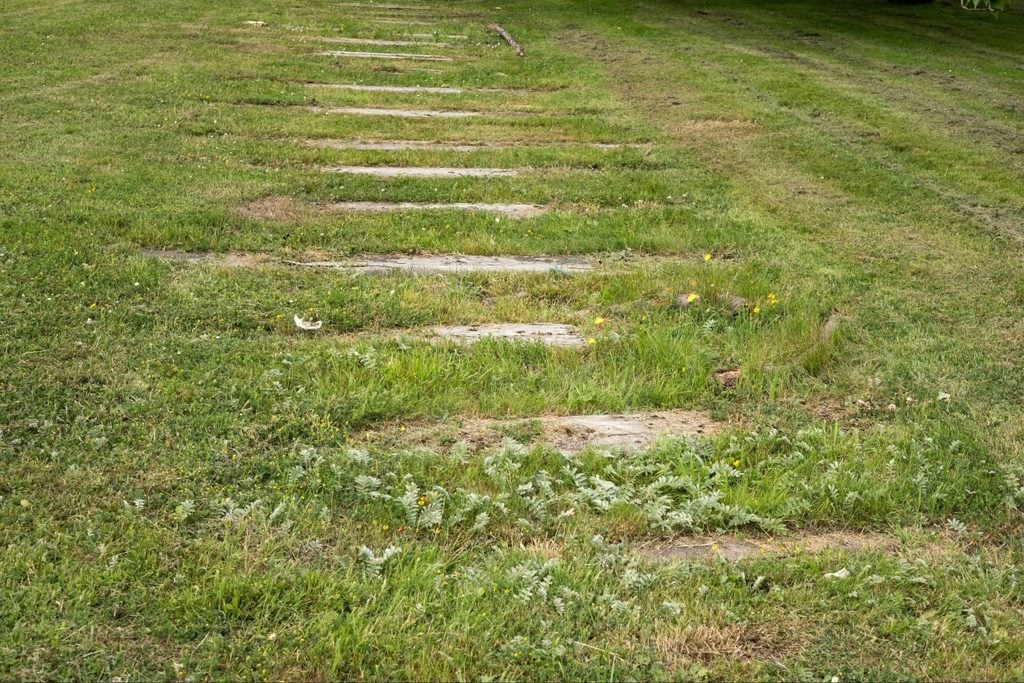
Raised edges, shallow depressions, and uneven transitions can change how close the blade comes to the turf. A setting that works across the open lawn may still scalp a particular ridge or corner.
If the same patch turns brown after every cut, photograph it and note the mower’s direction of travel. Repeated damage in one location is a reason to inspect the ground and mowing approach—not automatically replace the grass.
Recurring lawn scalping in the same location may indicate that the ground contours are affecting the mower’s cutting clearance. Raised areas, uneven transitions near sidewalks, and small ridges can cause the mower to cut closer to the turf even when its height setting remains unchanged.
Before replacing damaged grass, discuss whether the mowing route, equipment approach, or underlying surface condition needs attention.
4. Mowing When the Ground Is Too Wet or Soft
Soft ground, ruts, and heavy clippings can complicate mowing. In Southwest Florida, it is useful to consider recent rain alongside the lawn’s growth rather than treating the calendar as the only guide.
Before mowing, check whether the surface can support the equipment without rutting. When conditions are unsuitable, it’s better to discuss timing than to compensate later with a much lower cut.
Port Charlotte lawns can experience rapid growth and soft ground conditions following periods of heavy rainfall. Mowing equipment may leave ruts or sink into vulnerable areas, affecting the consistency of the cut.
Rather than following a rigid mowing schedule regardless of conditions, consider whether the lawn can support the equipment without unnecessary damage. Adjusting the timing of a mowing visit may be more appropriate than attempting to correct an uneven finish with a shorter cut afterward.
5. Overlooking Dull or Poorly Maintained Mower Blades
A lawn that appears pale or brown after mowing has not necessarily been scalped. Dull or damaged mower blades can tear grass rather than produce a clean cut, leaving ragged tips that may become discolored.
Examine the remaining grass blades. Shredded or frayed tips may indicate a blade-condition problem, while unusually short turf with exposed lower stems may suggest lawn scalping.
Both problems deserve attention, but they should not automatically be treated as the same condition.
Ask your lawn maintenance provider how equipment condition and cutting performance are evaluated, particularly if the lawn repeatedly looks unhealthy immediately after mowing.
6. Repeating the Same Mowing Approach in Problem Areas
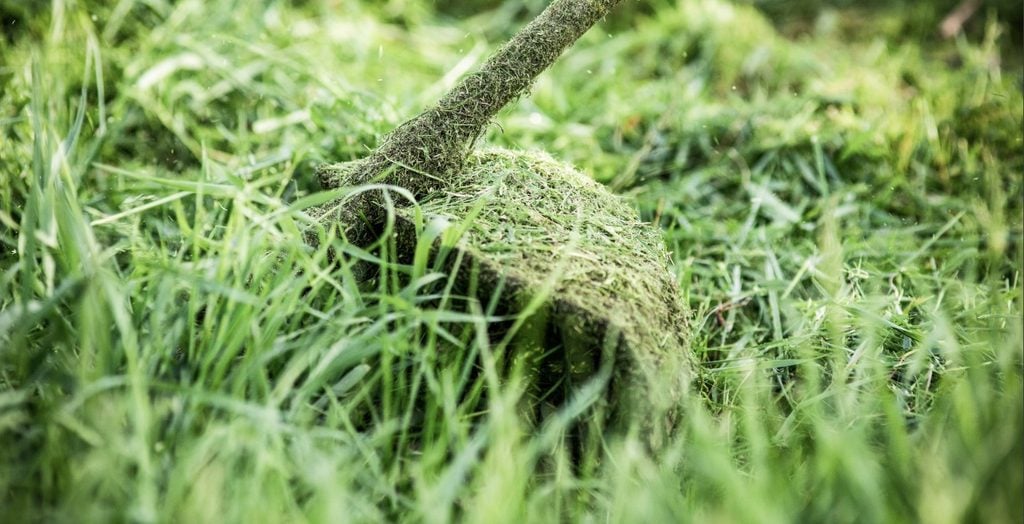
When the same strip or patch turns brown after every mowing visit, repeating the existing approach may continue damaging the turf.
Recurring lawn scalping can be associated with particular turns, overlapping mower passes, raised areas, or equipment movement near landscape borders.
Photograph the affected location and explain when the discoloration becomes visible. These details can help identify whether the mowing approach needs adjustment.
The goal is not simply to make every section of the lawn look equally short. It is to maintain an appropriate cutting height while accounting for differences in the property’s layout and ground conditions.
7. Trying to Correct Mowing Damage With Unnecessary Lawn Treatments
Brown grass after mowing can lead homeowners to assume that their lawn needs additional irrigation, fertilizer, or replacement sod.
However, these treatments do not directly correct an unsuitable mowing height or recurring equipment-related damage.
If lawn scalping is suspected, please identify and address the mowing issue first. Evaluate soil moisture, grass condition, and other potential concerns separately before deciding whether additional treatments are appropriate.
This helps avoid unnecessary maintenance expenses while allowing the lawn’s actual condition to guide recovery decisions.
Although lawn scalping can produce sudden discoloration, other lawn problems may become more noticeable after mowing. Drought stress, turf diseases, uneven irrigation coverage, and existing thinning can also contribute to brown patches. Comparing the timing, location, remaining grass height, and overall condition helps determine whether mowing caused the damage or simply made an existing problem more visible.
| Lawn problem | Common observations | What to evaluate |
|---|---|---|
| Lawn scalping | Brown areas immediately after mowing, very short grass, exposed stems | Cutting height and mowing route |
| Dull mower blades | Ragged, shredded, or discolored grass tips | Blade condition |
| Drought stress | Wilting, folded blades, dry soil | Soil moisture and rainfall |
| Uneven irrigation | Recurring dry areas or inconsistent moisture | Irrigation coverage |
| Possible lawn disease | Discoloration that may develop or spread between mowing visits | Turf condition and professional assessment |
| Existing turf thinning | Sparse grass visible before and after mowing |
The UF/IFAS Gardening Solutions lawn care resources provide educational information about Florida turfgrasses, lawn maintenance, irrigation, and common landscape problems. Understanding these different factors can help homeowners avoid treating every brown patch as a mowing problem or applying unnecessary lawn treatments before the underlying cause has been evaluated.
These observations are useful starting points, not definitive diagnoses. More than one condition may be affecting the lawn at the same time. If discoloration persists or continues spreading after mowing practices have been corrected, request a broader lawn assessment.
Lawn Scalping vs. Other Causes of Brown Grass After Mowing
Not every pale-looking lawn has been scalped. Look closely at the remaining grass blades.
If the lawn still has a reasonable height but the cut tips look shredded or ragged, the blade condition may be contributing to the appearance. When the grass is extremely short and the brown color originates deeper in the lawn canopy, cutting height becomes a more obvious concern.
Also compare photographs from before and after mowing, if available. Existing thin areas can become more noticeable after a cut without the mower having caused the original decline.
A useful assessment considers the grass type, remaining height, equipment condition, ground contours, and whether the affected area was healthy beforehand.
How to Help Your Lawn Recover From Lawn Scalping
Adjust the Mowing Height Before the Next Cut
Do not mow the area again just to make the brown patches match the surrounding lawn. Confirm an appropriate height for the grass and review the mower setting before the next visit.
Where damage follows a ridge or turn, discuss whether the mowing route or equipment approach needs adjustment.
After lawn scalping occurs, allow the affected grass to regain suitable leafy growth before mowing it again. Confirm the appropriate cutting height for the turfgrass variety and review any equipment or ground conditions that contributed to the damage.
Avoid attempting to correct the lawn’s appearance by immediately cutting surrounding areas to the same height. Doing so may unnecessarily stress otherwise healthy turf.
Maintain Appropriate Soil Moisture Without Overwatering
Brown color alone is not a reason to add extra sprinkler cycles. Check soil moisture and recent rainfall first. If the area also appears to have uneven irrigation coverage, address that as a separate question.
Fine Design Outdoor Solutions provides irrigation installation and repair as part of its landscaping services, but a shortcut does not, by itself, establish that irrigation repair is needed.
Although appropriate soil moisture supports healthy turf growth, increasing irrigation is not automatically the right response to lawn scalping. Excessive watering may create additional lawn problems without addressing the original mowing damage.
The EPA WaterSense outdoor water efficiency guidance offers resources on responsible landscape watering and irrigation efficiency. For homeowners dealing with mowing-related discoloration, maintaining appropriate moisture levels is more useful than automatically increasing sprinkler operation whenever the grass appears brown.
Consider recent rainfall, existing soil moisture, grass type, and applicable local watering restrictions before changing the irrigation schedule. If uneven irrigation coverage is suspected, have that condition evaluated separately.
Monitor Turf Recovery Before Applying Fertilizer or Replacing Sod
Avoid adding fertilizer simply to force a quick color change. Likewise, do not assume every scalped patch needs new sod.
Recovery depends on the extent of the damage and the underlying condition of the turf. Monitor for new growth and avoid unnecessary traffic over damaged areas. If bare ground persists or the same location repeatedly fails, request an assessment before deciding on lawn replacement. Correcting the mowing problem should come before installing new grass.
Recovery from lawn scalping depends on how much healthy plant tissue remains, the grass variety, seasonal growing conditions, and whether the original mowing problem has been corrected.
Minor scalping may improve as new leafy growth develops, while severely damaged areas may require additional evaluation. There is no universal recovery period that applies to every lawn.
Monitor the affected areas over subsequent weeks and document any changes. If the turf fails to show signs of recovery, if bare soil remains exposed, or if discoloration continues to spread, discuss the next steps with a lawn care professional before committing to replacement sod.
How to Prevent Lawn Scalping in Port Charlotte
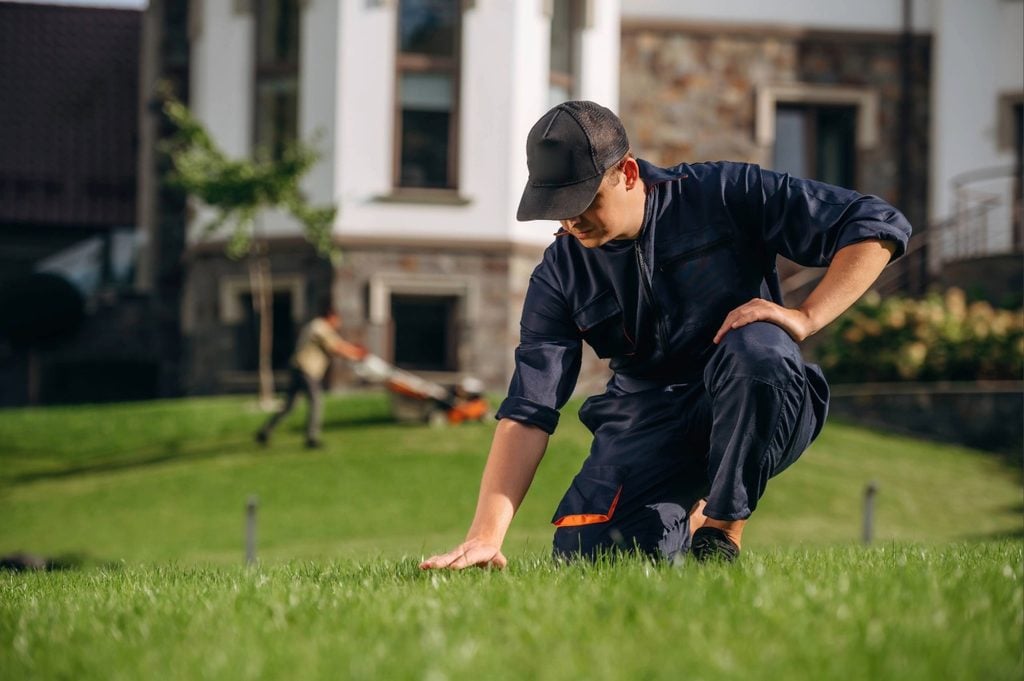
A useful maintenance plan connects mowing height with grass type, growth, and site conditions. Tell your lawn care provider about recurring trouble spots and agree on what should happen when weather delays a visit.
Before the next cut, clarify:
- What grass type is being maintained?
- Is the cutting height appropriate for that grass?
- Does extra growth call for a more gradual reduction?
- Are uneven areas causing the mower to cut too close?
- Are ground conditions suitable for mowing today?
Preventing lawn scalping requires a maintenance approach that accounts for grass type, seasonal growth, equipment condition, and the property’s individual characteristics.
During periods of rapid growth, mowing frequency may need to change to avoid removing excessive leaf growth in a single visit. Heavy rainfall can affect ground conditions, which may in turn determine whether mowing should proceed as scheduled.
Communicating recurring trouble spots to your lawn maintenance provider can also help identify areas where the mowing approach needs adjustment.
Fine Design Outdoor Solutions offers lawn mowing, edging, and maintenance tailored to Florida conditions. Sharing photos and noting exactly when the lawn changed color can make a maintenance discussion more useful.
Lawn Scalping Recovery Checklist for Homeowners
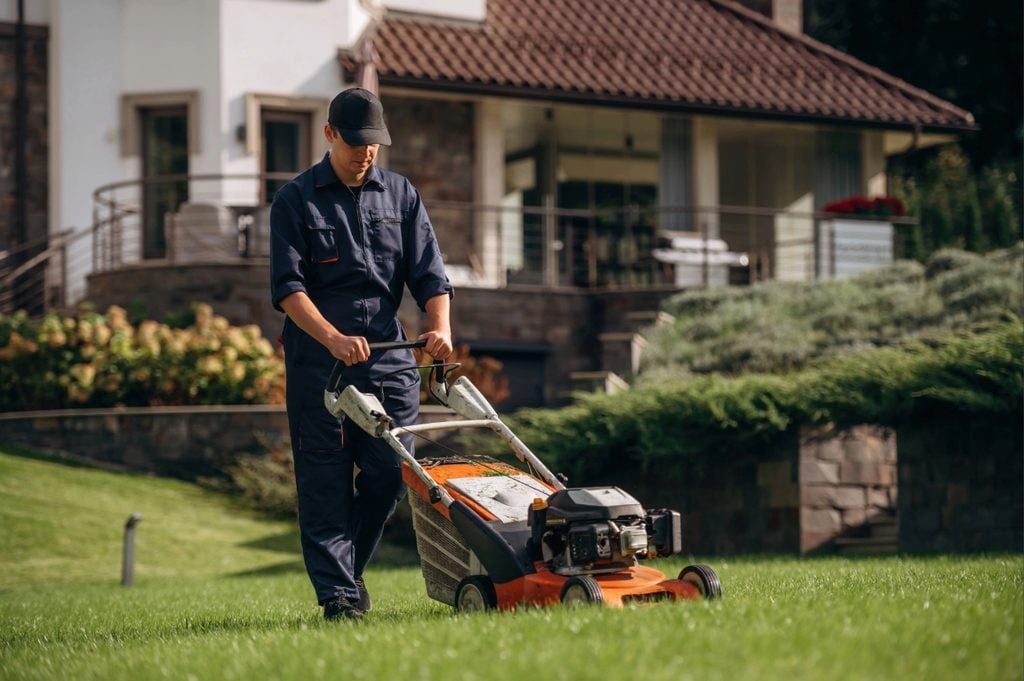
If your lawn turns brown immediately after mowing, use this checklist to organize your observations and determine what needs further attention.
- Compare the lawn’s appearance before and after mowing.
- Identify whether the brown areas follow mower passes or turns.
- Examine the remaining grass height and blade condition.
- Confirm the turfgrass variety and appropriate mowing height.
- Identify raised areas, ruts, and uneven ground.
- Review recent rainfall and existing soil moisture.
- Avoid unnecessary fertilizer or additional irrigation.
- Monitor the affected areas for new growth.
- Discuss recurring problems with your lawn maintenance provider.
Addressing the cause of lawn scalping before applying additional treatments can help prevent repeated damage and unnecessary maintenance expenses.
If the affected areas continue declining despite corrected mowing practices, request an assessment to determine whether other lawn health concerns are involved.
Frequently asked questions
-
Does a brown lawn after mowing mean the grass is dead?
Not necessarily. Removing the green upper growth can expose brown material underneath. Check how closely the lawn was cut and monitor its condition rather than judging survival by color alone.
-
Should I water immediately after scalping?
Base watering on soil moisture, rainfall, and the lawn’s needs—not just its brown appearance. Automatically increasing irrigation may overlook the actual mowing issue.
-
Why does only one strip turn brown after mowing?
A repeated strip may correspond to a high spot, mower pass, or equipment issue. Compare its location with the mowing route and inspect the remaining grass height before choosing a remedy.
-
Will new sod fix recurring scalping?
Replacement sod does not correct an unsuitable cutting height or uneven mowing approach. Resolve the cause first, then assess whether the damaged area needs replacement.
-
How long does it take a scalped lawn to recover?
Recovery time depends on the grass variety, severity of the damage, growing conditions, and whether the mowing problem has been corrected. Minor scalping may improve as new leaves develop, while severely damaged areas may require additional evaluation. Monitor new growth rather than relying on a fixed recovery timeline.
-
Can lawn scalping permanently damage grass?
Severe lawn scalping can damage important growing tissue and reduce the turf’s ability to recover. Repeated excessively short mowing may also weaken the lawn over time. Correct the mowing approach and assess the remaining turf before determining whether replacement is necessary.
Protect Your Port Charlotte Lawn With Proper Lawn Maintenance
Lawn scalping can turn an otherwise green lawn brown immediately after mowing, but the discoloration does not automatically mean the grass is dead or needs replacement.
Understanding the cause is the most important first step. Cutting height, excessive growth removal, uneven ground, mower blade condition, and recent rainfall can all influence the appearance of a lawn after mowing.
Before increasing irrigation, applying fertilizer, or installing replacement sod, identify whether the mowing approach needs adjustment. Monitor the affected areas and allow the lawn’s actual condition to guide further maintenance decisions.
Fine Design Outdoor Solutions offers professional lawn mowing, edging, and landscape maintenance tailored to Florida conditions, along with irrigation installation and repair services.
Whether your lawn has recurring brown strips, uneven mowing damage, or areas that appear unhealthy after maintenance visits, discussing these symptoms can help identify what needs attention.
If your Port Charlotte lawn repeatedly turns brown after mowing, Get a Free Quote from Fine Design Outdoor Solutions to discuss your lawn maintenance needs and help reduce recurring lawn scalping.