

Termites or flying ants? It’s a common question when Port Charlotte homeowners discover winged insects near windows, doors, or other areas of their property. At first glance, these insects can look surprisingly similar, especially when they are small, moving quickly, or have already shed their wings.
However, termites and flying ants are different pests, and identifying them correctly matters before choosing a treatment.
Winged reproductive termites, often called swarmers, and winged ants have several physical differences. Their body shapes, antennae, and wing proportions can provide useful identification clues. Still, a blurry photograph, a few loose wings, or the location of a sighting may not provide enough evidence for a confident conclusion.
For homeowners in Port Charlotte, Florida, the best starting point is to document what you found, preserve a specimen when practical, and arrange a professional inspection when identification remains uncertain.
Fine Design Outdoor Solutions provides both ant control and termite control, with services focused on inspection, targeted treatment, prevention, and ongoing protection.
This guide explains three key differences between termites and flying ants, what evidence to collect, and what to ask before approving pest-control treatment.
Termites or Flying Ants? 3 Key Differences to Check
When comparing termites or flying ants, focus on physical features rather than where the insects were discovered. Both types of insects may develop wings and appear in groups, so the presence of flying insects alone doesn’t establish which pest you’re dealing with.
The following characteristics can help you understand what an inspector may look for.
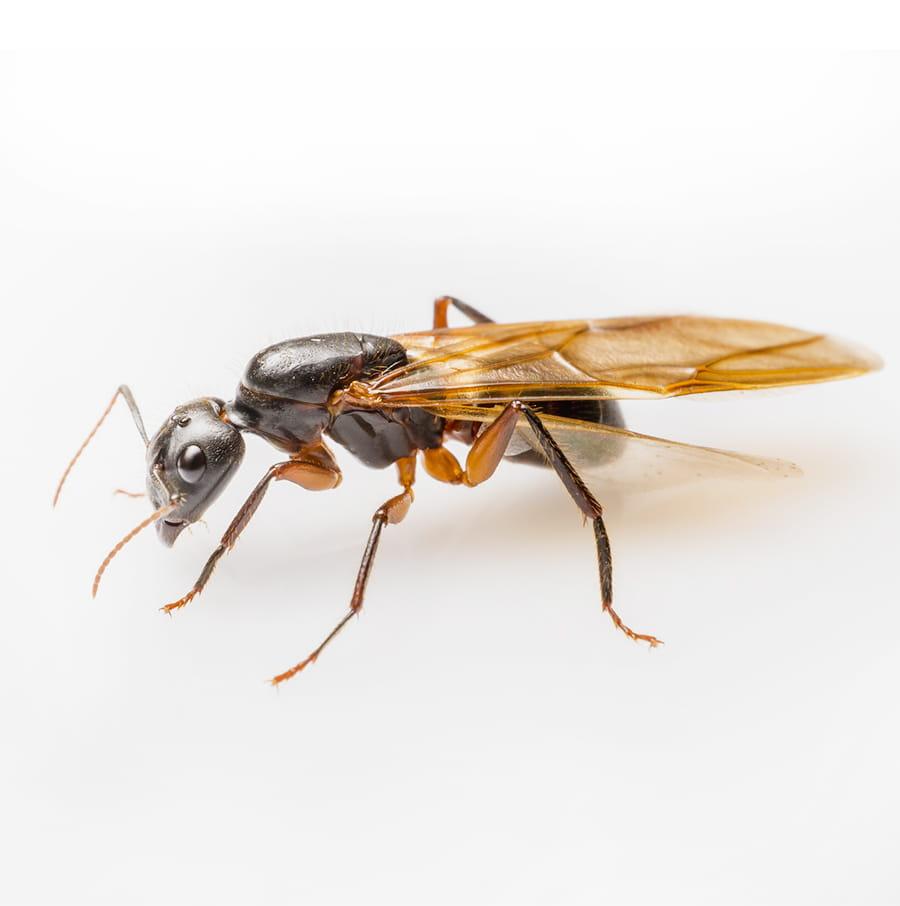
1. Body Shape: Straight Waist vs. Narrow Waist
One of the most recognizable differences involves the insect’s waist.
Termite swarmers generally have a broad, relatively uniform body shape without the distinctly pinched waist associated with ants.
Flying ants typically have a noticeably narrow or constricted waist between the thorax and abdomen.
This distinction can be difficult to see in a blurry photograph, particularly when wings cover the body. Try to capture the insect from above or at an angle that shows its body outline.
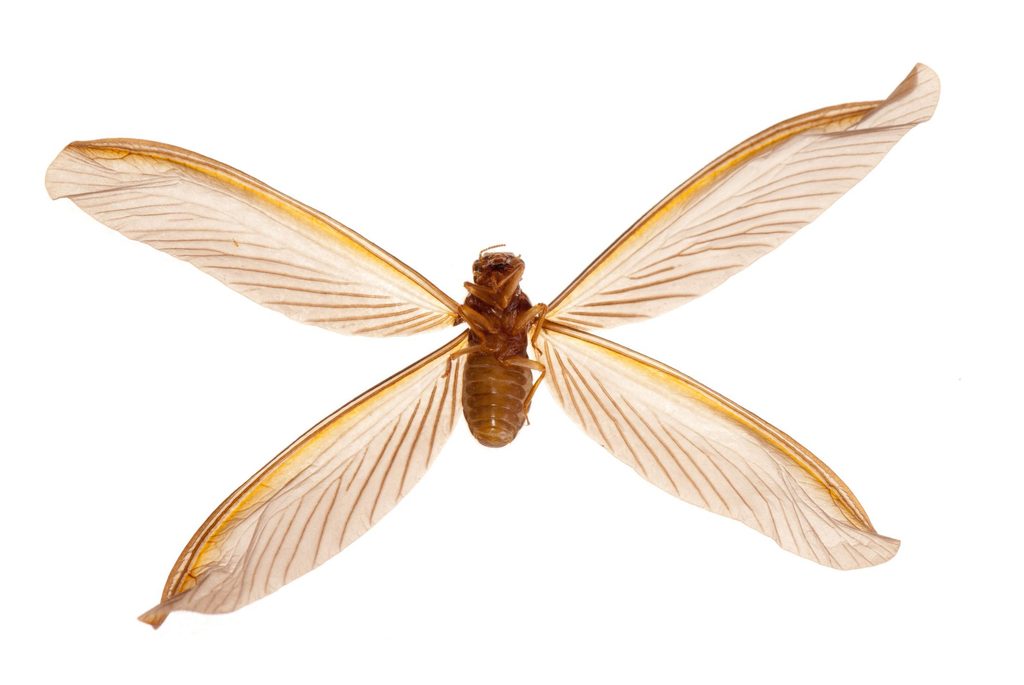
2. Wings: Similar Length vs. Unequal Length
Both termite swarmers and reproductive ants can have two pairs of wings, but their proportions differ.
Termite swarmers generally have four wings of approximately equal length. The wings often extend beyond the body.
Flying ants generally have front wings that are larger or longer than their hind wings.
If the wings overlap, are damaged, or have already detached, you may not be able to make this comparison reliably.
Loose wings can be useful evidence, but they shouldn’t be treated as a complete diagnosis without additional information.
3. Antennae: Straight or Beadlike vs. Elbowed
The antennae provide another useful clue.
Termites generally have relatively straight, beadlike antennae.
Flying ants typically have elbowed antennae with a noticeable bend.
A close-up photograph may help reveal this difference, but the antennae are small and can be difficult to capture clearly with a phone.
If the antennae aren’t visible, don’t guess based on the other features alone.
Why These Differences Matter
These characteristics are useful identification clues, but homeowners shouldn’t assume that a single visible feature establishes the species or the extent of a pest problem.
An inspection can help confirm the insect’s identity, evaluate reported activity, and determine whether treatment is appropriate.
If you aren’t sure what you found, describe it as an unidentified winged insect and share your photographs or specimen with a qualified pest-control provider.
| Feature | Termite Swarmers | Flying Ants |
|---|---|---|
| Body shape | Broad, relatively uniform waist | Distinctly narrow, pinched waist |
| Wings | Two pairs of approximately equal length | The front pair is generally larger than the hind pair. |
| Antennae | Relatively straight, beadlike | Elbowed or bent |
| Winged individuals | Reproductive termites | Reproductive ants |
| Treatment | Depends on termite identification and inspection findings | Depends on ant identification and inspection findings. |
Important: These are general identification characteristics, not a guarantee that every insect can be confidently identified from a phone photo.
For additional information about insect identification in Florida, homeowners can consult the University of Florida’s Entomology and Nematology Department. University extension resources can help explain the characteristics of common insects, although professional identification may still be necessary when a specimen is incomplete or the photographs are unclear.
Start with a clear view, not a treatment decision
When trying to determine whether you’ve found termites or flying ants, begin by examining the insect’s physical characteristics rather than choosing a treatment immediately. Body shape, wing proportions, and antennae can provide useful clues, but only when those features are clearly visible.
Try to capture these three areas:
- The body: Take a top-down photograph that shows the outline of the body and the area between its middle and rear sections.
- The wings: Photograph an intact insect with its wings visible. Note whether you can distinguish separate wings and compare their lengths.
- The antennae: Take a close-up of the head if your camera can keep the antennae in focus.
These are observations to share, not a substitute for identification. If wings overlap, antennae are missing or the insect is crushed, say so. Do not fill in details that you cannot see.
A practical rule is to describe an uncertain finding as an “unidentified winged insect” until it has been assessed. That keeps an initial suspicion from turning into an assumed diagnosis.
Preserve useful evidence
If you’re uncertain whether the insects are termites or flying ants, preserving useful evidence can help with identification. When practical, photograph an intact insect and keep a specimen in a closed container without direct handling. Ask the pest-control provider how they prefer specimens to be submitted.
Photograph the insect before removing it, and take a second, wider photograph showing the surrounding area. A close-up documents appearance; the wider image records where you found it.
Include a familiar object for scale without covering the insect. Keep the original photograph rather than sending only a heavily cropped or filtered version. If you found more than one insect, photograph several instead of assuming they are all identical.
Before cleaning up, make a brief record of:
- The room or outdoor area where you noticed activity.
- The date and approximate time.
- Whether you saw one insect or several.
- Whether this was a single discovery or a repeated occurrence.
- Any nearby area you want the inspector to examine.
You do not need to estimate an infestation’s size or identify a nesting location yourself. Report what you observed and let the inspection address what it means.
What Not to Do When You Find Winged Insects
Finding unfamiliar insects indoors can be concerning, particularly when termites are a possibility. However, acting before identifying the insects may make it harder to understand what you’ve discovered.
Don’t Assume Every Winged Insect Is a Termite
Flying ants and termite swarmers can look similar at first. Other winged insects may also be mistaken for either pest.
Avoid labeling the problem before an identification has been made. Share the insect’s physical features, photographs, and discovery location instead.
Don’t Apply Pesticides Just to Test Your Suspicion
A treatment should be based on the identified pest and the conditions found during an assessment.
Applying a product without understanding what you’re treating may create unnecessary exposure risks and won’t necessarily address the source of the activity.
Follow all pesticide label instructions and consult a qualified provider before choosing a treatment.
Don’t Discard Every Specimen Before Documenting It
If possible, photograph an intact insect and preserve a specimen in a closed container without direct handling.
A specimen may provide information that a photograph cannot capture, especially when the wings or antennae aren’t clearly visible.
Don’t Assume the Discovery Location Identifies the Source
Finding winged insects near a window doesn’t prove they entered through that window or originated nearby.
Record where the insects were found, but leave conclusions about entry points, nesting locations, or structural activity to the inspection.
Don’t Ignore Repeated Activity
A single discovery doesn’t automatically establish an infestation, but repeated sightings deserve attention.
Document the dates, locations, and approximate numbers of insects observed. If identification remains uncertain or you are concerned about possible termite activity, request a professional assessment rather than waiting for more evidence to accumulate.
Separate what you saw from what you suspect
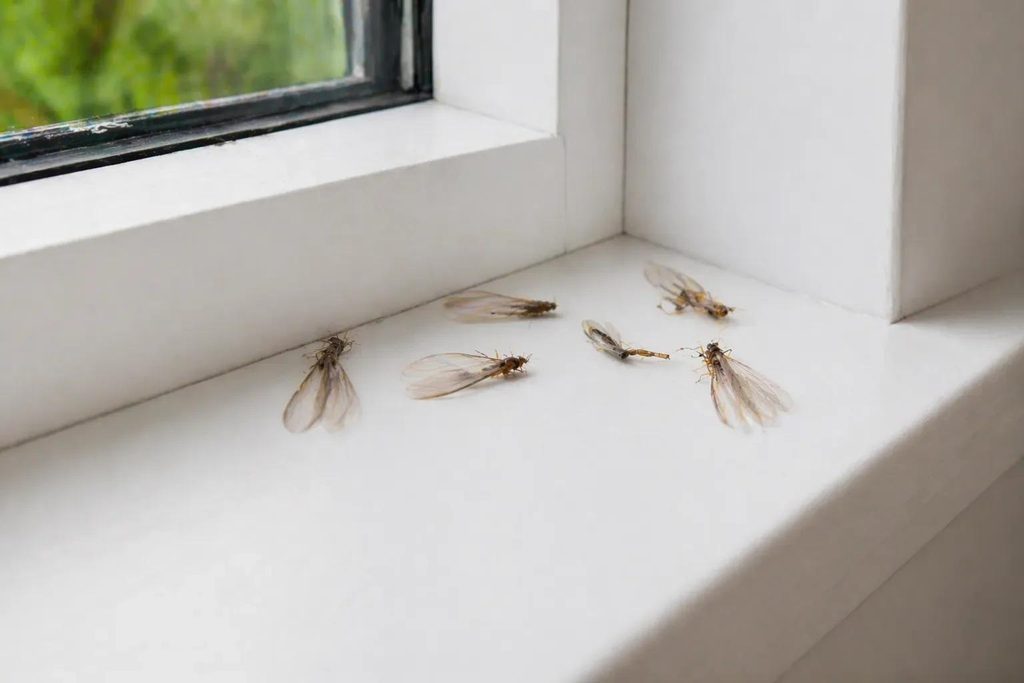
A clear description helps make an inspection request more useful. For example, “I found several winged insects on the inside windowsill” is more precise than “Termites are coming through the window” if you did not actually see their entry point.
Likewise, record any concern about wood or other materials separately from the insect discovery. Do not assume that two things found near each other have the same cause.
This distinction matters when discussing treatment. The questions are not just “What insect is this?” but also “What activity is present, and which areas need attention?”
If termites are suspected, avoid selecting a treatment based on appearance alone. The EPA’s termite identification and control guidance explains why proper identification and an appropriate control strategy matter when evaluating potential termite activity.
Fine Design’s pest-control approach includes inspection, targeted treatment, prevention, and ongoing protection. Identification and inspection provide the starting point for that discussion.
What to ask before approving treatment
Once the insects have been assessed, ask for an explanation of the findings in plain language. Useful questions include:
- Were the insects identified as ants, termites, or something else? Ask whether identification is confirmed or whether more evidence is needed.
- Which areas need inspection? Point out every location where you observed activity, including areas that may be difficult to access.
- What findings support the recommended treatment? Keep the discussion tied to observations at your property.
- What should I do before and after service? Request instructions specific to the proposed work rather than following a generic online checklist.
- What prevention or ongoing protection is recommended? Ask what the plan includes and which homeowner actions are relevant.

Fine Design’s ant control focuses on nesting areas, colonies, and future entry prevention. The company also provides termite control. Do not assume that a recommendation for one pest applies to the other; ask which service matches the findings.
Frequently asked questions
-
Can I identify the insect from a phone photo?
A clear photo is useful information to share, but ask the provider whether it is sufficient. Include the whole insect, visible wings, antennae, and a wider view of the discovery location. If those details are unclear, identification may remain unresolved.
-
What if I only found loose wings?
Photograph them and record where you found them. Describe the evidence exactly as it is rather than labeling it an ant or termite problem. Ask whether an inspection or additional specimen is needed.
-
Should I wait until I find more insects?
You can ask for help with identification now. There is no need to create your own threshold before discussing the finding with a pest-control provider. Explain whether the activity has been repeated and ask what the next step is.
-
Do flying ants mean my home has termites?
No. Flying ants and termite swarmers are different insects. Seeing flying ants does not establish termite activity, just as finding an unidentified winged insect does not confirm an infestation. If you’re unsure which insect you’ve found, preserve a specimen when practical and request identification before deciding whether treatment is necessary.
Termites or Flying Ants? Get the Right Identification Before Treatment
Finding winged insects inside your Port Charlotte home can raise understandable concerns, especially when you’re unsure whether they’re termites or flying ants.
Although the two insects may look similar, their body shapes, antennae, and wing proportions offer useful identification clues. Termite swarmers generally have a broad waist, relatively straight antennae, and similarly sized wings. In contrast, flying ants are characterized by a pinched waist, elbowed antennae, and larger front wings.
However, photographs and visual comparisons don’t always provide a confident identification. Preserving a specimen, documenting the discovery location, and requesting a professional inspection can help clarify what you’ve found.
Fine Design Outdoor Solutions provides ant control and termite control for Port Charlotte homeowners, with an approach that includes inspection, targeted treatment, prevention, and ongoing protection.
Before choosing a service, ask what the inspection established, which areas require attention, and how the recommended treatment addresses the identified pest.
If you’ve discovered winged insects and aren’t sure what they are, Get a Free Quote from Fine Design Outdoor Solutions to discuss your observations and the appropriate next steps.