
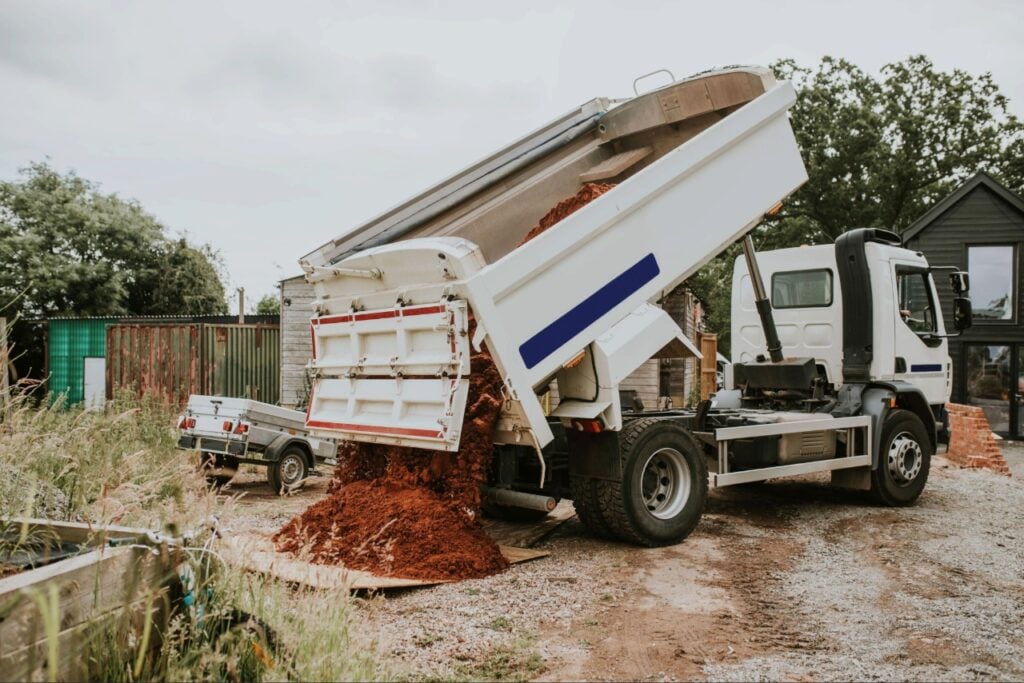
Landscape Material Calculator Florida Homeowners Can Use for Their Next Project
A landscape material calculator Florida homeowners can use doesn’t have to be complicated. Whether you’re planning a new planting bed, refreshing existing mulch, adding topsoil, creating a gravel area, or preparing a larger outdoor project, knowing how much material you need can help prevent expensive ordering mistakes.
Landscape materials typically come in cubic yards, but many homeowners measure their projects in feet and inches. That difference can make it difficult to estimate how much material to order.
Order too little, and you may have to arrange another delivery.
Order too much, and you could end up with excess material that takes up valuable space on your property.
The basic process is straightforward:
- Measure the area.
- Determine the desired material depth.
- Calculate the volume.
- Convert the result to cubic yards.
- Add a reasonable allowance for settling, irregular areas, and project conditions.
A little planning before ordering can make your landscape supply project much easier.
Why Landscape Material Quantities Are Measured in Cubic Yards
When purchasing bulk landscape materials, you’ll often see quantities listed in cubic yards.
A cubic yard is a unit of volume.
One cubic yard equals the following:
27 cubic feet
That means a pile measuring 3 feet long × 3 feet wide × 3 feet high contains 27 cubic feet, or one cubic yard.
This measurement is useful because materials such as mulch, topsoil, sand, gravel, and other bulk landscape products are typically ordered based on volume rather than simply by surface area.
For example, saying that you need enough mulch for a 500-square-foot planting bed isn’t enough information to determine the quantity.
You also need to know how deep you want the mulch to be.
A 500-square-foot bed with a 2-inch layer requires considerably less material than the same bed covered to a depth of 6 inches.
That’s why both area and depth matter when using a landscape material calculator.
The Basic Formula for Calculating Landscape Materials
For many landscape projects, you can calculate the approximate volume using:
Length × Width × Depth = Volume
The important detail is that all three measurements need to use the same unit.
If you’re working in feet, convert the material depth from inches to feet.
For example:
- Length = 20 feet
- Width = 10 feet
- Depth = 3 inches
Three inches equals 0.25 feet.
So:
20 × 10 × 0.25 = 50 cubic feet
Because one cubic yard contains 27 cubic feet:
50 ÷ 27 = 1.85 cubic yards
You would therefore need approximately 1.85 cubic yards of material for that rectangular area at a 3-inch depth.
For practical ordering purposes, you may decide to round that figure according to the material, delivery requirements, and expected settling.
How to Measure a Landscape Bed
Before using a landscape material calculator, Florida homeowners should first measure the project area as accurately as possible.
Rectangular Areas
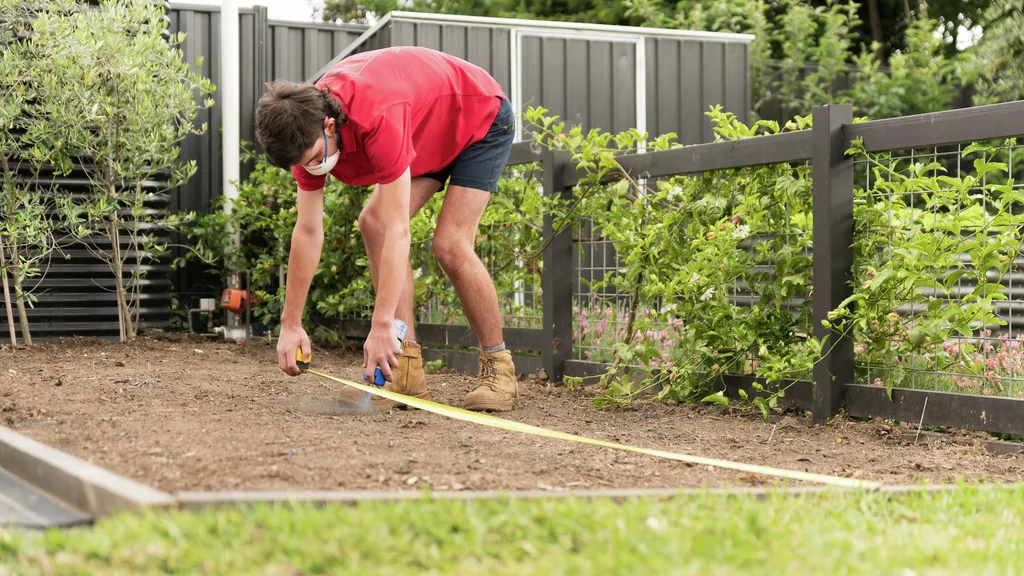
Rectangular and square beds are the easiest.
Measure:
- Length
- Width
- Desired depth
Then multiply the measurements together.
For example, a landscape bed measuring 30 feet long and 8 feet wide has:
30 × 8 = 240 square feet
If you want 3 inches of material:
240 × 0.25 = 60 cubic feet
Then:
60 ÷ 27 = 2.22 cubic yards
So the project requires approximately 2.22 cubic yards before considering additional material for settling or irregularities.
UF/IFAS uses the same basic area-and-depth approach when explaining how homeowners can calculate the amount of mulch needed for landscape beds.
How to Calculate Circular Areas
Not every Florida landscape bed is rectangular.
If you’re working with a circular planting bed, you need to calculate its area differently.
Measure from the center of the circle to the outside edge. This measurement is the radius.
Then use:
Area = 3.14 × radius × radius
For example, if a circular bed has a radius of 5 feet:
3.14 × 5 × 5 = 78.5 square feet
You can then use the resulting square footage to calculate the amount of material required at your desired depth.
Circular beds are common around:
- Trees
- Palms
- Landscape focal points
- Round planting areas
- Decorative features
Taking a few extra minutes to calculate the actual area is better than estimating by eye.
What About Irregular-Shaped Landscape Beds?
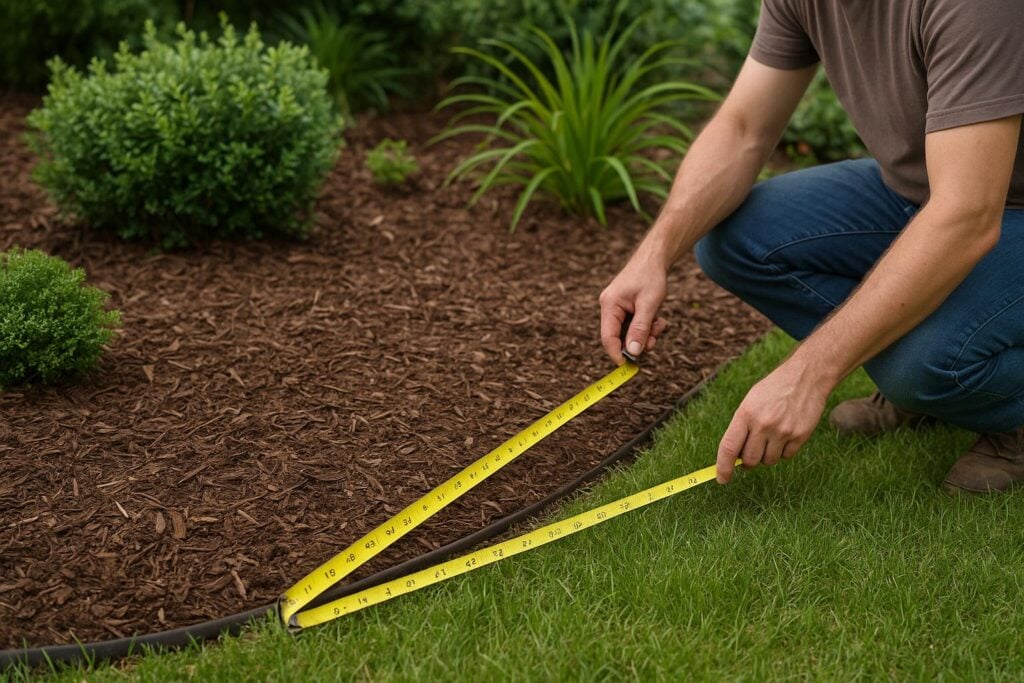
Florida landscaping frequently includes curved borders and irregular planting beds.
These can be more difficult to measure accurately.
One practical approach is to divide the area into several smaller shapes.
For example, an irregular bed might be separated into:
- Two rectangles
- One triangle
- One semicircle
Calculate each section separately and then add the results together.
UF/IFAS recommends this same general approach for irregular mulch areas: divide the space into simpler shapes and add the smaller areas together.
This method is much more reliable than trying to guess the total square footage of a curved bed.
Why Material Depth Matters
One of the easiest mistakes to make is focusing only on square footage.
Imagine two homeowners each have a 500-square-foot planting bed.
One wants a 2-inch layer of mulch.
The other wants a 4-inch layer.
They have exactly the same surface area, but the second homeowner needs twice as much material.
This is why a good landscape material calculator Florida homeowners use should always account for depth.
Common Landscape Material Depths
The appropriate depth depends on the material and how it will be used.
For many Florida landscape beds, mulch is commonly maintained at approximately 2 to 3 inches. UF/IFAS Florida-Friendly Landscaping guidance recommends maintaining mulch around trees, shrubs, and bedding plants at 2–3 inches and cautions against excessive depth.
However, homeowners shouldn’t automatically assume that every landscape material should be installed at the same depth.
Mulch, topsoil, gravel, and other materials have different purposes.
The intended application should determine the appropriate depth.
A Quick Mulch Calculation Example
Let’s say you have a:
600-square-foot landscape bed
and want:
3 inches of mulch
Convert 3 inches to feet:
3 ÷ 12 = 0.25 feet
Then:
600 × 0.25 = 150 cubic feet
Convert cubic feet to cubic yards:
150 ÷ 27 = 5.56 cubic yards
So you would need approximately 5.56 cubic yards of mulch.
UF/IFAS provides a similar calculation method and notes that 1 cubic yard of mulch covers approximately 108 square feet at a 3-inch depth.
This type of calculation is especially useful when comparing bagged mulch versus bulk delivery.
Why Bulk Materials Can Make Sense for Larger Projects
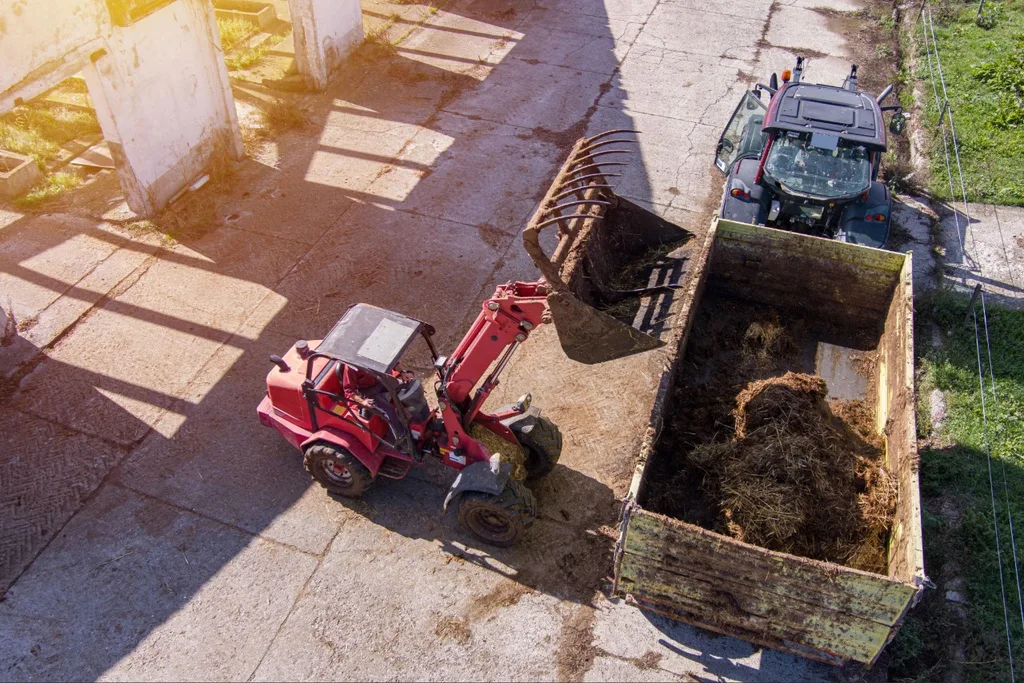
Small landscape projects may only require a few bags of material.
But for larger projects, buying all the materials by the bag can quickly become impractical.
UF/IFAS notes that bulk mulch purchased by the cubic yard can be more cost-effective for larger projects compared with purchasing numerous individual bags.
Bulk delivery can be useful for projects such as
- Large planting beds
- New landscape installations
- Lawn renovation
- Garden preparation
- Gravel pathways
- Large mulch applications
- Construction landscaping
- Commercial landscape projects
Instead of carrying dozens of bags from a store to the property, bulk material can be delivered directly to the project location.
That can save considerable time and labor.
Don’t Forget About Access and Delivery
Calculating the correct quantity is only part of the process.
You also need to consider where the material will be delivered.
Before ordering bulk landscape materials, think about:
- Where the delivery truck can enter
- Whether there is enough clearance
- Where the material can be dumped
- Whether the driveway can accommodate delivery
- How far the material needs to be moved
- Whether gates or landscaping restrict access
A pile of material dumped 100 feet from the actual work area can create significantly more labor than one placed conveniently near the project.
For larger Florida landscaping projects, planning the delivery location before ordering can make the installation much more efficient.
Calculating Topsoil for Florida Landscaping Projects
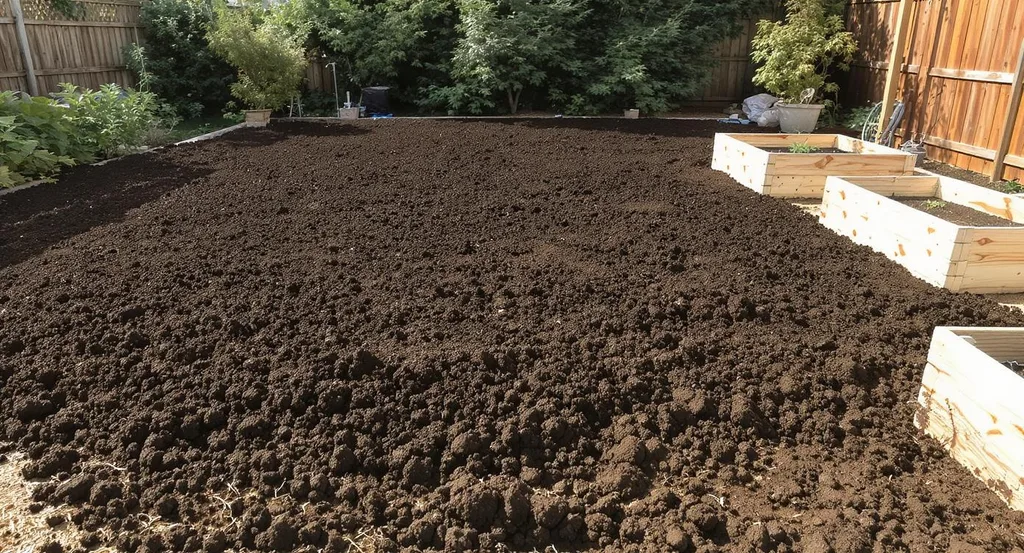
Topsoil calculations work much like mulch calculations: you need the surface area and desired depth before you can estimate the total volume.
Before ordering topsoil, homeowners should understand the difference between topsoil and fill dirt and what each material is intended to accomplish.
This is particularly important when preparing new planting beds, repairing areas where soil has been removed, or establishing new landscape areas.
For example, imagine a rectangular planting area measuring the following:
- 40 feet long
- 12 feet wide
- 4 inches deep
First calculate the area:
40 × 12 = 480 square feet
Then convert 4 inches to feet:
4 ÷ 12 = 0.333 feet
Now calculate the volume:
480 × 0.333 = approximately 160 cubic feet
Convert that to cubic yards:
160 ÷ 27 = approximately 5.93 cubic yards
So the project would require approximately 6 cubic yards of topsoil before accounting for any additional material needed because of settling, uneven areas, or project-specific requirements.
A reliable landscape material calculator Florida homeowners use should therefore account for both the area and the depth of the soil layer rather than relying on square footage alone.
Don’t Assume Every Landscape Area Needs the Same Soil Depth
One common mistake is using one depth for an entire property.
Different areas may have different requirements.
A new planting bed, for example, may need a different soil preparation approach than a lawn renovation project.
Likewise, filling a low area for grading isn’t the same as creating a planting medium for shrubs or flowers.
Before ordering topsoil, determine what the material is actually being used for.
Consider:
- Existing soil conditions
- Drainage
- Plant requirements
- Grade changes
- Desired finished elevation
- Existing landscape materials
- Whether the area will support lawn, trees, shrubs, or garden plants
This is one reason choosing the correct landscape supply is just as important as calculating the quantity.
Calculating Gravel and Decorative Stone
Gravel, crushed stone, and decorative rock can also be calculated using the same basic volume principle.
Measure the area in square feet, determine the desired depth, and convert the resulting cubic-foot volume into cubic yards.
For example:
25 feet × 10 feet = 250 square feet
If the desired depth is 2 inches:
2 ÷ 12 = 0.167 feet
Then:
250 × 0.167 = 41.75 cubic feet
Convert to cubic yards:
41.75 ÷ 27 = approximately 1.55 cubic yards
So you’d need roughly 1.55 cubic yards of material.
The exact depth should depend on the type of rock and how the area will be used.
Gravel for a decorative landscape bed may have different requirements than aggregate used for a pathway or another functional application.
Don’t Assume Every Landscape Area Needs the Same Soil Depth
One common mistake is using one depth for an entire property.
Different areas may have different requirements.
A new planting bed, for example, may need a different soil preparation approach than a lawn renovation project.
Likewise, filling a low area for grading isn’t the same as creating a planting medium for shrubs or flowers.
Before ordering topsoil, determine what the material is actually being used for.
Consider:
- Existing soil conditions
- Drainage
- Plant requirements
- Grade changes
- Desired finished elevation
- Existing landscape materials
- Whether the area will support lawn, trees, shrubs, or garden plants
This is one reason choosing the correct landscape supply is just as important as calculating the quantity.
Calculating Gravel and Decorative Stone
Gravel, crushed stone, and decorative rock can also be calculated using the same basic volume principle.
Measure the area in square feet, determine the desired depth, and convert the resulting cubic-foot volume into cubic yards.
For example:
25 feet × 10 feet = 250 square feet
If the desired depth is 2 inches:
2 ÷ 12 = 0.167 feet
Then:
250 × 0.167 = 41.75 cubic feet
Convert to cubic yards:
41.75 ÷ 27 = approximately 1.55 cubic yards
So you’d need roughly 1.55 cubic yards of material.
The exact depth should depend on the type of rock and how the area will be used.
Gravel for a decorative landscape bed may have different requirements than aggregate used for a pathway or another functional application.
Calculating Materials for a Walkway
Walkways are another common application where material calculations can help.
Suppose you’re creating a gravel walkway that is:
- 30 feet long
- 4 feet wide
- 3 inches deep
Calculate the area:
30 × 4 = 120 square feet
Convert the depth:
3 ÷ 12 = 0.25 feet
Calculate volume:
120 × 0.25 = 30 cubic feet
Convert to cubic yards:
30 ÷ 27 = 1.11 cubic yards
You would therefore need approximately 1.11 cubic yards.
However, this is an estimate of volume, not a guarantee of the final amount needed.
The underlying surface, installation method, compaction, material size, and final grading can all affect actual requirements.
What About Sand?
Sand may also be used in certain landscape and outdoor projects.
The same volume calculation can be applied:
Length × Width × Depth ÷ 27 = cubic yards
But sand can behave differently from mulch or larger aggregate.
It may settle or compact depending on how it is installed and what is beneath it.
If you’re ordering sand for a specific construction or landscape application, confirm the intended use and installation requirements before deciding on a quantity.
This is particularly important when a project involves more than simply spreading material over an existing landscape bed.
How to Calculate Materials for an Irregular Driveway or Patio Area
Large outdoor areas are rarely perfect rectangles.
A driveway, patio, or landscape area may contain curves, corners, planting cutouts, or other irregular sections.
The easiest approach is usually to divide the project into smaller measurable areas.
For example:
Section A:
20 × 12 = 240 sq. ft.
Section B:
15 × 8 = 120 sq. ft.
Section C:
10 × 5 = 50 sq. ft.
Total:
240 + 120 + 50 = 410 square feet
You can then apply the desired depth to the combined area.
This approach makes a landscape material calculator Florida project easier to manage because you’re working with measurements you can actually verify.
Don’t Forget Sloped Areas
Sloped landscapes can make material calculations more complicated.
A slope may have a different surface area than its horizontal footprint, and grading work can also change how much material is required.
For a simple residential project, homeowners may be able to estimate the surface area themselves.
But if the project involves substantial grading, drainage correction, retaining walls, or major elevation changes, a professional measurement may be worthwhile.
This is especially important when ordering several cubic yards of material.
A small measurement error across a large property can result in a significant difference in the final quantity.
How Much Extra Material Should You Order?
This is one of the most common questions homeowners have.
Should you order exactly the calculated amount?
Not always.
Your calculation provides an estimated volume, but real landscape projects aren’t perfectly uniform.
You may have:
- Uneven ground
- Irregular edges
- Small areas missed during measurement
- Material settling
- Compaction
- Spillage during installation
- Slight variations in material depth
For these reasons, a modest allowance may be appropriate.
However, ordering excessive amounts “just in case” isn’t necessarily a good strategy either.
Extra material costs money, takes up space, and may be difficult to use later.
The right allowance depends on the material, project, installation method, and accuracy of your measurements.
For larger projects, it can make sense to have the quantity reviewed by an experienced landscape-material supplier or contractor before placing the order.
Why Material Type Matters When Estimating Quantity
A cubic yard is a measurement of volume, but different materials can have very different weights.
One cubic yard of mulch won’t necessarily weigh the same as one cubic yard of gravel.
This matters when considering:
- Delivery
- Vehicle capacity
- Handling
- Installation
- Storage
- Labor
For example, gravel is substantially denser than many organic landscape materials.
So you shouldn’t assume that a cubic-yard calculation automatically tells you how heavy the delivery will be.
If you’re unsure, ask the supplier about the approximate weight and delivery requirements for the specific material you’re ordering.
Bulk Delivery: What Florida Homeowners Should Know
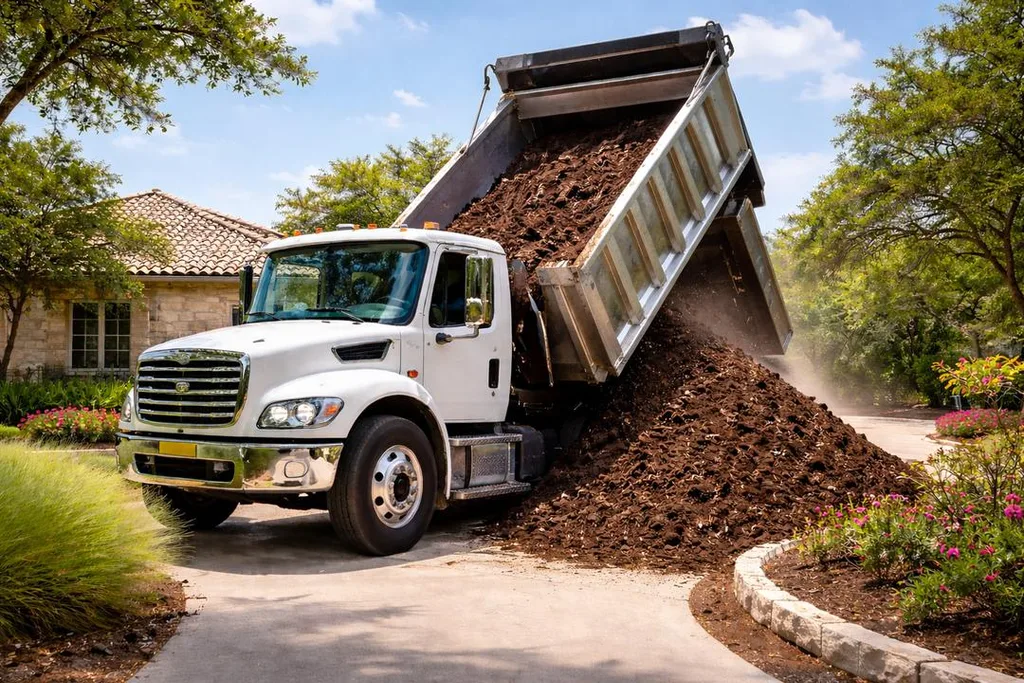
Once you’ve calculated the quantity, the next question is often how to get the material to the property.
Bulk landscape material delivery can be convenient for larger projects because the material arrives in a single load rather than requiring dozens of individual bags.
But delivery logistics still matter.
Before placing your order, confirm:
- Material type
- Estimated quantity
- Delivery date
- Delivery location
- Truck access
- Gate clearance
- Driveway conditions
- Dump location
- Whether the delivery area is accessible
If the truck cannot reach the intended location, the material may have to be dumped elsewhere and moved manually.
That can add significant labor to a project.
A Simple Cubic-Yard Formula to Keep Handy
For rectangular areas, the basic calculation can be simplified to:
Length × Width × Depth in feet ÷ 27 = cubic yards
If your depth is measured in inches, convert it first:
Depth in feet = depth in inches ÷ 12
Then:
Length × Width × (Depth ÷ 12) ÷ 27 = cubic yards
For example:
30 × 10 × (3 ÷ 12) ÷ 27
= 2.78 cubic yards
This formula works well for basic estimates involving mulch, topsoil, gravel, sand, and similar bulk landscape materials.
However, it is still an estimate. Complex projects should be measured and calculated according to their specific installation requirements.
Worked Examples for Common Florida Landscape Projects
A formula is useful, but seeing how it applies to real projects makes the process much easier.
Here are several examples Florida homeowners and contractors can use as a starting point.
Example 1: Mulch for a Front Landscape Bed
Suppose a front planting bed measures the following:
- 35 feet long
- 10 feet wide
- 3 inches deep
First calculate the area:
35 × 10 = 350 square feet
Convert the depth:
3 ÷ 12 = 0.25 feet
Calculate the volume:
350 × 0.25 = 87.5 cubic feet
Convert to cubic yards:
87.5 ÷ 27 = 3.24 cubic yards
The estimated requirement is therefore about 3.24 cubic yards of mulch.
If the bed has irregular edges, you should measure the individual sections rather than assuming the entire area is a perfect rectangle.
Example 2: Topsoil for a New Planting Area
Imagine you’re preparing a new planting area measuring:
- 25 feet × 15 feet
- 4 inches deep
Area:
25 × 15 = 375 square feet
Depth:
4 ÷ 12 = 0.333 feet
Volume:
375 × 0.333 = approximately 125 cubic feet
Cubic yards:
125 ÷ 27 = approximately 4.63 cubic yards
That gives you an estimated requirement of about 4.63 cubic yards of topsoil.
Before ordering, consider whether the existing grade is level and whether the entire area actually needs the full 4-inch depth.
Example 3: Gravel for a Backyard Path
Suppose a gravel walkway is:
- 50 feet long
- 3 feet wide
- 2 inches deep
Area:
50 × 3 = 150 square feet
Depth:
2 ÷ 12 = 0.167 feet
Volume:
150 × 0.167 = 25.05 cubic feet
Cubic yards:
25.05 ÷ 27 = approximately 0.93 cubic yards
The basic estimate is therefore about 0.93 cubic yards of gravel.
Because gravel is relatively dense, it’s also worth confirming the supplier’s delivery and weight information before ordering.
Quick Landscape Material Calculation Table
For a quick estimate, homeowners can use the following examples.
| Project Area | Depth | Approximate Material |
|---|---|---|
| 100 sq. ft. | 2 inches | 0.62 cubic yards |
| 100 sq. ft. | 3 inches | 0.93 cubic yards |
| 250 sq. ft. | 2 inches | 1.54 cubic yards |
| 250 sq. ft. | 3 inches | 2.31 cubic yards |
| 500 sq. ft. | 2 inches | 3.09 cubic yards |
| 500 sq. ft. | 3 inches | 4.63 cubic yards |
| 1,000 sq. ft. | 2 inches | 6.17 cubic yards |
| 1,000 sq. ft. | 3 inches | 9.26 cubic yards |
These figures are volume estimates, not recommendations for how deep a particular material should be installed.
The correct depth depends on the material and its intended use.
What If You Have Several Different Areas?
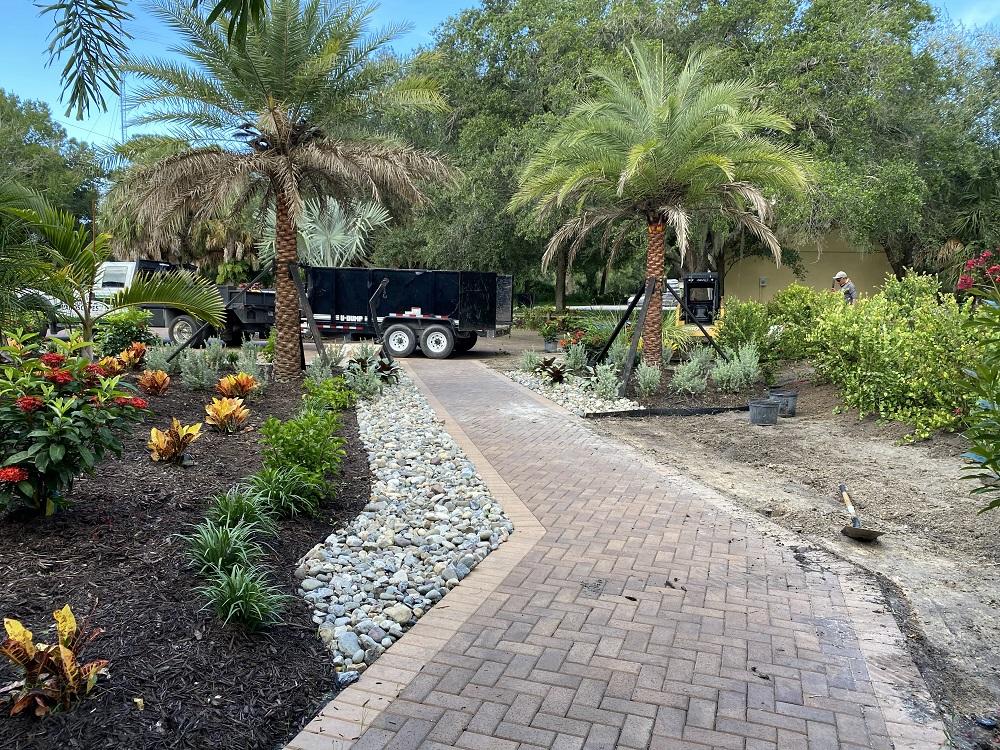
Large landscaping projects often involve multiple areas with different dimensions and material requirements.
For example, a homeowner might have:
Front bed:
400 sq. ft. × 3 inches
Side bed:
200 sq. ft. × 3 inches
Backyard bed:
600 sq. ft. × 2 inches
Instead of trying to calculate everything at once, calculate each section separately.
This makes it easier to:
- Check your measurements
- Identify different material requirements
- Account for different depths
- Estimate separate quantities
- Avoid ordering too much of one material
You can then add the quantities together when the same material is being used in multiple locations.
This approach is particularly useful for larger properties in Port Charlotte and throughout Southwest Florida.
Common Landscape Material Ordering Mistakes
Even a good landscape material calculator Florida homeowners use can’t compensate for inaccurate measurements or misunderstandings about the project.
Here are some of the most common mistakes.
Ordering Based Only on Square Footage
A 500-square-foot area doesn’t tell you how much material is required by itself.
You also need the desired depth.
Forgetting to Convert Inches to Feet
If your area is measured in feet but your depth is in inches, you must convert the depth before calculating cubic feet.
For example:
3 inches ÷ 12 = 0.25 feet
Skipping this conversion can produce a dramatically incorrect estimate.
Assuming Every Material Uses the Same Depth
Mulch, topsoil, gravel, sand, and other materials may have different installation requirements.
Don’t choose a depth simply because it worked for another material.
Treating an Irregular Area Like a Rectangle
If the landscape bed has curves, cutouts, or multiple sections, calculating it as one large rectangle can overestimate or underestimate the required quantity.
Break it into manageable sections instead.
Ignoring Existing Grade
A property that isn’t level may require different amounts of material in different locations.
A calculated average depth may not accurately represent a grading project.
Ordering Too Much
More isn’t always better.
Excess material creates additional cost and may leave you with a large pile that needs to be stored or disposed of.
Ordering Too Little
The opposite problem can be just as frustrating.
Running short near the end of an installation can delay the project and create additional delivery or labor costs.
When Should You Ask a Landscape Supply Professional?
A simple rectangular planting bed is usually easy to calculate.
But more complicated projects may benefit from professional assistance.
Consider asking a landscape supply professional or contractor for help when you’re dealing with:
- Large properties
- Multiple material types
- Significant grading
- Drainage improvements
- Sloped terrain
- Retaining walls
- Large gravel installations
- Commercial landscaping
- Major landscape renovations
- Projects requiring several truckloads
Professional assistance can help you determine not only how much material you need, but also whether you’re ordering the appropriate material for the application.
How Fine Design Outdoor Solutions Can Help
For homeowners and contractors in Port Charlotte and Southwest Florida, ordering landscape materials is only one part of a successful outdoor project.
The material also needs to be appropriate for the application, delivered efficiently, and incorporated into the overall landscape plan.
Fine Design Outdoor Solutions provides landscape solutions for Southwest Florida properties, including landscape supply and outdoor improvement services.
Whether you’re preparing planting beds, refreshing an established landscape, improving an outdoor area, or planning a larger installation, accurate material estimates can help you plan your project more effectively.
If you’re unsure how much material your project requires, having the area measured and discussing the intended application with a knowledgeable supplier can prevent costly ordering mistakes.
Final Thoughts
A landscape material calculator Florida homeowners use is essentially a way to turn simple measurements into a practical estimate.
The process is:
Measure → determine depth → calculate volume → convert to cubic yards → review the estimate.
For straightforward rectangular areas, the calculation can be completed in just a few minutes.
More complicated properties require more careful measurements.
The most important thing is not to guess.
Measure the area, account for depth, consider the material you’re using, and think about delivery before placing your order.
For larger projects, getting professional input can provide an additional layer of confidence and help ensure the material you order is appropriate for the job.
With accurate planning, you can reduce waste, avoid unnecessary deliveries, and get your Florida landscaping project off to a much smoother start.
FAQs
-
How do I calculate how much landscape material I need?
Measure the length and width of the area, determine the desired material depth, and multiply the measurements to calculate cubic feet. Divide the result by 27 to convert cubic feet into cubic yards.
-
How many cubic yards are in a cubic foot?
One cubic yard contains 27 cubic feet. To convert cubic feet to cubic yards, divide the cubic-foot measurement by 27.
-
How deep should mulch be in a Florida landscape bed?
For many Florida landscape beds, UF/IFAS recommends approximately 2 to 3 inches of mulch. The appropriate depth can vary depending on the application and material.
-
Should I order extra landscape material?
A modest allowance may be appropriate because real landscape areas aren’t perfectly uniform and some materials can settle. However, ordering excessive quantities can create unnecessary costs and storage problems.
-
How do I calculate material for an irregular landscape bed?
Divide the irregular area into smaller, measurable shapes such as rectangles, triangles, or circles. Calculate each section separately and then add the results together.
-
Is bulk landscape material better than bags?
For larger projects, bulk materials can be more practical because they reduce the number of individual bags that need to be purchased, transported, and handled. Bulk delivery can also be convenient when several cubic yards are required.
-
Can I calculate material for a sloped landscape?
You can make a basic estimate, but significant slopes or grading projects can be more complicated. Large projects involving elevation changes, drainage, or retaining walls may benefit from professional measurement.