
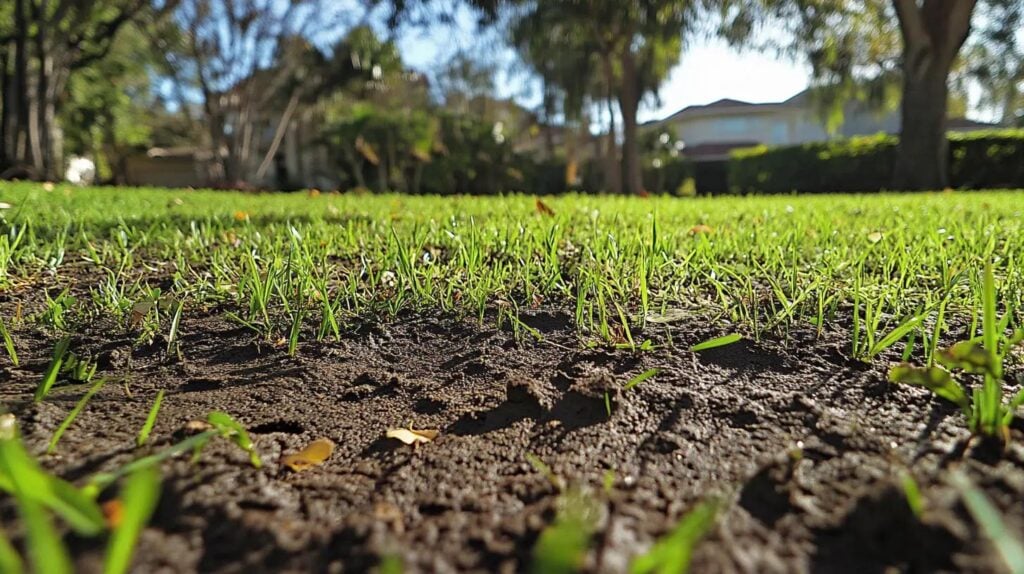
Florida lawns can struggle for many reasons, including improper irrigation, poor mowing practices, pests, disease, nutrient problems, and weather stress. But one less obvious problem can begin below the grass itself: compacted soil.
If your lawn feels unusually hard, water runs across the surface instead of soaking in, or your grass develops thin and weak areas despite regular care, soil compaction may be contributing to the problem.
Compacted lawn soil in Florida is particularly worth investigating on properties that have recently been constructed, renovated, or exposed to repeated foot and vehicle traffic. UF/IFAS explains that construction equipment and traffic can compress soil, reducing pore space needed for water, air, and root growth.
The encouraging news is that compaction can often be addressed once you understand what is causing it and how severe the problem is.
What Is Compacted Lawn Soil?
Healthy soil contains spaces, or pores, between soil particles. Those spaces allow air and water to move through the soil while giving plant roots room to grow.
When soil becomes compacted, those spaces become smaller and fewer.
That can create several problems for turfgrass:
- Water has difficulty infiltrating the soil
- More water may run across the surface
- Roots have less room to grow
- Oxygen availability around roots decreases
- Root systems can remain shallow
- Turf can become more vulnerable to environmental stress
- Irrigation and fertilizer may become less effective
UF/IFAS notes that soil compaction can extend more than 12 inches below the surface in some situations and may persist for years.
This is why simply putting new grass over a compacted area isn’t always the best solution.
If the underlying soil remains heavily compacted, the new turf may encounter the same problems.
Why Soil Compaction Is Common in Florida
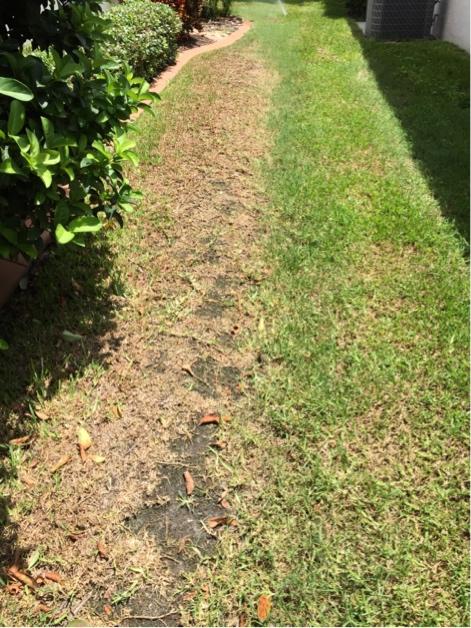
Soil compaction isn’t limited to one type of property.
It can happen in established landscapes through repeated traffic, but construction is another major cause.
UF/IFAS identifies heavy equipment used during construction and repeated foot or vehicle traffic as common causes of urban soil compaction.
This can be particularly relevant to homeowners in newer developments.
During construction, heavy machinery may repeatedly travel across areas that will eventually become lawns or planting beds. The soil may look perfectly acceptable once the house and landscaping are finished, but the structure underneath can remain compressed.
UF/IFAS Gardening Solutions specifically notes that many new Florida homes are built on compacted soil.
Construction Isn’t the Only Cause
An established lawn can also develop compacted areas due to the following:
- Frequent walking
- Children playing in the same area
- Pets repeatedly using the same paths
- Vehicles parked on grass
- Lawn equipment
- Heavy landscaping equipment
- Outdoor events
- Repeated traffic near gates and driveways
The problem can become especially noticeable along predictable traffic routes.
For example, the strip of lawn between a driveway and backyard gate may receive considerably more traffic than the rest of the property.
Over time, that repeated pressure can affect the soil structure.
7 Signs Your Florida Lawn May Have Compacted Soil
Not every unhealthy lawn has a compaction problem.
That’s important.
Yellow grass, standing water, weeds, or poor growth can have multiple causes. Before investing in aeration or other treatments, look for several signs that point toward compaction.
1. The Soil Feels Extremely Hard
One of the simplest warning signs is unusually hard soil.
Try pushing a screwdriver, soil probe, or similar narrow object into moist soil.
UF/IFAS recommends this method as a quick way to evaluate compaction. Its Florida lawn guidance explains that if a rod cannot be pushed at least about six inches into moist soil without significant force, compaction is likely affecting the turfgrass.
This isn’t a laboratory soil test, but it can provide a useful initial indication.
If the soil is difficult to penetrate even when adequately moist, the root zone may be compressed.
2. Water Runs Off Instead of Soaking In
Watch your lawn during irrigation or after a heavy Florida rain.
Does water:
- Pool on the surface?
- Flow toward the driveway?
- Collect in low areas?
- Run down a slope?
- Does it take a long time to disappear?
Compaction reduces pore space and can slow water infiltration, increasing runoff.
However, you shouldn’t automatically assume that compaction causes every drainage problem.
Poor grading, low areas, irrigation problems, and natural site conditions can also contribute to standing water.
UF/IFAS recommends evaluating the site’s topography, areas where water collects after rainfall, and areas that remain wet after surrounding soil has drained.
3. Grass Has Shallow or Weak Roots
Healthy turf needs a functioning root zone.
When soil is compacted, roots may have difficulty penetrating deepeithe soil.
The result can be a shallow root system that leaves grass more vulnerable when environmental conditions become stressful.
UF/IFAS identifies restricted root penetration and shallow rooting as important consequences of soil compaction.
If your grass appears to depend heavily on frequent watering and becomes stressed quickly during hot or dry periods, investigate the condition of the root zone instead of simply increasing irrigation.
4. Certain Areas of the Lawn Keep Dying Back
Look for patterns.
If grass struggles throughout the entire property, there may be a broader issue involving irrigation, turf selection, nutrition, disease, or another factor.
But if weak grass appears mainly in areas that receive heavy traffic, compaction becomes more plausible.
Pay particular attention to:
- Side-yard pathways
- Areas beside gates
- Around outdoor equipment
- Frequently used backyard routes
- Areas where vehicles have driven
- Recently constructed sections of lawn
A concentrated problem often tells you something about how that portion of the property is being used.
5. Watering Doesn’t Seem to Help
A homeowner may see struggling grass and respond by watering more frequently.
But that can make the situation worse if the real issue is compacted soil.
When water can’t move properly into the root zone, simply applying more water doesn’t necessarily give the grass better access to it.
UF/IFAS explains that compacted soils can restrict water penetration and contribute to shallow root systems, which can lead homeowners to compensate with excessive irrigation.
In Florida, that matters because excessive irrigation can waste water and contribute to other landscape problems.
6. The Lawn Is Thin Along High-Traffic Areas
Walk through your property and identify where people, pets, equipment, or vehicles travel most often.
If grass is consistently thinner in those locations, repeated traffic may be contributing to soil compaction.
This is especially common when a lawn is being used as an informal pathway.
UF/IFAS recommends using appropriate paths or permeable surfaces where people or vehicles repeatedly travel over landscape areas to help prevent additional compaction.
In other words, fixing the soil without fixing the traffic pattern may only provide a temporary improvement.
7. The Lawn Has Persistent Drainage Problems
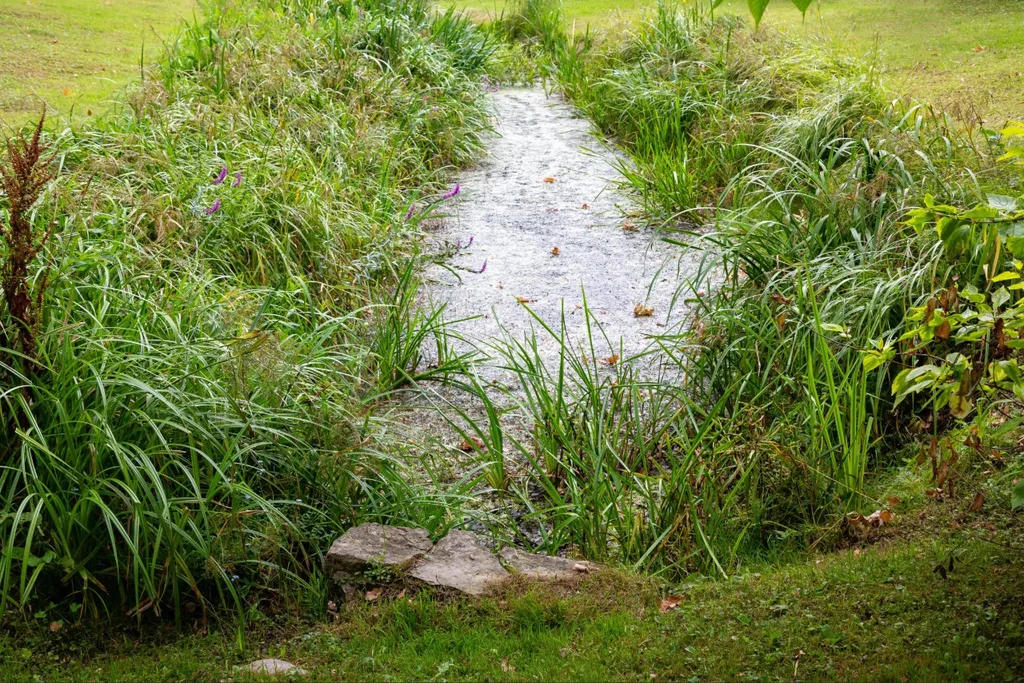
Compacted soil can contribute to poor drainage because water has difficulty moving through the reduced pore spaces.
You may notice:
- Puddles after rain
- Slow infiltration
- Muddy patches
- Runoff
- Wet areas that remain longer than surrounding turf
But drainage problems deserve a closer look.
If grading is incorrect, aeration alone may not solve the problem.
UF/IFAS notes that poor drainage can result from topography, grading, or compaction and that regrading may sometimes be necessary.
That distinction can save homeowners from spending money on a treatment that doesn’t address the actual cause.
How to Test for Compacted Lawn Soil
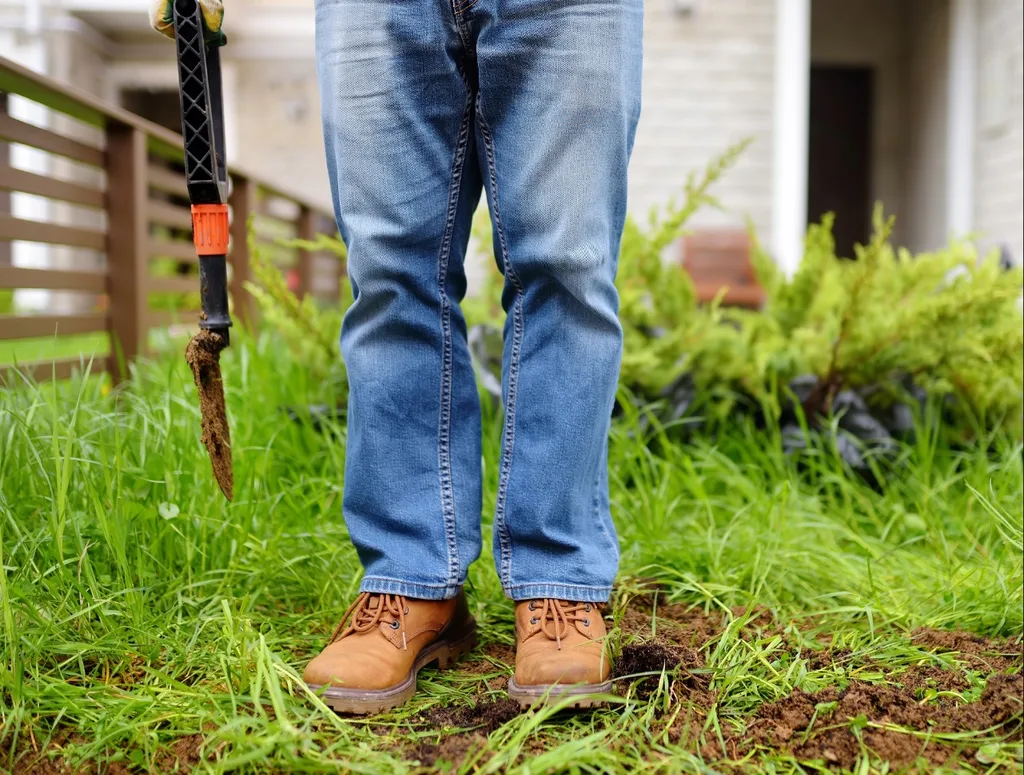
You don’t necessarily need specialized equipment to begin investigating the problem.
The Soil Probe Test
Choose a section of lawn where you suspect compaction.
After the soil has been adequately moistened, push a narrow rod, screwdriver, or soil probe into the ground.
Compare the resistance in the following:
- A problem area
- A healthy-looking lawn area
- A low-traffic area
If the problem area is dramatically harder to penetrate, that difference can provide a useful clue.
For a more thorough assessment, particularly on a new property or a large landscape project, professional soil evaluation can provide more information about the depth and severity of the compacted layer.
Why Fixing the Soil Matters
It’s tempting to focus entirely on what you can see.
After all, grass is what homeowners notice.
But the soil underneath determines much of what happens above it.
Improving compacted soil can help create better conditions for:
- Root development
- Water movement
- Oxygen availability
- Nutrient uptake
- Turf establishment
- Overall lawn resilience
That doesn’t mean correcting compaction will solve every lawn problem.
Florida turf can still experience pests, diseases, drought stress, excessive irrigation, poor mowing, and other challenges.
But addressing a significant soil problem can remove one major obstacle to healthy growth.
How to Fix Compacted Lawn Soil in Florida
Once you’ve determined that compaction is likely contributing to your lawn problems, the next question is how to correct it.
The right solution depends on the severity and depth of the compaction, its cause, and your intended future use of the area.
For many established lawns, aeration can help relieve compaction in the upper root zone. However, severely compacted construction soil may require more extensive preparation.
The important thing is to avoid treating every compacted lawn exactly the same way.
1. Core Aeration Can Relieve Surface Compaction
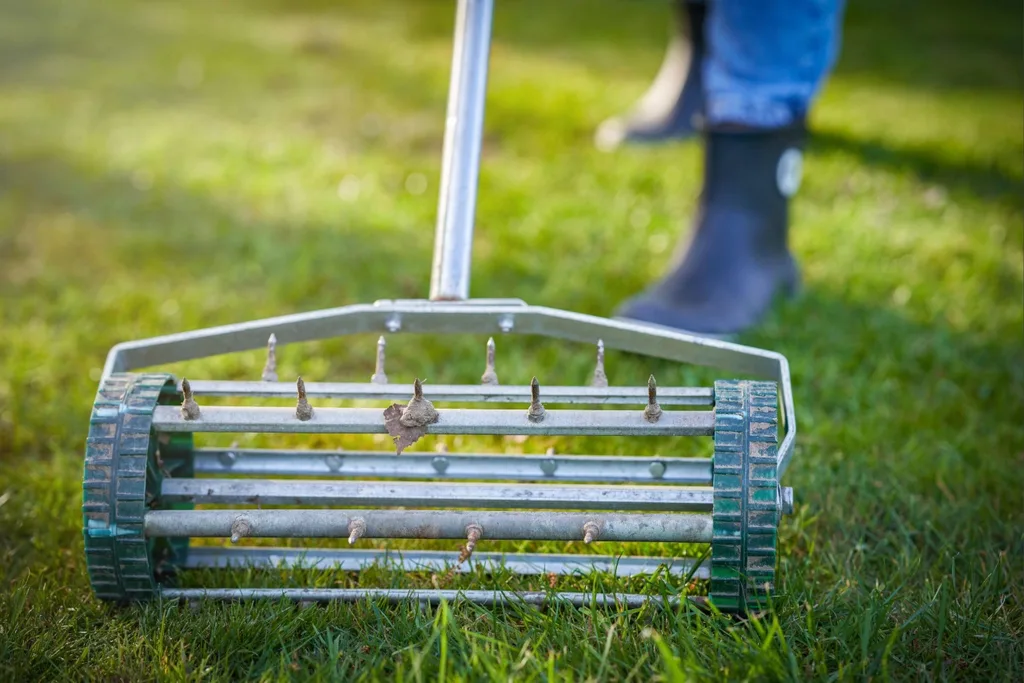
Core aeration is one of the most common ways to address compacted turf.
A core aerator removes small plugs of soil from the lawn. These openings create pathways that allow air, water, and roots to move through the soil more effectively.
UF/IFAS specifically recommends core aeration for compacted Florida lawns and explains that removing soil cores can improve air and water movement while encouraging deeper root growth. (gardeningsolutions.ifas.ufl.edu)
This makes core aeration an important tool for homeowners dealing with compacted lawn soil in Florida conditions.
Why Core Aeration Helps
A compacted soil layer can restrict the movement of
- Water
- Oxygen
- Plant roots
- Nutrients
Core aeration temporarily opens channels through the compacted layer.
As the lawn recovers, those openings can provide pathways for roots to expand and for water to penetrate the soil.
Core Aeration vs. Spike Aeration
Not all aeration methods work the same way.
Core aeration physically removes plugs of soil.
Spike aeration creates holes by pushing solid spikes into the ground.
For significant compaction, core aeration is generally the more useful approach because it removes some of the compacted material rather than simply pressing it farther into the surrounding soil.
Homeowners should also avoid assuming that repeatedly poking holes into severely compacted soil will solve a deep construction-related problem.
The depth and severity of the compaction matter.
2. Aerate When the Grass Can Recover
Timing matters.
Aeration creates temporary openings and causes some disruption to the turf. The lawn needs suitable growing conditions afterward so it can recover and take advantage of the improved soil conditions.
UF/IFAS recommends timing lawn aeration according to the turfgrass species and its active growing period. (gardeningsolutions.ifas.ufl.edu)
Florida has several common turfgrass species, including the following:
- St. Augustinegrass
- Zoysiagrass
- Bahiagrass
- Bermudagrass
- Centipedegrass
Their growth patterns aren’t identical.
That means there isn’t one universal aeration date for every Florida lawn.
A lawn professional can evaluate the turf type and local conditions before recommending the timing.
3. Address the Cause of Compaction
Aeration can improve the soil, but it doesn’t prevent the same problem from happening again.
If people continue walking through the same area every day, the soil can gradually become compacted again.
The same thing can happen if vehicles continue driving across the grass.
If heavy equipment repeatedly parks on the lawn, the underlying problem remains.
That’s why fixing compacted lawn soil Florida homeowners encounter should include identifying the source of the pressure.
Common Causes to Address
Consider whether the problem is caused by:
- Foot traffic
- Pets
- Vehicles
- Lawn equipment
- Construction activity
- Repeated outdoor events
- Informal pathways
- Poorly planned access routes
If a particular area is consistently used as a walkway, consider installing a proper path.
If vehicles regularly cross the lawn, create a more suitable access surface.
If equipment must travel over the property, limit traffic to designated routes whenever possible.
The goal isn’t simply to loosen the soil.
The goal is to keep it from becoming compacted again.
4. Improve the Soil Before Installing New Grass
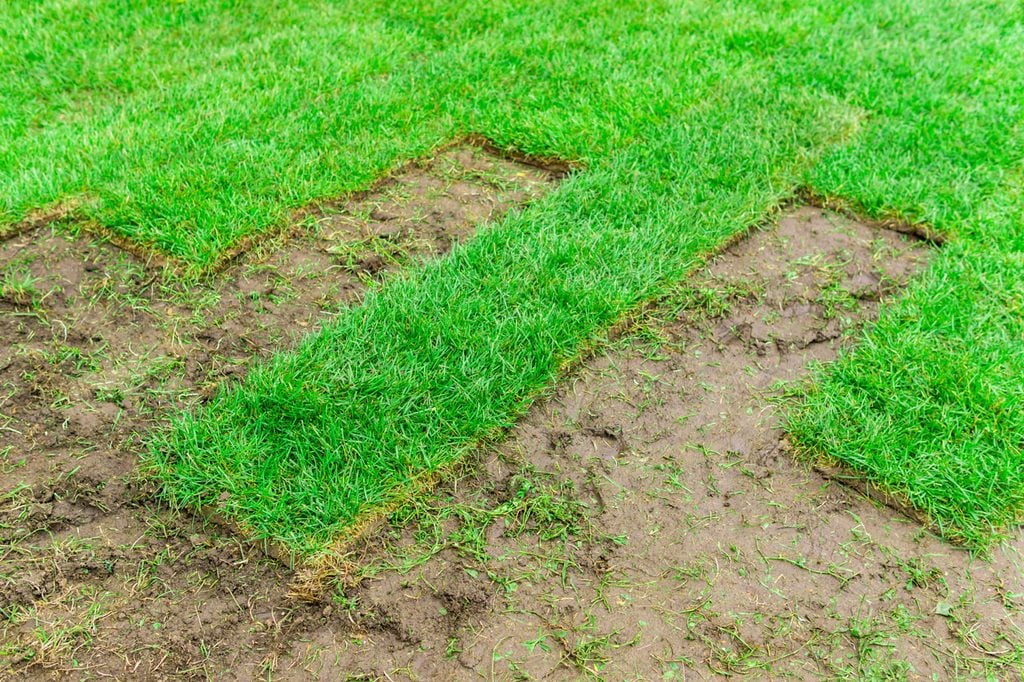
One of the most common mistakes homeowners make is replacing struggling grass without investigating the soil underneath.
If the existing turf is severely damaged, replacing it may eventually be necessary.
However, new sod or seed still requires a suitable root zone.
UF/IFAS explains that proper soil preparation is important when establishing Florida lawns and that compacted soil can restrict root growth. (ask.ifas.ufl.edu)
Before installing new turf, consider:
- Removing severely damaged material
- Correcting grading problems
- Addressing compacted areas
- Preparing the soil
- Checking irrigation
- Selecting an appropriate turfgrass
- Establishing the lawn during suitable growing conditions
This is especially important with newly constructed homes.
A fresh lawn may look healthy initially, but if you install it over heavily compacted construction soil, problems can emerge as the turf matures.
5. Be Careful About Adding Organic Matter
Improving soil with organic matter can be beneficial in many landscape situations, but homeowners should understand that simply spreading a thin layer of compost over an established lawn isn’t a universal cure for compaction.
The correct approach depends on the soil type, existing turf, depth of compaction, and project conditions.
UF/IFAS emphasizes that Florida soils vary considerably and that soil amendments should be used appropriately rather than automatically adding materials without understanding the underlying soil. (gardeningsolutions.ifas.ufl.edu)
For example, a homeowner may have:
- Native sandy soil
- Imported fill
- Construction-compacted soil
- A mixture of different soil materials
- Areas with organic-rich soil
- Areas with poor drainage
These conditions require different approaches.
Don’t Assume More Soil Is Better
Adding material on top of a compacted lawn can sometimes create another layer rather than fixing the underlying problem.
If you’re dealing with severe compaction, particularly following construction, professional assessment can help determine whether the soil needs to be mechanically loosened, amended, removed, or replaced.
6. Improve Irrigation Instead of Simply Adding More Water
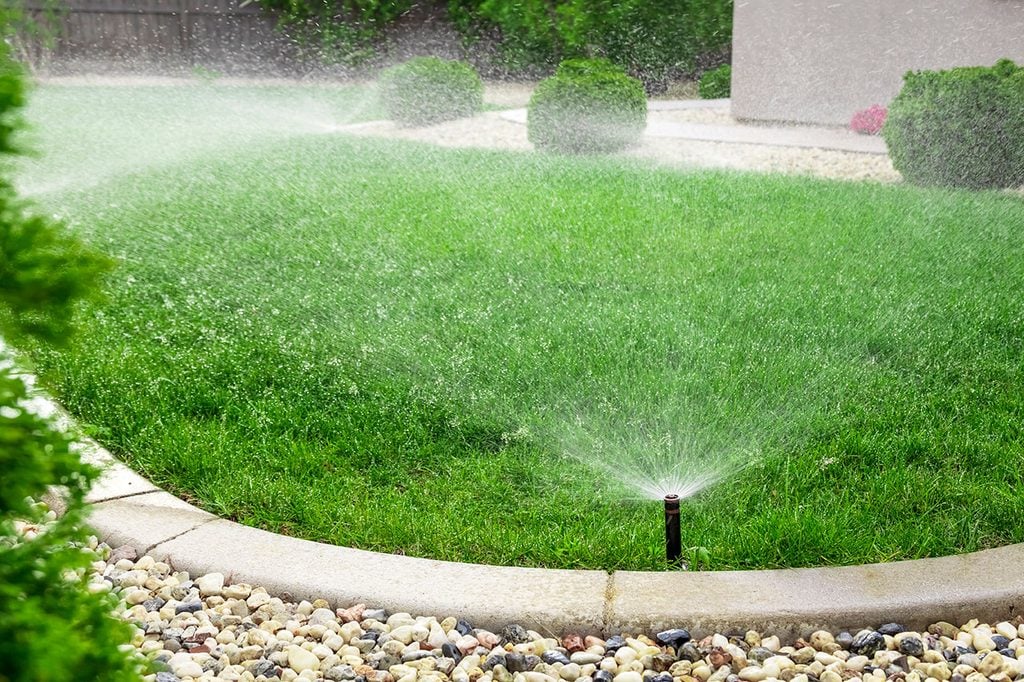
A struggling lawn can tempt homeowners to increase irrigation.
But if compacted soil is preventing water from reaching the root zone effectively, watering more frequently isn’t necessarily the solution.
Florida’s warm climate makes efficient irrigation especially important.
UF/IFAS recommends watering lawns according to their actual needs rather than following an arbitrary schedule. It also notes that soil type, rainfall, season, and other conditions influence irrigation requirements. (ask.ifas.ufl.edu)
Look for signs that your irrigation system may need attention:
- Water pooling in certain areas
- Sprinklers missing portions of the lawn
- Water spraying onto sidewalks or driveways
- Different areas receiving dramatically different amounts of water
- Runoff occurring before the soil can absorb the water
If compaction is severe, correcting irrigation alone won’t solve the underlying problem.
But improving both soil conditions and irrigation efficiency can give the lawn a better chance to recover.
7. Redirect Heavy Traffic Away From the Lawn
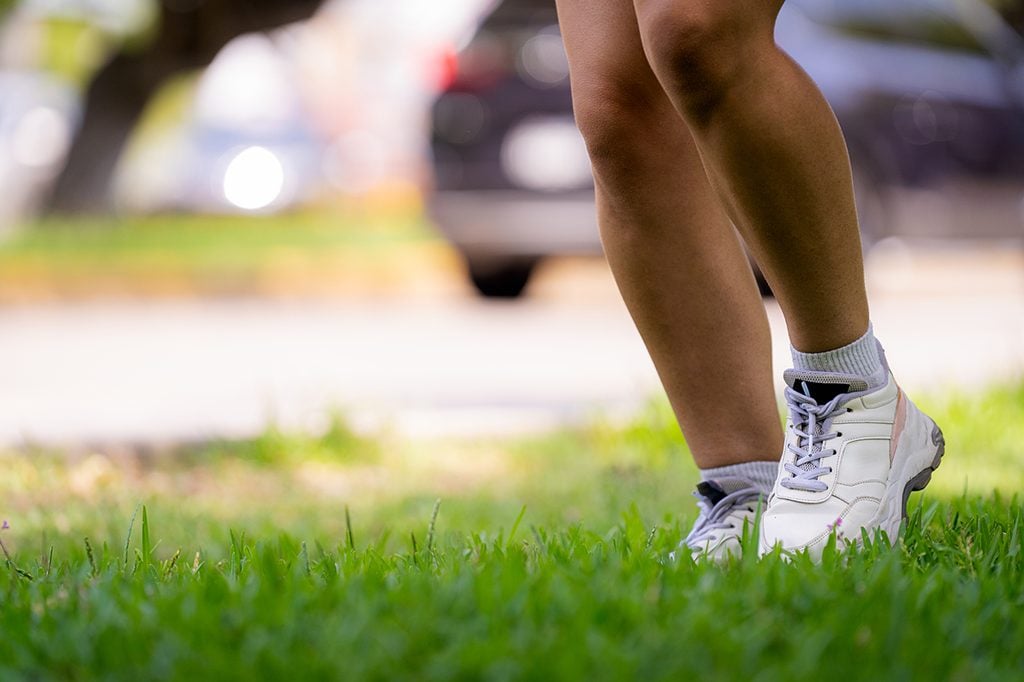
If traffic causes compaction, changing how you use the property can be one of the most effective long-term solutions.
Consider installing:
- Paver walkways
- Stepping-stone paths
- Gravel paths
- Designated pet routes
- Wider access areas
- Stable surfaces around gates
- Appropriate parking surfaces
UF/IFAS recommends using paths or permeable surfaces where repeated traffic occurs instead of allowing the same lawn areas to continually receive heavy pressure. (gardeningsolutions.ifas.ufl.edu)
This is especially useful for narrow side yards.
A homeowner may repeatedly walk between the driveway and backyard, creating a predictable traffic lane. Installing a dedicated walkway can protect the lawn while making access easier.
When Aeration Isn’t Enough
Aeration is useful, but it isn’t a magic solution.
If the compacted layer is deep, severely compressed, or associated with construction fill, simply aerating the surface may not address the entire problem.
You may need more extensive work if:
- A newly built property has severely compacted soil
- Water consistently pools in the same location
- Grass repeatedly fails after replacement
- Roots cannot penetrate beyond a shallow layer
- Heavy equipment has repeatedly crossed the area
- Grading is incorrect
- There is a deep compacted layer beneath the turf
In those cases, the solution may involve soil excavation, grading, soil replacement, drainage improvements, or other site preparation.
This scenario is where professional evaluation becomes particularly valuable.
Don’t Confuse Compaction With Poor Drainage
These problems can look similar.
A lawn with compacted soil may have poor infiltration.
But a lawn can also have drainage problems because of:
- Improper grading
- Low areas
- Downspout discharge
- Excess irrigation
- High water tables
- Site topography
- Poorly designed drainage systems
UF/IFAS recommends evaluating the site’s overall drainage characteristics rather than assuming compaction is always the cause. (ask.ifas.ufl.edu)
If water consistently collects near the foundation or remains in a particular area long after rainfall, investigate the entire drainage pattern.
Don’t Overcorrect a Florida Lawn
There’s another important consideration.
Florida lawns don’t necessarily need to be aggressively treated simply because the soil feels different from soil in another region.
Florida has diverse soil conditions, and many residential lawns are established in sandy soils.
The objective isn’t to make the soil behave like soil from another part of the country.
The objective is to create a suitable root environment for the turfgrass growing on the property.
That means addressing actual problems, rather than automatically applying treatments.
What Homeowners Can Do Before Calling a Professional
If you’re trying to determine whether your lawn has a compaction problem, start by observing it.
Step 1: Look for Patterns
Identify where the grass is struggling.
Is the problem?
- Everywhere?
- Along a walkway?
- Near a driveway?
- In a recently constructed area?
- Around a drainage location?
Step 2: Check Soil Penetration
Test moist soil in both healthy and struggling areas.
Compare how easily a probe enters the ground.
Step 3: Observe Water
Run your irrigation system and watch what happens.
Does water infiltrate?
Does it run away?
Does it pool?
Step 4: Inspect the Turf
Look for:
- Thin grass
- Bare patches
- Shallow roots
- Traffic damage
- Uneven growth
Step 5: Consider the History
Ask yourself:
- Was the house recently built?
- Has heavy equipment crossed the lawn?
- Are vehicles driving over the grass?
- Does the family frequently use one section as a pathway?
The answers can help identify whether compaction is a realistic possibility.
Frequently Asked Questions
-
What causes compacted lawn soil in Florida?
Compacted lawn soil in Florida can be caused by construction equipment, heavy foot traffic, vehicles, lawn equipment, pets, and repeated use of the same areas. New construction can be especially problematic because heavy machinery may compress the soil before the lawn is installed.
-
How do I know if my Florida lawn has compacted soil?
Common signs include unusually hard soil, water pooling or running off instead of soaking in, shallow roots, thin or weak grass, and recurring problems in high-traffic areas. Testing moist soil with a screwdriver or soil probe can provide an initial indication of compaction.
-
Does aeration improve compacted lawn soil?
Core aeration can help relieve surface-level compacted lawn soil by removing small plugs and creating pathways for air, water, and roots. However, severe or deep construction-related compaction may require more extensive soil preparation.
-
When should I aerate my Florida lawn?
The best timing depends on your turfgrass species and its active growing period. Florida lawns can contain different warm-season grasses, so aeration should be timed according to the specific grass and local growing conditions rather than using one date for every lawn.
-
Can compacted soil cause poor lawn drainage?
Yes. Compaction reduces the pore spaces through which water moves, potentially increasing runoff and slowing infiltration. However, poor grading, low areas, excessive irrigation, and other site conditions can also cause drainage problems, so compaction should not automatically be assumed to be the only cause.
-
Should I replace my grass if the soil is compacted?
Not necessarily. If you don’t address the underlying compaction, newly installed grass can experience the same problems. Depending on the severity, improving the soil, correcting drainage, reducing traffic, and aerating the lawn may be appropriate before considering turf replacement.
-
Can adding more water fix compacted lawn soil?
No. Applying more water doesn’t necessarily solve compaction. If water cannot infiltrate the root zone properly, additional irrigation can increase runoff and waste water. The soil condition and irrigation system should be evaluated together.