
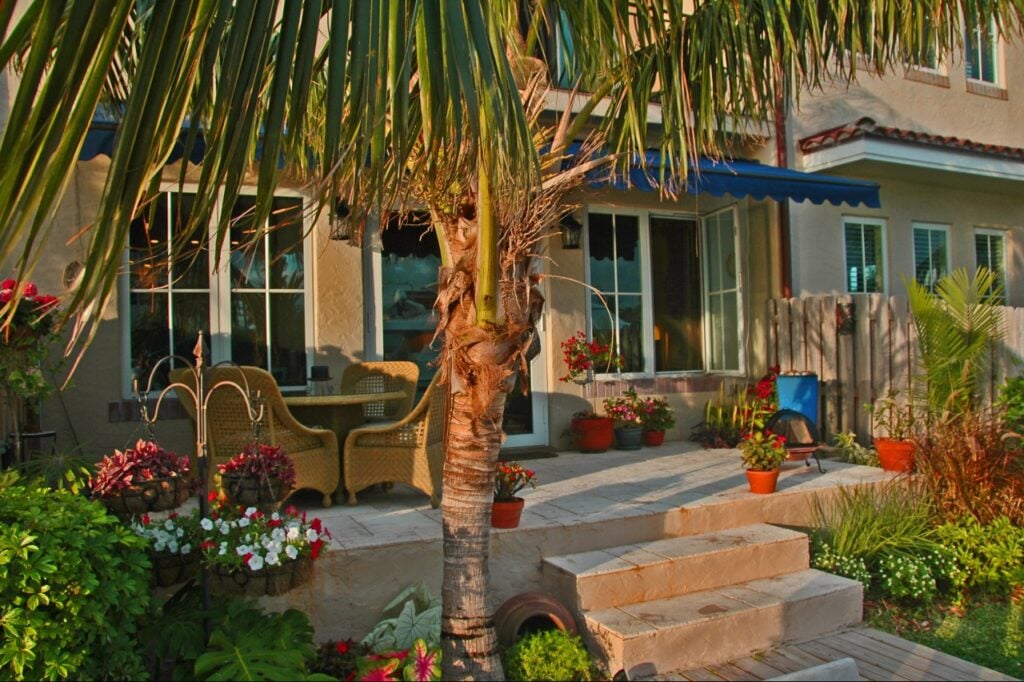
Your home’s exterior creates the first impression for visitors, neighbors, and potential buyers. For Florida homeowners, thoughtful landscaping can make that first impression more attractive while also creating an outdoor space that works with the state’s climate and growing conditions.
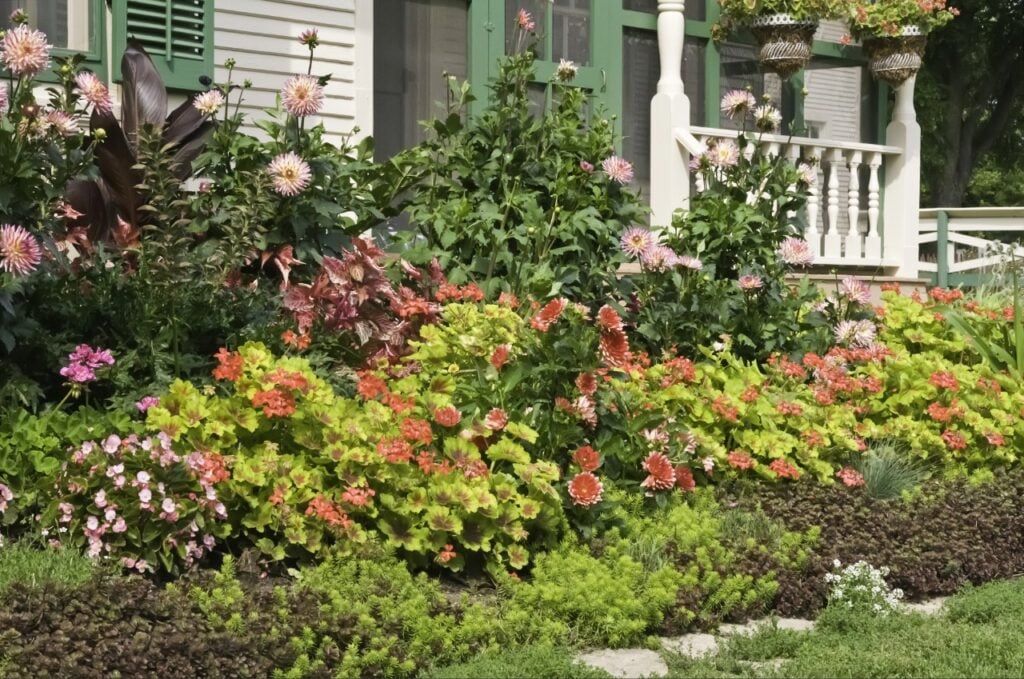
The best curb appeal landscaping ideas aren’t necessarily expensive or complicated. Simple improvements such as refreshing planting beds, defining lawn edges, choosing appropriately sized plants, improving the walkway, and keeping trees and shrubs maintained can make a noticeable difference.
Florida homeowners also have unique considerations when planning their front landscapes. Heat, intense sunlight, rainfall, irrigation, soil conditions, and plant growth rates can all affect how a landscape looks and performs over time. UF/IFAS recommends choosing the right plant for the right place and keeping plants proportional to the home and the available space.
Whether you’re preparing your property for sale or simply want to make your home more welcoming, these curb appeal landscaping ideas can help you create a cleaner, more attractive front yard.
The most effective curb appeal landscaping ideas are those that improve the property’s appearance while also making the landscape practical and easier to maintain.
1. Refresh Overgrown Front Planting Beds
One of the fastest ways to improve the appearance of a property is to address planting beds that have become overgrown, sparse, or difficult to maintain.
Shrubs that have outgrown their intended space can make a home look hidden or neglected. Weeds, dead foliage, bare soil, and uneven plant growth can have a similar effect.
Start by evaluating the existing planting beds.
Remove:
- Dead or declining plants
- Excessive weeds
- Fallen branches and debris
- Plants blocking walkways
- Vegetation that has grown into windows or entryways
Then determine which plants are worth keeping and which areas need replacement.
UF/IFAS recommends using plants that remain appropriately sized for the space, particularly around front entries. Homeowners can also review UF/IFAS curb appeal guidance for additional ideas about plant selection, maintenance, pathways, and creating a welcoming front landscape. Compact, well-behaved plants can help keep walkways accessible and maintain visibility toward the front door.
A refreshed planting bed doesn’t always require completely redesigning the landscape. Sometimes removing a few overgrown plants, adding appropriate replacements, and cleaning the bed can produce a significant visual improvement. This is one of the simplest curb appeal landscaping ideas for homeowners who want noticeable results without completely redesigning the property.
2. Choose Florida-Friendly Plants for the Front Yard
Plant selection plays a major role in long-term curb appeal.
A plant may look beautiful at a garden center but become a maintenance problem if it grows too large for its location or struggles with the property’s light, moisture, and soil conditions.
This scenario is where the Florida-Friendly Landscaping principle of right plant, right place becomes particularly useful.
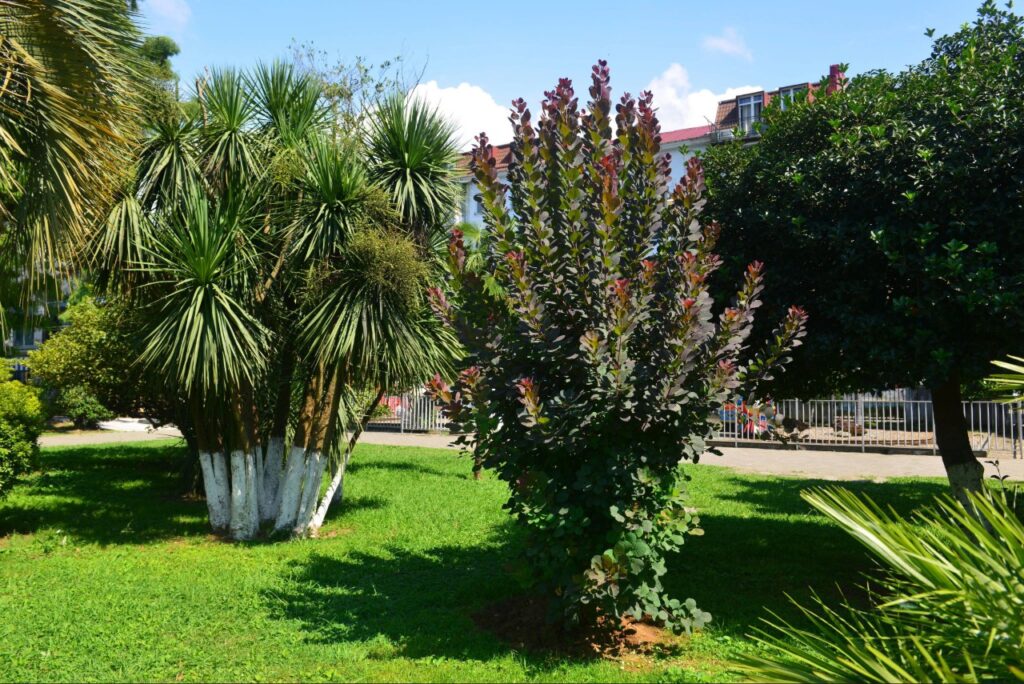
Consider:
- How much sunlight the location receives
- Available soil moisture
- Mature plant size
- Maintenance requirements
- Proximity to walkways
- Visibility around doors and windows
- Existing irrigation
- The overall appearance of the house
Florida-Friendly Landscaping encourages homeowners to select plants that are suited to their site, rather than trying to force plants into conditions where they won’t perform well.
The Florida-Friendly Landscaping program provides additional information about selecting and maintaining plants according to site conditions.
When developing curb appeal landscaping ideas, think beyond what looks good immediately after installation. A successful front landscape should continue looking intentional as plants mature. Using mature plant size as part of your planning is one of the most practical curb appeal landscaping ideas for avoiding an overcrowded front yard.
3. Create Clean Edges Around Lawns and Planting Beds
Clean transitions between lawn areas and planting beds can make an entire property appear more organized.
Even attractive plants can lose some of their visual impact when grass grows several inches into a planting bed or mulch spreads onto the lawn.
Clearly defined edges help separate different landscape areas and create a more deliberate appearance.
You can establish clean boundaries around the following:
- Flower beds
- Trees
- Shrubs
- Walkways
- Driveways
- Mulched areas
The edging doesn’t necessarily have to involve expensive materials. A simple, consistently maintained boundary can be enough to create visual definition. Among the easiest curb appeal landscaping ideas to implement, clean landscape edging can make existing lawns and planting beds look substantially more organized.
UF/IFAS also discusses defined landscape boundaries as one of the ways homeowners can create “cues to care”—visual signals that communicate that a landscape is intentionally maintained.
This is one of the simpler curb appeal landscaping ideas to implement because it can make an existing landscape look more polished without requiring a complete redesign.
4. Refresh Mulch Around Planting Areas
Fresh mulch can quickly improve the appearance of worn planting beds.
Besides creating a more finished appearance, appropriate mulch can provide practical benefits. UF/IFAS notes that mulch can help conserve soil moisture, suppress weeds, reduce erosion, and moderate soil temperatures.
Before adding new mulch, however, clean the existing bed first.
Remove weeds and debris, check the condition of existing mulch, and make sure mulch isn’t piled against tree trunks or plant stems.
UF/IFAS recommends maintaining appropriate mulch depths and specifically cautions against excessive accumulation around plants and trees.
For more detailed recommendations, see the UF/IFAS mulch guidance before installing or refreshing mulch around your landscape.
Choose a mulch that complements the home’s exterior and surrounding landscape rather than treating it simply as a decorative afterthought.
As curb appeal landscaping ideas go, refreshing mulch is relatively straightforward and can make established planting beds look cleaner almost immediately.
For example, a consistent mulch material throughout the front yard can help connect separate planting areas and create a more cohesive appearance.
5. Make the Front Walkway More Inviting
The walkway leading toward your front entrance is one of the most important visual elements in a front landscape.
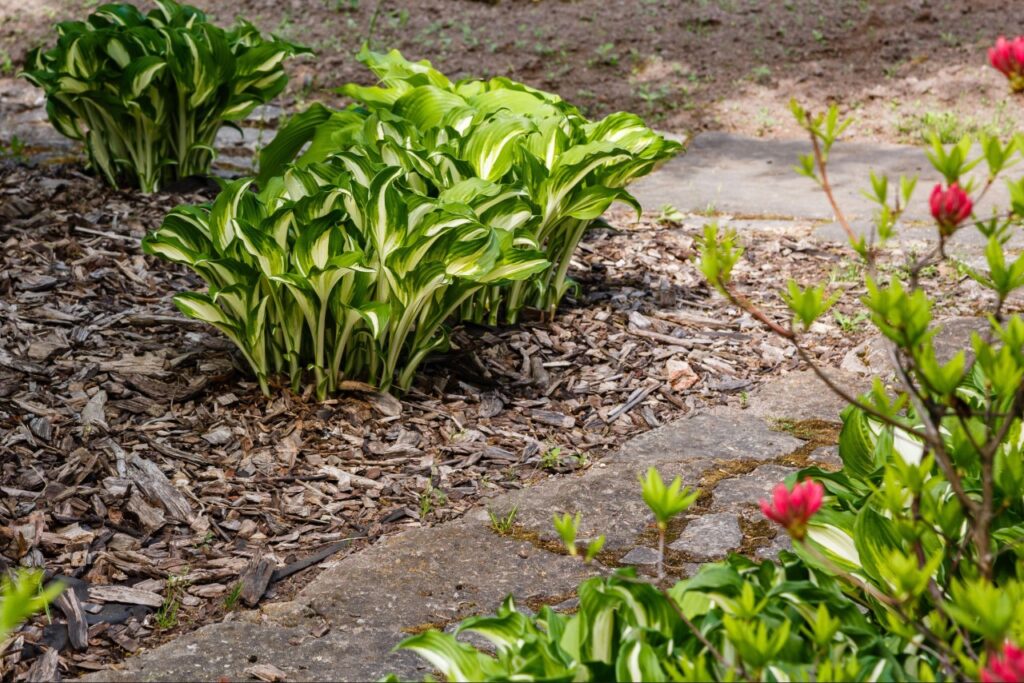
A beautiful yard can still feel unwelcoming if the path to the front door is difficult to see, obstructed by vegetation, or poorly maintained.
Keep pathways:
- Clearly visible
- Free from overgrown plants
- Easy to walk on
- Appropriately scaled for the property
- Connected logically to the entrance
UF/IFAS specifically recommends maintaining a clear view of the front door and incorporating pathways through materials such as gravel, pavers, or mulched areas where appropriate.
If an existing walkway is cracked, stained, uneven, or visually disconnected from the rest of the landscape, improving it may have a greater impact than simply adding more plants. Improving the path to the front door is another of the curb appeal landscaping ideas that can improve both appearance and everyday usability.
The goal isn’t to fill every available space with vegetation. Good curb appeal landscaping ideas should improve both the appearance and functionality of the front yard.
6. Use Landscape Lighting to Highlight Key Features
Landscape lighting can change how your property looks after sunset.
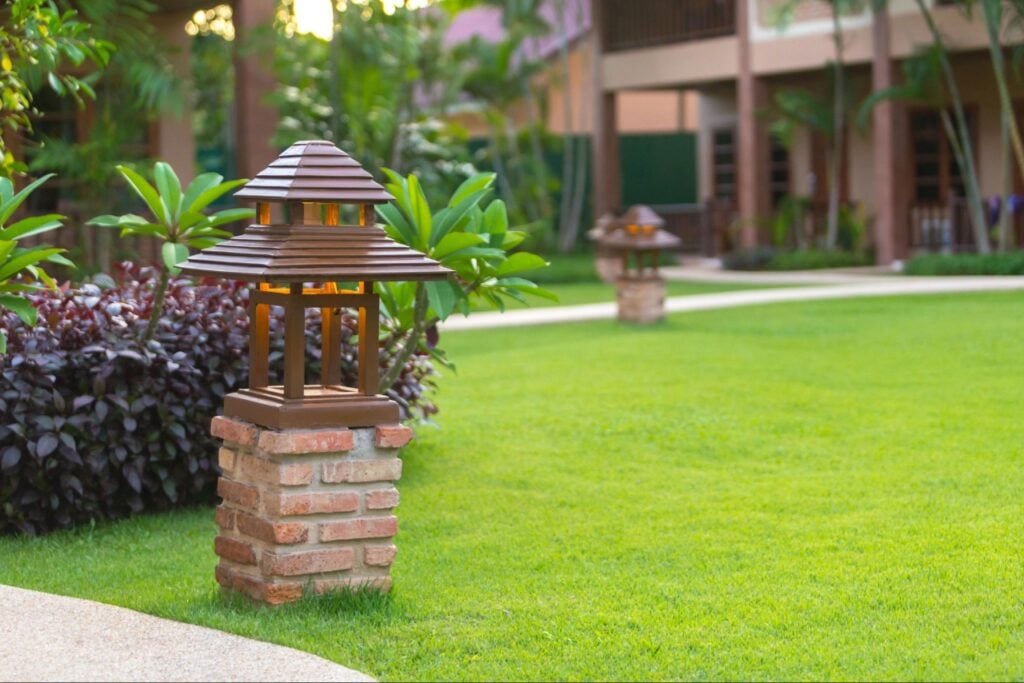
Instead of illuminating every part of the yard, focus on important features such as the following:
- The front walkway
- Entryway
- Architectural details
- Trees
- Planting beds
- Pavers
- Focal plants
Lighting can also make pathways easier to navigate after dark.
Keep the design subtle. One of the advantages of these curb appeal landscaping ideas is that lighting can continue to enhance the property’s appearance after the sun goes down. Excessively bright or poorly positioned fixtures can create glare and distract from the landscape.
When planning outdoor lighting, consider how the fixtures will look during the day as well as at night. Cables, fixtures, and installation locations should fit into the overall landscape rather than becoming visual distractions.
7. Keep Trees and Shrubs Properly Maintained
Large plants can become major visual features of a property, but they can also overwhelm a landscape when they’re allowed to grow unchecked.
Trees and shrubs should be maintained according to their growth habits rather than repeatedly cut into unnatural shapes.
UF/IFAS recommends avoiding practices such as unnecessary shearing, topping trees, and over-pruning palms. Proper maintenance should preserve the natural form and structure of plants.
Pay particular attention to plants near:
- Rooflines
- Windows
- Walkways
- Driveways
- Utility equipment
- Entryways
The goal is not to make every plant perfectly symmetrical. Proper pruning is therefore one of the curb appeal landscaping ideas that can improve the appearance of an established landscape without requiring new construction or major planting. Instead, maintain enough structure and clearance for the landscape to look intentional and allow people to move comfortably around the property.
8. Repair Patchy or Declining Lawn Areas
A healthy-looking lawn can make a significant difference in the overall appearance of a Florida property. Brown patches, thinning grass, bare areas, weeds, and inconsistent growth can make even a well-designed landscape appear neglected.
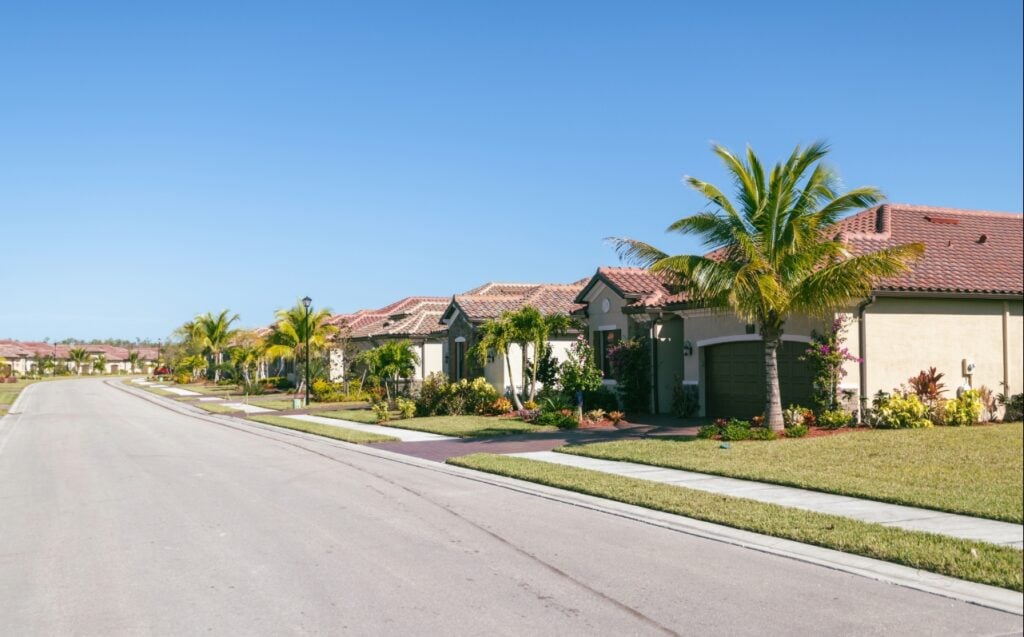
Before replacing sections of lawn, however, you should first determine why the grass is struggling.
Possible causes include the following:
- Improper irrigation
- Poor drainage
- Excessive shade
- Compacted soil
- Incorrect mowing
- Pest activity
- Turf disease
- Seasonal stress
- The wrong grass type for the location
Simply installing new grass without addressing the underlying problem can result in the same issue returning.
Florida lawns can also require different care depending on the turfgrass species, season, irrigation conditions, and location. UF/IFAS recommends considering factors such as grass species, soil type, season, and rainfall when determining irrigation needs.
If a lawn has widespread problems, consider whether replacing the turf entirely makes more sense than repeatedly repairing individual patches.
When evaluating curb appeal landscaping ideas, remember that the lawn is often one of the largest visible areas of the front yard. Improving its condition can therefore have a substantial effect on the appearance of the entire property. For properties with visible lawn problems, lawn improvement should be near the top of the list of curb appeal landscaping ideas to consider.
9. Use Layered Planting to Add Depth
A front landscape can look flat when every plant is positioned at approximately the same height.
Layering plants of different heights can create more visual depth while making planting beds appear fuller and more intentional. This approach is particularly useful when curb appeal landscaping ideas need to add visual interest without taking up unnecessary yard space.
A simple planting arrangement might include:
- Taller plants toward the back
- Medium-height shrubs in the middle
- Lower-growing plants near the front
- Groundcovers or small accent plants around edges
The exact arrangement depends on the size of the property, available sunlight, plant species, and desired maintenance level.
Layered planting can also help draw attention toward architectural features or the front entrance.
However, avoid placing large plants where they will eventually block windows, pathways, signage, or the front door.
The best curb appeal landscaping ideas balance visual interest with the practical space available for plants as they mature.
10. Coordinate the Landscape With Your Home’s Exterior
Landscaping shouldn’t look like a completely separate element from the house.
The colors, textures, shapes, and materials used throughout the front yard can complement architectural features and make the property feel more cohesive.
For example, you could coordinate:
- Mulch with exterior colors
- Pavers with existing hardscape
- Plant colors with the home’s facade
- Landscape lighting with architectural features
- Planting-bed shapes with the home’s lines
- Walkways with the front entrance
This doesn’t mean everything needs to match perfectly.
Instead, aim for a landscape that looks like it was intentionally designed around the home. Coordinating these elements is one of the more design-focused curb appeal landscaping ideas because it considers the house and landscape as one visual composition.
A simple color palette can often be more effective than using too many unrelated plant colors and materials.
How Florida’s Climate Affects Curb Appeal
Florida homeowners need to think about more than aesthetics when planning a front landscape.
The state’s heat, sunlight, rainfall patterns, humidity, and varying soil conditions can all affect plant performance and landscape maintenance.
Consider Sun Exposure
Different parts of the front yard may receive dramatically different amounts of sunlight.
A plant that performs well in full sun may struggle in a shaded area, while shade-tolerant plants may perform poorly when exposed to intense afternoon sunlight.
Before choosing plants, observe the amount of sunlight each area receives throughout the day.
Considering sunlight before planting is an important part of successful curb appeal landscaping ideas for Florida properties.
Consider Water Requirements
Irrigation should support the landscape without creating unnecessary water use.
Homeowners interested in reducing unnecessary outdoor water use can also review EPA WaterSense landscaping guidance for additional information about efficient landscape practices.
UF/IFAS recommends choosing plants according to site conditions and grouping plants with similar water requirements where practical.
This can make irrigation management easier and help prevent some plants from being overwatered simply because they’re located near plants with greater water requirements.
Water-conscious planning can make curb appeal landscaping ideas more sustainable while helping plants perform better in their specific locations.
Consider Drainage
Florida’s heavy rainfall can quickly expose drainage problems.
Standing water, constantly wet planting beds, soil erosion, and water collecting near walkways can affect both appearance and plant health.
Before adding new plants or landscape materials, determine whether water is moving properly through the property.
In some situations, improving drainage may be more important than adding additional landscaping.
Addressing drainage before adding decorative features is one of the most important curb appeal landscaping ideas when a property’s existing conditions are affecting plant health.
Don’t Forget the Details Around the Front Entry
The front entrance naturally draws attention, so relatively small improvements in this area can have an outsized visual impact.
Keep the area around the front door:
- Clean
- Unobstructed
- Well maintained
- Appropriately planted
- Clearly visible from the street
Avoid allowing large shrubs or trees to completely hide the entrance.
You can also use plants, lighting, containers, or a walkway to visually guide visitors toward the front door.
These simple curb appeal landscaping ideas can help make the entrance feel more intentional without overwhelming the home’s exterior.
UF/IFAS specifically recommends keeping the front door visible and using the entry area as a focal point within the landscape.
Prioritize Improvements Instead of Doing Everything at Once
You don’t necessarily need to renovate your entire front yard to improve curb appeal.
A phased approach can make a landscaping project more manageable.
Start with the improvements that will have the greatest visual impact.
For example:
Phase 1: Clean up overgrown vegetation and weeds.
Phase 2: Repair lawn problems and redefine planting-bed edges.
Phase 3: Refresh mulch and replace plants that no longer fit the space.
Phase 4: Improve the walkway and add landscape lighting.
Phase 5: Consider larger landscape-design changes if the property needs them.
This approach allows homeowners to spread out costs while still making visible improvements.
It also gives you an opportunity to see how each change affects the overall appearance before committing to a larger redesign.
Curb Appeal Improvements Don’t Have to Be Expensive
Some of the most effective improvements can involve maintenance rather than construction.
Regular mowing, trimming, pruning, weeding, edging, debris removal, and mulch maintenance can keep an established landscape looking substantially better.
In many cases, basic maintenance can support the results of more involved curb appeal landscaping ideas without requiring a major landscaping budget.
UF/IFAS describes these types of maintenance practices as important visual cues that communicate care and intentional landscape management.
If the basic landscape is already well designed, consistent maintenance may provide a better return than constantly adding new features.
On the other hand, if the existing landscape has poor drainage, inappropriate plants, damaged hardscaping, or an inefficient layout, professional redesign may provide a more lasting solution.
When Professional Landscape Design Makes Sense
Some landscaping projects are relatively simple DIY improvements. Others involve multiple systems and require more planning.
Professional assistance can be especially useful when you’re dealing with:
- Large-scale planting
- Drainage concerns
- Irrigation installation or changes
- New sod
- Landscape lighting
- Paver installation
- Significant tree or shrub removal
- Complete front-yard redesign
- Multiple landscape materials
- Long-term maintenance planning
- Complete front-yard landscape design
A professional landscape designer can evaluate the property as a whole rather than treating each problem separately.
This can help homeowners combine different curb appeal landscaping ideas into a cohesive plan rather than adding individual features that don’t work well together.
For example, replacing a lawn without addressing drainage may not solve the underlying issue. In a similar way, planting new shrubs without considering their mature size can lead to maintenance problems later.
Fine Design Outdoor Solutions provides landscaping and outdoor solutions for homeowners looking to improve the appearance, functionality, and long-term usability of their properties.
How to Maintain Your Home’s Curb Appeal Year-Round
Creating an attractive front landscape is only the beginning. Regular maintenance is what keeps the improvements looking intentional as plants grow and the seasons change.
Even the best curb appeal landscaping ideas can lose their impact when weeds, overgrown plants, damaged turf, or neglected planting beds are allowed to accumulate.
A simple maintenance routine can include:
- Regular mowing and lawn care
- Trimming overgrown shrubs
- Removing weeds and fallen debris
- Maintaining planting-bed edges
- Checking mulch depth
- Inspecting irrigation
- Keeping walkways clear
- Pruning plants when appropriate
- Checking landscape lighting
- Replacing declining plants when necessary
Florida’s growing conditions can cause vegetation to develop quickly, so a landscape that looks neat after a cleanup can become overgrown again if maintenance is neglected.
The goal isn’t to constantly redesign the property. Instead, choose curb appeal landscaping ideas that address the most noticeable problems first and build from there. Instead, consistent maintenance helps preserve the improvements you’ve already made.
How to Prioritize Your Landscaping Improvements
If your front yard needs several improvements, start with the issues that are most visible and most likely to affect the health or functionality of the landscape.
A useful order is:
1. Address problems first.
Deal with drainage, failing irrigation, dead plants, damaged walkways, or declining turf before focusing primarily on decoration.
2. Clean and simplify.
Remove weeds, debris, dead vegetation, and plants that are no longer appropriate for the space.
3. Improve the major visual areas.
Focus on the lawn, front planting beds, walkway, and entrance.
4. Add visual interest.
Consider appropriate plants, mulch, lighting, or hardscape features.
5. Establish a maintenance routine.
Keep the improvements looking good with regular care.
This approach can prevent homeowners from spending money on decorative upgrades while larger landscaping problems remain unresolved.
Prioritizing projects is especially useful when there are several curb appeal landscaping ideas you want to implement but don’t want to complete everything at once.
Final Thoughts
The most effective curb appeal landscaping ideas combine appearance, functionality, and long-term maintenance.
Florida homeowners don’t necessarily need to completely redesign their front yards to create a better first impression. Cleaning up overgrown beds, choosing plants that fit the site, defining lawn edges, refreshing mulch, maintaining the lawn, improving walkways, and keeping trees and shrubs properly maintained can all make a noticeable difference.
It’s also important to consider Florida’s environmental conditions when making landscaping decisions. The right plants, irrigation practices, drainage solutions, and landscape materials can help create an outdoor space that looks attractive while being easier to maintain.
For larger projects, professional planning can help ensure that individual improvements work together rather than becoming a collection of unrelated features.
If you’re considering several curb appeal landscaping ideas, professional planning can help you determine which improvements make the most sense for your home’s layout, landscape conditions, and long-term maintenance needs.
Fine Design Outdoor Solutions can help homeowners develop attractive and functional outdoor spaces through professional landscaping and related outdoor services. Whether you’re looking to refresh an established landscape or create a new design, thoughtful planning can help your property look its best throughout the year.
FAQs
-
What are the best curb appeal landscaping ideas for Florida homes?
Some effective improvements include refreshing planting beds, maintaining the lawn, defining landscape edges, adding appropriate mulch, improving walkways, selecting Florida-suitable plants, maintaining trees and shrubs, and using landscape lighting strategically.
-
How can I improve my home’s curb appeal without redesigning the entire yard?
Start with maintenance and cleanup. Remove weeds and debris, trim overgrown plants, define planting-bed edges, refresh mulch, improve the lawn, and keep the walkway and front entrance clear. These relatively simple changes can make an existing landscape look more polished.
-
What plants are good for Florida curb appeal?
The best plants depend on the property’s location, sunlight, soil, moisture, and available space. Florida-Friendly Landscaping recommends selecting the right plant for the right place, rather than choosing plants based solely on their appearance.
-
Does landscaping increase curb appeal?
Well-maintained landscaping can improve the visual appearance of a property by creating a cleaner, more intentional, and welcoming exterior. Landscaping can also help frame architectural features and guide attention toward the home’s entrance.
-
How often should Florida landscaping be maintained?
Maintenance frequency depends on the plants, turfgrass, season, irrigation, and property conditions. Regular mowing, pruning, weeding, edging, debris removal, and irrigation checks can help keep the landscape looking well maintained.